By
By 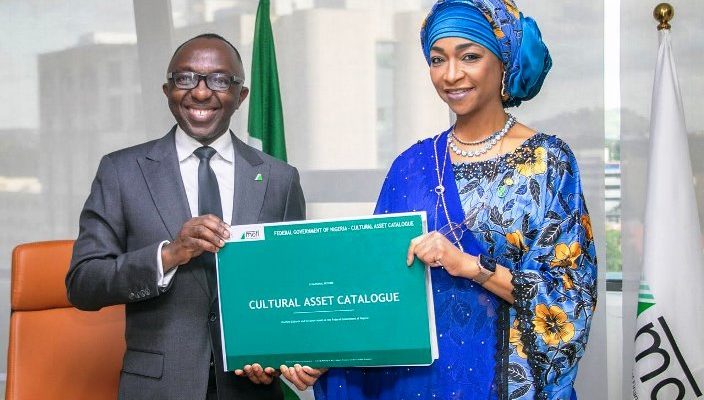
MOFI, Arts Ministry advance cultural assets monetisation as Nigeria catalogues 2,102 heritage assets for economic growth.




MOFI, Arts Ministry Complete First Phase of Cultural Assets Monetisation Project
The Ministry of Finance Incorporated (MOFI) and the Federal Ministry of Arts, Culture, Tourism and the Creative Economy (FMACTCE) have completed the first phase of Nigeria’s Cultural Assets Monetisation Project, successfully identifying, verifying and cataloguing 2,102 tangible cultural assets across the country.
RELATED: Nigeria unlocks economic potential with MOFI-culture ministry cultural asset monetization pact
The milestone marks a significant step in the Federal Government’s strategy to transform Nigeria’s vast cultural heritage into productive national assets capable of generating investment, creating jobs and contributing meaningfully to economic diversification.
ALSO READ: MOFI in Q2 2026: Unlocking national asset value for Nigeria’s digital economy
The announcement was made by the Managing Director and Chief Executive Officer of MOFI, Dr. Armstrong Takang, following a meeting with the Minister of Arts, Culture, Tourism and the Creative Economy, Hannatu Musa Musawa, in Abuja.
ALSO RELATED: MOFI positions federal assets as the backbone of Nigeria’s digital economy
According to Takang, the engagement represents another major milestone in implementing the Memorandum of Understanding signed by both institutions last year to identify, document, value and unlock the economic potential of Nigeria’s cultural assets.
2,102 Cultural Assets Successfully Verified and Catalogued
As part of Phase One of the initiative, MOFI formally presented the National Cultural Assets Register and Catalogue to the Minister after completing the nationwide documentation exercise.
The catalogue contains 2,102 verified tangible cultural assets, providing Nigeria with one of its most comprehensive inventories of heritage resources for future economic development and investment planning.
Takang described the achievement as an important foundation for positioning Nigeria’s rich cultural heritage as a strategic national asset capable of making substantial contributions to Gross Domestic Product (GDP).

“It was great to host the Honourable Minister of Arts, Culture, Tourism and the Creative Economy and her team as we took another major step towards making Nigeria’s cultural heritage assume its true status as a thriving national asset collectively contributing to the country’s GDP,” he said.
Phase Two to Focus on Asset Valuation and Investment Frameworks
Following the successful completion of the asset identification exercise, the partnership is entering its second phase, which will concentrate on formal asset valuation and the establishment of legal, institutional and governance frameworks required to commercialise the country’s cultural resources.
According to Takang, the next stage will enable Nigeria to optimise the economic value of its cultural assets through structured investment models while ensuring sustainable preservation.
“As we look forward to Phase Two, which will focus on formal valuation of the cultural assets and establishment of the legal and governance framework to allow for the optimisation of economic value, we restate our deep commitment towards another successful phase,” he said.
Building a National Assets Register for Sustainable Wealth Creation
The Cultural Assets Monetisation Project aligns with MOFI’s broader mandate of developing a comprehensive National Assets Register that accurately captures, values and manages Federal Government assets.
The initiative is expected to improve national asset management by ensuring that previously underutilised cultural resources become part of Nigeria’s formal economic balance sheet.
Takang noted that Nigeria possesses one of Africa’s richest cultural heritage portfolios, but many of these assets have remained economically dormant due to inadequate documentation, valuation and investment frameworks.
“It is heartening that we can contribute to projecting and optimising a unique asset class for which Nigeria is richly blessed, but which has for far too long failed to receive the deserved attention,” he added.
Unlocking Economic Value Without Selling National Assets
Rather than disposing of public assets, MOFI’s monetisation strategy focuses on unlocking their economic value through structured financing, strategic partnerships and private-sector participation.
The approach includes comprehensive asset identification, professional valuation, concession models, public-private partnerships (PPPs), securitisation of eligible assets and institutional investment frameworks capable of generating sustainable government revenues.
Under the model, cultural heritage assets can attract investments in tourism, creative industries, museums, heritage conservation, digital content development and intellectual property commercialisation while preserving public ownership.
MOFI is also working with international development institutions, including the World Bank and the International Finance Corporation (IFC), to strengthen its asset optimisation framework and attract global investment expertise.
Supporting Nigeria’s Creative Economy Transformation
The Cultural Assets Monetisation Project forms part of the Federal Government’s broader strategy under President Bola Ahmed Tinubu’s Renewed Hope Agenda to position the creative economy as a major contributor to national development.
The initiative supports the Federal Ministry of Arts, Culture, Tourism and the Creative Economy’s Destination 2030 Strategy, which seeks to increase the creative sector’s contribution to the economy while creating millions of jobs.
The strategy targets expanding investments across tourism, film, music, fashion, cultural heritage, entertainment, digital creative industries and intellectual property development.
Government projections aim to unlock $100 billion in GDP contribution and generate approximately two million new jobs by 2030 through strategic investments in Nigeria’s creative ecosystem.
Cultural Heritage Emerging as a Strategic Economic Asset
Industry observers say the completion of Phase One demonstrates a growing recognition that Nigeria’s cultural heritage extends beyond historical preservation to become a strategic economic resource capable of attracting investment, stimulating tourism, supporting creative enterprises and generating sustainable national wealth.
With the establishment of a verified national cultural assets register, Nigeria is laying the institutional foundation for evidence-based asset valuation, improved governance and structured commercial partnerships that could reposition the country’s cultural sector as a significant pillar of economic diversification.
The successful transition into Phase Two is expected to accelerate efforts to convert dormant cultural assets into productive economic resources while preserving Nigeria’s rich heritage for future generations.