By
By 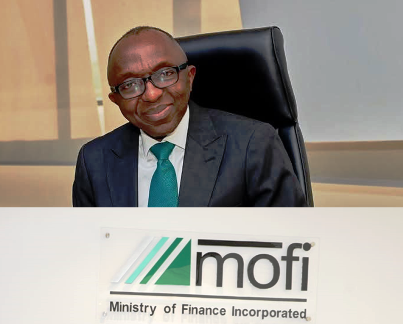
Institutional Focus – IT Edge News.Africa Q2 2026 Digital Economy Report
In Q2 2026, Ministry of Finance Incorporated (MOFI) emerged as one of the most consequential institutions shaping Nigeria’s digital economy—quietly but decisively redefining how public assets, private capital, and technology intersect in national development.
RELATED: Q2 Reports – Galaxy Backbone at 20: Powering Nigeria’s shift from infrastructure to digital sovereignty
Under the innovative leadership of its Managing Director and Chief Executive Officer, Armstrong Ume Takang, MOFI has evolved from a passive custodian of government shareholdings into a globally benchmarked sovereign investment and asset optimisation platform, with ambitions to scale into a $40 billion public-private investment powerhouse.


ALSO READ: MOFI positions federal assets as the backbone of Nigeria’s digital economy
Operating under the Federal Ministry of Finance, MOFI is now central to Nigeria’s shift from economic stabilisation to expansion—using data, governance reform, and strategic investments to unlock long-dormant national value.
From Custodian to Catalyst: MOFI’s Institutional Transformation
Since February 2023, MOFI has undergone a landmark repositioning. Once known primarily as a holding entity for government equity, it is now an active asset manager and principal investment vehicle focused on value creation, capital mobilisation, and institutional reform.
This transformation has placed MOFI at the heart of Nigeria’s digital economy—bridging public digital infrastructure, indigenous technology capacity, and private-sector capital to scale innovation and productivity across sectors.
Data as Infrastructure: Project Lighthouse and Revenue Intelligence
A defining pillar of MOFI’s Q2 2026 strategy is the deployment of Project Lighthouse, a large-scale big data analytics engine aggregating financial and non-financial data across government agencies.
- Integrated national data visibility: Supporting smarter fiscal planning and revenue optimisation
- Evidence-based investment decisions: Enabling data-led prioritisation of digital and infrastructure investments
- Digital governance backbone: Positioning data as a core national economic asset
Project Lighthouse signals MOFI’s belief that data integration is foundational to Nigeria’s digital economy.
Rebuilding GOEs for the Digital Age
MOFI is driving one of the most ambitious corporate governance reforms in Nigeria’s public sector history.
Key Governance Interventions
- Corporate Governance Scorecards: Introducing independent evaluations and performance metrics across Government-Owned Enterprises (GOEs)
- Investor-Ready Restructuring: Digitising operations and financial reporting to attract private and tech-sector capital
- MOFI Corporate Governance Excellence Awards: Launched in Q2 2026 to institutionalise transparency, accountability, and performance culture
These reforms are repositioning GOEs as credible partners for digital, infrastructure, and technology investments.

Mobilising Capital for Digital and Physical Infrastructure
MOFI’s Q2 2026 agenda reflects a clear shift from ownership to capital activation.
Key Investment Platforms
- National Assets Register (NAR): A comprehensive, data-driven inventory of federal assets, bringing long-overdue visibility to what Nigeria owns
- MOFI Real Estate Investment Fund (MREIF): A ₦1 trillion blended-finance vehicle unlocking pension and private capital for affordable housing and long-term mortgages
- Public-Private Partnerships (PPPs): Structuring investment-ready projects across infrastructure, technology, and innovation-driven sectors
These platforms are designed to crowd in private capital while reducing fiscal pressure on government.
MOFI and the Digital Infrastructure Ecosystem
Within Nigeria’s digital economy, MOFI plays a catalytic role by enabling strategic alignment between government-owned technology assets and emerging private innovators.
This includes integration with public digital infrastructure providers such as Galaxy Backbone Limited, strengthening the ecosystem that underpins cloud services, data centres, fibre connectivity, and e-government platforms.
By aligning investment strategy with digital infrastructure, MOFI is ensuring that technology becomes an engine of national productivity, not just a support function.
Sectoral Impact: Agriculture, Housing and Inclusive Growth
MOFI’s Q2 2026 interventions extend beyond technology into sectors critical to inclusive development:
- Agriculture & Food Security: Continued restructuring of the Presidential Fertiliser Initiative (PFI) to boost local production, secure raw materials, and lower input costs
- Sustainable Integrated Productive Communities (SIPC): Advancing partnerships with states such as Niger State to develop self-sustaining zones combining housing, agriculture, and renewable energy
- Affordable Housing Finance: Scaling long-term mortgage access through MREIF to support urbanisation and economic mobility
These initiatives demonstrate how digital tools, capital markets, and governance reform intersect to deliver real-sector outcomes.
Leadership Anchored in Digital Policy Experience
Dr. Takang brings deep credibility to MOFI’s digital ambitions. He previously served as Chairman of the Nigeria National ICT Strategic Action Plan Committee and the National Software Development Task Force—contributing to foundational ICT and digital economy reforms.
This background has enabled MOFI to engage confidently in national and regional technology policy discussions, including strategic participation at platforms such as the West Africa Convergence Conference (WACC).
Outlook: MOFI as a Strategic Engine of National Development
By Q2 2026, MOFI had firmly positioned itself as more than an asset manager. It is now a strategic economic platform, unlocking national asset value, mobilising private capital, strengthening digital infrastructure, and embedding good governance across public enterprises.
As Nigeria’s digital economy becomes central to growth, competitiveness, and jobs, MOFI’s role as the financial architect of national development is set to deepen.