By
By 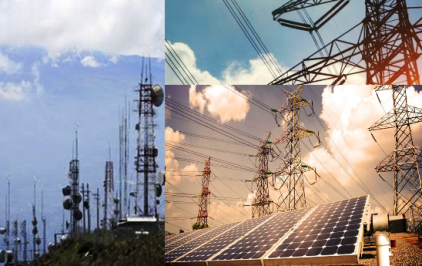
By Osasome C,O
How the NCC–REA Alliance Could Transform Nigeria’s Digital Infrastructure Through Clean Energy
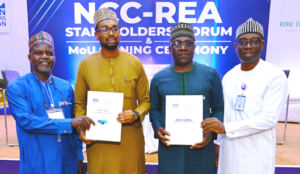
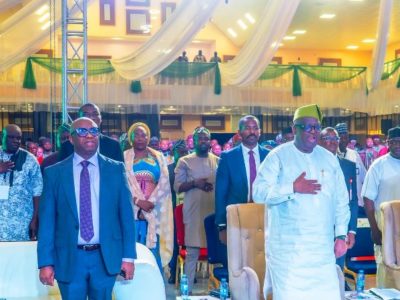
L-R: Mr. Kashim Ibrahim, Director, Legal Services, Rural Electrification Agency, REA; Engr. Umar Abdullahi Umar, Executive Director Technical Services, REA; Engr. Abraham Oshadami, Executive Commissioner Technical Services Nigerian Communications Commission, NCC; Mr Gwa Tobbie Mohammed, Director, Commission Secretariat, NCC, during the NCC-REA Stakeholders’ Forum and MoU Signing Ceremony.
Nigeria is taking a decisive step toward closing one of the biggest barriers to nationwide broadband expansion—unreliable electricity—with a landmark partnership between the Nigerian Communications Commission (NCC) and the Rural Electrification Agency (REA).


RELATED: NCC, REA ink MoU to power telecom towers with renewable energy, expand rural broadband across Nigeria
The collaboration, formalised through a Memorandum of Understanding (MoU) at the NCC–REA Stakeholder Workshop in Abuja, is expected to reshape the country’s telecommunications landscape by integrating renewable energy solutions with telecom infrastructure, significantly reducing dependence on diesel-powered base stations while accelerating digital inclusion across underserved communities.
Held under the theme “Unlocking the Energy–Telecoms Nexus for Scalable Digital Infrastructure in Nigeria,” the workshop brought together telecommunications operators, tower companies, renewable energy developers, financiers, development partners, policymakers and government agencies to chart a sustainable pathway for Nigeria’s digital infrastructure expansion.
Why the NCC–REA Partnership Matters
The partnership addresses one of Nigeria’s most persistent infrastructure challenges—the lack of reliable electricity for telecommunications facilities.
According to NCC industry statistics, Nigeria currently operates approximately 145,141 Base Transceiver Stations (BTS) across about 39,880 physical telecom tower sites nationwide. A significant number of these installations, particularly in rural and remote communities, depend almost entirely on diesel generators due to unreliable or non-existent grid electricity.
This dependence has resulted in:
- High operational expenditure for mobile network operators
- Rising diesel and maintenance costs
- Frequent service interruptions
- Limited network expansion into commercially unattractive rural communities
- Higher cost of telecommunications services for consumers
By connecting telecom sites to renewable energy-powered mini-grids, the NCC–REA collaboration is expected to lower operating costs, improve network uptime, reduce carbon emissions and make rural broadband deployment economically viable.
Powering Nigeria’s Digital Economy Through Renewable Energy
Speaking at the workshop, the Executive Vice Chairman and Chief Executive Officer of the NCC, Dr. Aminu Maida, represented by the Executive Commissioner, Technical Services, Engr. Abraham Oshadami, described the collaboration as a strategic milestone for Nigeria’s digital transformation agenda.
He said reliable electricity and digital connectivity should no longer be viewed as separate development objectives but as complementary pillars of national economic growth.
“Reliable electricity and digital connectivity are not two separate development goals. They are mutually reinforcing foundations of the same objective that produces an inclusive and productive economy,” he said.
Maida noted that communities without reliable electricity struggle to sustain telecommunications infrastructure, while communities without connectivity are unable to maximise the socio-economic benefits of electrification.
According to him, the partnership provides a practical framework for jointly planning telecommunications and rural electrification projects through infrastructure sharing, coordinated investments and renewable energy deployment.
Data Sharing to Close Nigeria’s Connectivity and Energy Gaps
One of the most significant outcomes of the partnership is the integration of planning between both agencies through shared geospatial intelligence.
Under the agreement:
- REA will provide the NCC with detailed geospatial data covering existing, ongoing and planned electrification projects.
- The NCC will share information on existing telecommunications infrastructure and planned Universal Service Provision Fund (USPF) deployments.
This integrated mapping system will enable both institutions to identify communities suffering simultaneous electricity and connectivity deficits, allowing investments to be targeted where they will deliver maximum socio-economic impact.
The collaboration will also explore opportunities for telecom infrastructure—including base stations and fibre repeater sites—to receive electricity directly from REA’s renewable mini-grid projects while encouraging co-location of telecom facilities on energy infrastructure where technically feasible.
Renewable Energy: The Missing Link in Rural Broadband Expansion
For decades, Nigeria’s rural telecommunications infrastructure has relied heavily on diesel generators.
The new strategy seeks to replace this model with decentralized renewable energy systems capable of delivering cleaner, cheaper and more reliable electricity.
A major component of the partnership is the transition of telecom sites located within approximately one to two kilometres of operational solar mini-grids from diesel generation to renewable power.
This approach delivers multiple benefits:
- Significant reduction in diesel consumption
- Lower telecom operating costs
- Improved network availability
- Reduced environmental impact
- Stronger financial sustainability for renewable energy developers through guaranteed demand from telecom operators
The arrangement creates a mutually beneficial ecosystem where telecom towers serve as stable “anchor loads” that improve the commercial viability of renewable mini-grid investments.
Nigeria’s Expanding Renewable Energy Infrastructure
The NCC–REA partnership aligns with broader Federal Government efforts to expand off-grid electricity access across Nigeria.
Several flagship renewable energy initiatives are already underway.
DARES Programme
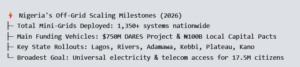
The World Bank-supported Distributed Access through Renewable Energy Scale-up (DARES) Programme is deploying more than 1,350 solar mini-grids alongside hundreds of interconnected systems with the objective of providing electricity to approximately 17.5 million Nigerians.
Recent Renewable Energy Projects
Among the major projects already being implemented are:
- A 505-kWp solar mini-grid commissioned in Epe, Lagos State, serving five underserved communities.
- An 11.9-MW solar hybrid project in Rivers State covering communities in Onne and Gokana/Khana.
- Twenty-three pilot mini-grid projects developed under the Africa Mini-Grid Programme (AMP) in partnership with the United Nations Development Programme (UNDP), providing electricity to approximately 50,000 rural residents.
These projects provide the energy backbone required to support future telecom infrastructure expansion.
Local Manufacturing to Strengthen Energy Security
The partnership also complements Nigeria’s growing localisation strategy for renewable energy technologies.
Through collaboration between the National Agency for Science and Engineering Infrastructure (NASENI) and REA, Nigeria is implementing a “Nigeria First” policy aimed at increasing domestic production of renewable energy equipment.
A key initiative is the Gora Solar Industrial Park in Nasarawa State, where solar panels, batteries and wind energy components will be assembled locally, reducing import dependence while strengthening Nigeria’s clean energy value chain.
REA: Reliable Power and Connectivity Must Grow Together
Representing the Managing Director of REA, Executive Director, Technical Services, Engr. Umar Abdullahi Umar, said the country’s digital economy cannot flourish without dependable electricity.
He described renewable energy mini-grids as a cleaner, more affordable and commercially sustainable alternative to diesel-powered telecom sites.
“Reliable power and universal connectivity are not competing priorities. They are the same priority, approached from two directions. Where we deliver them together, the cost of each falls and the reach of both extends.”
According to him, the partnership creates commercially viable opportunities for both telecom operators and renewable energy developers while accelerating digital inclusion nationwide.
Stakeholders Seek Practical Financing and Implementation Models
Beyond policy announcements, the workshop focused on implementation.
Participants reviewed:
- Geospatial mapping analysis
- Pilot deployment opportunities
- Infrastructure readiness
- Financing mechanisms
- Regulatory frameworks
- Infrastructure-sharing models
- Commercial viability of renewable-powered telecom sites
Oshadami urged stakeholders to move beyond declarations of support by developing practical financing structures and regulatory frameworks capable of scaling renewable-powered telecommunications infrastructure nationwide.
A Strategic Step Towards Universal Digital Connectivity
The NCC–REA alliance represents one of Nigeria’s most strategic inter-agency collaborations in recent years.
By synchronising telecommunications expansion with rural electrification programmes, the initiative is expected to:
- Expand broadband coverage into underserved communities.
- Reduce telecom operating costs through renewable energy adoption.
- Improve network reliability and service quality.
- Accelerate rural digital inclusion.
- Lower carbon emissions from telecom operations.
- Increase infrastructure sharing and investment efficiency.
- Support the Federal Government’s Digital Economy and Energy Transition agendas.
- Strengthen resilience of critical digital infrastructure.
- Stimulate investment in renewable energy and telecommunications.
- Enhance socio-economic development through improved access to digital services.
If successfully implemented, this partnership could become a landmark model for integrated infrastructure development across Africa. It would demonstrate how coordinated investments in energy and telecommunications can drive inclusive economic growth while bridging Nigeria’s digital divide. By linking these critical sectors, the initiative offers a replicable blueprint for sustainable development and digital inclusion across the continent.