By
By 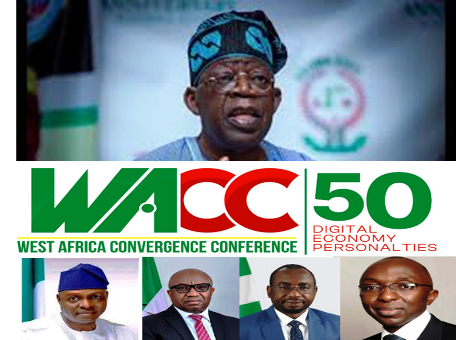
Nigeria’s Digital Economy Anchors Economic Stability and Policy Direction
Nigeria’s digital economy has increasingly become a stabilising pillar underpinning President Bola Ahmed Tinubu’s assertion that the country has moved away from the brink of economic crisis and is progressing toward structural recovery.
RELATED: Yilwatda, Takang, Olatunji, Abdullahi and Nnamani to shape Nigeria’s digital economy discourse ahead of 2027 at WACC 2026
President Tinubu addressed the nation on the third anniversary of his administration. He declared that difficult but essential fiscal and monetary reforms had restored economic confidence and averted a financial crisis. These same measures, he added, have now placed the economy on a solid path toward sustainable growth.
Central to this recovery, he noted, has been the expanding role of the digital economy in driving productivity, attracting investment, and supporting macroeconomic reforms.

This national reassessment coincides with growing institutional backing for the West Africa Convergence Conference (WACC) 2026 and the 50 Most Influential Figures in Nigeria’s Digital Economy. Both events are scheduled to hold in Lagos, Thursday, June 25, 2026.
The WACC and 50 Most Influential Figures serve as a high-level policy platform to shape political visions for the 2027 general elections
Institutional Support Grows Ahead of a Pivotal Election Cycle
Key federal institutions have led confirmations for the 15th edition of WACC, alongside state governments, regulators, investors, and private sector leaders. They include Ministry of Finance Incorporated, National Information Technology Development Agency, and the Nigeria Data Protection Commission.
Organisers say the surge in interest reflects the conference’s growing relevance as Nigeria enters a new national election cycle. The general elections are expected in early 2027. In this context, policy, politics, and business strategy are increasingly converging around the digital economy as a shared national priority.
Despite persistent inflation and cost-of-living pressures, the ICT sector continues to outperform many traditional industries. It is acting as a crucial buffer against oil price volatility and currency shocks. ICT now contributes over 18% of Nigeria’s GDP, reinforcing its role as a cornerstone of economic resilience.
Technology, Policy, and Politics Converge at WACC 2026
The keynote address at WACC 2026 will be delivered by Prof Nentawe Yilwatda, National Chairman of the All Progressives Congress (APC). He will headline a high-level policy colloquium themed:
“Leveraging Technology for Development in Nigeria, 2027–2031: Delivering the Renewed Hope Agenda.”

Yilwatda described WACC as strategically aligned with long-term national development planning beyond 2027. He noted that technology-driven growth must remain central to inclusive governance, economic competitiveness, and political stability.
A Platform Aligning Government Policy and Private Innovation
Organised by Knowhow Media International, publishers of IT Edge News.Africa, WACC has evolved into Nigeria’s premier digital economy and technology policy forum.
The annual gathering convenes policymakers, technology CEOs, fintech innovators, infrastructure providers, and state governors to shape the future of Nigeria’s estimated $450 billion digital economy.
Discussions will focus on broadband expansion, digital infrastructure, data governance, payments systems, and technology-enabled public services. These issues are expected to dominate political and economic debates in the lead-up to 2027.
50 Most Influential Awards Spotlight Digital Leadership
A major highlight of WACC 2026 will be the 50 Most Influential Figures in Nigeria’s Digital Economy and the WACC Recognition Awards. The awards celebrate leadership driving digital transformation across government and industry.
Past honourees include Hyacinth Alia, Obadare Peter Adewale, Vincent Olatunji, Ike Nnamani, Ayotunde Coker, Kashifu Inuwa Abdullahi, and Tola Yusuf.
Investment, Regulation, and People-Centred Digital Growth
A core feature of WACC 2026 will be the Executive Industry Notes by CEOs, built around the theme “Humanising Nigeria’s Digital Economy for People-Centred Impact.”
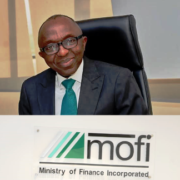
Dr. Armstrong Ume Takang, CEO of MOFI, will lead a high-level CEO Pitch Session at the conference. The session will showcase priority infrastructure and industrial projects, innovation-led initiatives, PPP opportunities, and technology-enabled governance strategies.
NITDA and NDPC are also expected to deepen regulatory engagement with more than 70 operators across connectivity, cloud, data centres, and digital services. These operators include Infratel Africa, IPNX, CWG Plc, IXPN, and Digital Realty.
Why WACC 2026 Matters Now
The urgency of WACC 2026 is further reinforced by an independent report titled “Nigeria’s Digital Economy”, conducted by Public First and commissioned by Meta. According to the report, Meta Platforms injects about $820 million annually into Nigeria’s economy through social commerce, SMEs, and digital services.
The report projects that artificial intelligence and digital transformation could add up to $22 billion to Nigeria’s GDP by 2035. However, this forecast depends on leadership, regulation, and investment aligning effectively.
“Twenty-two billion dollars will not deliver itself. People do. Leaders do,” said Olusegun Oruame, CEO of Knowhow Media International.
Nigeria’s National Payment Stack recently demonstrated its readiness after successfully processing 153,000 pilot transactions. As a result, confidence is growing in the country’s ability to absorb digital growth across all sectors.
A Defining Forum for the 2027–2031 Era
As Nigeria approaches the 2027 general elections, WACC 2026 stands out as a policy-shaping, investment-defining forum. This where where politics, governance, and business strategies around the digital economy intersect.
More than a conference, WACC 2026 is positioned to convert reports, projections, and platforms into coordinated national action. The gathering holds at a moment when Nigeria’s digital future is becoming inseparable from its political and economic trajectory.