By
By 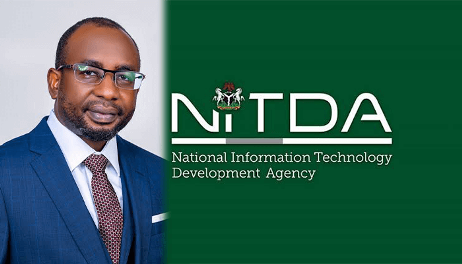
Institutional Focus – IT Edge News.Africa Q2 2026 Digital Economy Report
Nigeria’s digital economy entered a defining phase in Q2 2026 as the National Information Technology Development Agency (NITDA) intensified its dual role as both development catalyst and digital regulator.
Under the leadership of Kashifu Inuwa Abdullahi, the agency delivered strong performance milestones during the period. It also advanced its Strategic Roadmap and Action Plan (SRAP 2.0), a framework that is now central to Nigeria’s digital ambitions. This framework focuses on critical pillars including artificial intelligence, cloud sovereignty, and digital public infrastructure.

Digital activity is deepening rapidly across finance, telecommunications, healthcare, artificial intelligence, and e-government in Nigeria. In response, momentum is building for a comprehensive National Digital Economy and E-Governance Bill.
This proposed legislation is expected to significantly expand NITDA’s statutory authority while harmonising the country’s currently fragmented regulatory landscape.
SRAP 2.0: NITDA’s Execution Engine for Digital Transformation
NITDA’s SRAP 2.0 has emerged as a practical execution framework for Nigeria’s digital economy goals, prioritising inclusion, resilience, and innovation at scale.
Digital Public Infrastructure and E-Government Integration
In Q2 2026, NITDA consolidated its leadership of the Nigeria Government Enterprise Architecture (NGEA), strengthening interoperability across federal ministries, departments, and agencies.
This move is reshaping e-government delivery by reducing duplication, improving service integration, and laying the foundation for scalable Digital Public Infrastructure (DPI).
Cloud Sovereignty and Local Value Retention
Through the National Cloud First Guidelines, NITDA accelerated efforts to localise critical national data and digital services.
The policy aims to reduce dependence on dollar-denominated foreign cloud platforms, shield startups from foreign exchange volatility, and retain digital economic value within Nigeria.

AI and Emerging Technologies
NITDA’s Q2 agenda firmly positioned Nigeria as a leading voice in AI governance in Africa. Beyond adoption, the agency is shaping policy blueprints that integrate AI into workforce development, productivity growth, and national socio-economic planning.
Why Nigeria Needs a Digital Economy Act
As digital services increasingly overlap across regulated sectors, Nigeria’s current legal framework is showing strain. Startups and investors continue to navigate overlapping rules across financial services, telecoms, data protection, and digital platforms.
In response, NITDA and industry stakeholders are advocating for a unified Digital Economy Act, designed to modernise governance, reduce compliance friction, and provide regulatory certainty.
How the National Digital Economy and E-Governance Bill Empowers NITDA
The proposed legislation significantly expands NITDA’s mandate. It positions the agency as the central coordinating authority—or “super-regulator”—for Nigeria’s digital market.
1. AI Risk Classification Authority
Under the bill, NITDA gains statutory power to classify AI systems based on societal risk:
- High-risk sectors such as finance, public administration, surveillance, and automated decision-making face mandatory registration and licensing.
- Enforcement powers include system restrictions, platform blocks, and penalties of up to ₦10 million or 2% of annual turnover.
- Regulatory sandboxes allow controlled experimentation for early-stage AI innovations.
2. Algorithmic Transparency and Auditability
To address rising concerns around algorithmic bias and opaque automated decisions, the bill mandates:
- Explainable AI (XAI) requirements for systems impacting citizens’ rights or financial outcomes.
- Independent annual AI audits, supported by a new class of accredited AI auditors.
- Human-in-the-loop safeguards for high-impact automated systems.
3. Inter-Regulator Coordination and Startup Protection
The bill introduces formal mechanisms to reduce regulatory overlap:
- Harmonised compliance across NITDA, the Nigerian Communications Commission (NCC), the Central Bank of Nigeria (CBN), the Nigeria Data Protection Commission (NDPC), and the Office of the National Security Adviser (ONSA).
- A Multistakeholder Coordination Group to shorten approval timelines for startups.
- Investor certainty, replacing fragmented rules with a single national benchmark.
Positioning Nigeria as an African Leader in AI Regulation
Nigeria’s Digital Economy and E-Governance Bill is steadily progressing through the legislative pipeline. Once enacted, the country will stand among the first in Africa to possess a comprehensive and enforceable framework for AI governance.
NITDA’s approach balances innovation with public trust—anchoring growth in accountability, transparency, and coordinated oversight.
Outlook: Q3 2026 and Beyond
NITDA’s Q2 2026 performance confirms its evolution from a technology development agency into a core pillar of Nigeria’s digital economic governance.
By aligning SRAP 2.0 with emerging legislation, the agency is shaping a regulatory environment that supports startups, attracts investment, and ensures Nigeria’s digital economy scales responsibly.
As digital transformation accelerates, the passage of the National Digital Economy and E-Governance Act may well define the next decade of Nigeria’s technology-driven growth.