By
By 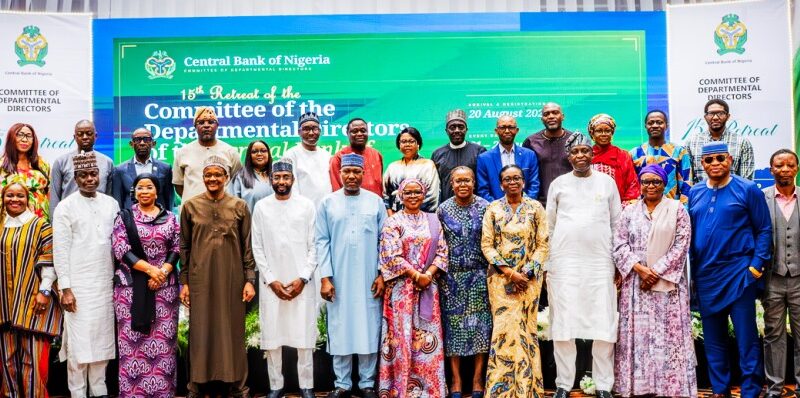
NITDA DG Calls for Digital Stability, Real-Time Supervision and Financial Sector Resilience
Traditional regulatory approaches are no longer sufficient to safeguard Nigeria’s financial stability. According to the Director General of the National Information Technology Development Agency (NITDA), Kashifu Inuwa Abdullahi, the banking sector has morphed into a sophisticated digital ecosystem that outpaces legacy oversight mechanisms. To secure the nation’s economic future, he emphasised that regulators must now prioritize real-time supervision, cross-sector collaboration, digital sovereignty, and enhanced operational resilience.
RELATED: NITDA, Budget Office inaugurate committee to drive Nigeria’s sovereign cloud initiative
Abdullahi made the assertion while speaking on “Digital Transformation, Supervision, Innovation and Operational Resilience” at the 15th Retreat of the Central Bank of Nigeria Committee of Departmental Directors in Lagos.
The retreat was themed “From Reform to Institutionalisation: Strengthening the CBN Capacity to Deliver Sustainable Financial System Stability.”


It brought together directors of the apex bank to examine institutional reforms, financial stability and the changing realities of banking and financial services.
Abdullahi argued that regulators must move beyond supervising individual financial institutions. They must develop the capacity to monitor the broader ecosystem of technology platforms. Equally importnat are the infrastructure providers and stakeholders that increasingly power modern finance.
He declared that financial stability and digital stability have become inseparable in the modern banking environment. This was one of the central messages of his presentation.
‘Without Digital Stability, We Cannot Guarantee Financial Stability’
According to Abdullahi, the transformation of banking from physical branches to internet platforms, mobile applications, fintech ecosystems and embedded financial services has fundamentally changed the nature of financial sector risks.
Modern banking, he said, now depends on a complex network of telecommunications infrastructure, and cloud platforms. In that mix are also fntech companies, digital marketplaces, data systems and emerging technologies.
This growing interconnectedness means that regulators can no longer rely exclusively on traditional models. The era of taking decisons based largely on periodic reports submitted by regulated institutions is over.
“To achieve financial stability, we need digital stability. Without digital stability, today we cannot be talking about financial stability in the financial sector,” Abdullahi said.
He called for regulators to develop real-time visibility across the financial ecosystem. They must build the capacity to identify emerging risks before they escalate into wider systemic problems.

“We need to be ahead of the institutions we regulate. We cannot wait for regulated institutions to submit returns before we analyse and understand what is happening. We need end-to-end visibility of the ecosystem,” he stated.
Modern Banking Requires an Ecosystem Approach to Regulation
Abdullahi said banking has progressed through several stages of technological evolution, from traditional branch-based operations to internet banking, mobile banking and increasingly embedded digital financial services.
The result, he noted, is a financial ecosystem that now extends far beyond the direct operational boundaries of banks and other licensed financial institutions.
A disruption in telecommunications infrastructure, cloud services, digital identity systems or other critical technology platforms could therefore have consequences across multiple financial institutions and millions of users.
He argued that regulators must consequently adopt a broader ecosystem approach capable of understanding the relationships and dependencies between financial institutions and the technology infrastructure on which they depend.
The future of financial supervision, according to Abdullahi, will require regulators to develop new capabilities for sensing, analysing and responding to risks across the entire digital financial ecosystem.
Digital Transformation Must Go Beyond Automation
The NITDA boss also drew a distinction between digitalisation and genuine digital transformation.
While digitalisation can improve existing processes through the use of technology, he argued that digital transformation requires institutions to rethink how they operate, create value and respond to changing customer and market realities.
Abdullahi said innovation cannot be achieved simply by automating existing processes. Instead, institutions must be prepared to rethink traditional operating models and develop new approaches capable of responding to rapidly changing technology environments.
He urged regulators and financial institutions to embrace ecosystem-driven innovation, particularly as emerging technologies continue to reshape the delivery of financial services.
Operational Resilience Must Extend Beyond Cybersecurity
On operational resilience, Abdullahi said financial institutions and regulators must expand their focus beyond conventional cybersecurity frameworks.
He identified third-party and fourth-party risks, cloud governance, data protection, artificial intelligence oversight and digital infrastructure sustainability as increasingly important elements of financial sector resilience.
The growing dependence on external technology providers, he warned, represents one of the major emerging risks facing financial systems globally.
A disruption involving a cloud provider, connectivity infrastructure or a critical digital platform could potentially affect multiple institutions simultaneously, making resilience a system-wide issue rather than an individual organisational concern.
Abdullahi said regulators must therefore develop a more comprehensive understanding of the digital dependencies that support critical financial services.
AI Creates New Opportunities — and New Financial Sector Risks
Artificial intelligence was another major focus of Abdullahi’s presentation.
While AI is increasingly being deployed to strengthen security, automate processes and improve decision-making, he warned that AI systems are themselves becoming targets for increasingly sophisticated attacks.
Financial regulators and institutions, he said, must therefore pursue a dual strategy: deploying artificial intelligence to strengthen defence while simultaneously protecting AI-powered systems from manipulation, compromise and other emerging threats.
He also emphasised the importance of developing local digital talent and institutional capabilities capable of supporting supervision in an increasingly technology-dependent financial environment.
Building the necessary skills base, Abdullahi said, will be critical to strengthening Nigeria’s long-term financial and digital resilience.
NITDA DG Links Financial Stability to Digital Sovereignty
One of the strongest arguments advanced by Abdullahi was the link between financial stability and digital sovereignty.
He said nations must retain meaningful control over the critical digital infrastructure powering strategic sectors of their economies.
“Financial stability now depends on resilient technology and Nigeria’s capacity for digital self-determination. If we do not build, control and maintain sovereignty over critical digital infrastructure, how can we guarantee the stability and integrity of our financial system?” he said.
The argument places issues such as cloud infrastructure, data systems, telecommunications networks, cybersecurity and emerging technology capabilities within a broader national economic and security context.
According to Abdullahi, the future of financial supervision must focus not merely on digitising existing regulatory processes but on fundamentally transforming how regulators understand and respond to risks across the entire ecosystem.
“The future of supervision is not merely to digitise regulation, but to digitally transform how regulators sense, understand and respond to risks across the ecosystem,” he stated.
Cardoso Says CBN Reforms Are Strengthening the Institution
In his virtual keynote address, the Governor of the Central Bank of Nigeria, Mr. Olayemi Cardoso, assured participants that the apex bank was in a strong position following ongoing institutional reforms.
Cardoso said the Bank’s transformation agenda was designed to strengthen the institution while also protecting the interests and career development of its workforce.
“The Bank is in a good place,” the Governor said, stressing that the ultimate success of reforms depends on their ability to become embedded within an institution’s culture, systems and processes long after those who initiated them have left office.
He said the CBN had recorded progress across several strategic areas, including the completion of a bank-wide culture survey that provided employees with an opportunity to contribute to shaping the institution’s future.
Cardoso described culture as the foundation of sustainable reforms and said staff feedback would continue to inform meaningful action within the Bank.
‘Reform Is the Protection of the Career Officer’
The CBN Governor also sought to reassure staff that institutional reforms and the drive towards greater institutionalisation should not be viewed as threats.
Instead, he described them as safeguards designed to strengthen the Bank and create a more secure environment for career development.
“The Bank is in a good place. Our staff have nothing to fear. Reform and institutionalisation are not a threat to the career officer; they are the protection of the career officer,” Cardoso said.
He challenged the Bank’s directors to empower their teams, encourage constructive engagement and strengthen collaboration across departments.
According to him, a resilient and future-ready Central Bank would ultimately depend on the collective integrity, professionalism and commitment of its workforce.
CBN Directors Described as ‘Major Anchors’ of the Institution
Chairman of the Committee of Departmental Directors of the CBN, Mr. Jimoh Musa Itoba, charged the Bank’s directors to take greater responsibility for strengthening financial stability and supporting Nigeria’s broader economic growth ambitions.
He described the directors as the institution’s “major anchors” and custodians of its processes, culture and institutional memory.
According to Itoba, the retreat represented more than an annual engagement. He said it provided an opportunity for participants to critically examine how the CBN could strengthen its contribution to Nigeria’s economic development and the country’s ambition of building a one-trillion-dollar economy.
“The directors are the major anchors of the Bank,” he said, noting that employees look to them for leadership and direction.
He urged participants to challenge existing narratives and focus on generating practical recommendations capable of strengthening financial system stability, institutional effectiveness and public trust.
Innovation and Collaboration Critical to a Future-Ready CBN
Earlier, the Secretary of the Board, Committee of Departmental Directors, Rashida Monguno, called on directors to embrace innovation, strategic thinking and stronger collaboration as the CBN responds to an increasingly complex operating environment.
She said the theme of the retreat was particularly timely, given the growing expectations and challenges confronting modern institutions.
According to Monguno, the CBN must continue to assess its performance, identify gaps and develop innovative approaches capable of improving effectiveness, efficiency and service delivery.
She urged participants to leverage the expertise available at the retreat to generate new ideas, exchange best practices and develop practical solutions for the institution.
“The success of our initiatives will depend on our willingness to collaborate, think strategically and remain focused on achieving measurable outcomes,” she said.
Monguno expressed confidence that the retreat would generate recommendations capable of strengthening institutional performance, improving coordination across departments and reinforcing the collective responsibility of building a stronger and more responsive Central Bank.
A New Regulatory Era for Nigeria’s Financial System
The central message emerging from the NITDA Director General’s presentation is that the architecture of modern banking has changed faster than many traditional regulatory systems.
Financial stability can no longer be assessed solely through the health of individual banks or the reports they submit to regulators. It increasingly depends on the resilience of the wider digital infrastructure supporting financial transactions, data processing, connectivity and emerging technology services.
As Nigeria’s financial system becomes more digitally interconnected, the ability of regulators to develop real-time visibility, manage ecosystem-wide risks, strengthen operational resilience and build local digital capabilities could become increasingly critical.
For Abdullahi, the path forward is clear: Nigeria must move from simply digitising financial regulation to digitally transforming the entire approach to supervision.
The objective is a more resilient, secure and sustainable financial system capable of supporting both financial stability and Nigeria’s broader digital economy ambitions.