By
By 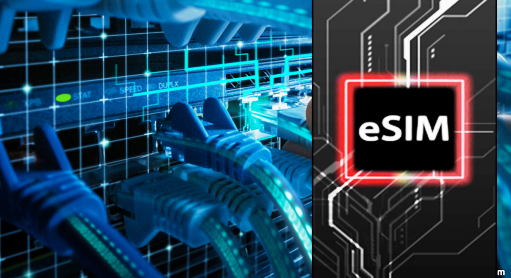
By Osasome, C.O
The eSIM revolution: Why Nigerian ISPs are pivoting to mobile bundles as a key VAS
With over 107 million internet users and mobile devices accounting for nearly 80% of the nation’s total web traffic, Nigeria stands at a digital tipping point. While traditional fixed broadband and fiber connections have laid the groundwork for connectivity, a silent shift is occurring beneath the surface. Internet Service Providers (ISPs) are increasingly looking beyond the home router.
RELATED:


The next frontier? Embedded SIM (eSIM) technology, which is rapidly transforming from a niche smartphone feature into a strategic value-added service (VAS) capable of unlocking new revenue streams and reshaping the competitive landscape of Nigeria’s telecom sector.
From Home Wi-Fi to Everywhere Connectivity
What does this mean? Nigeria’s ISPs may be sitting on a new opportunity to expand beyond the traditional business of selling fixed broadband. As eSIM-enabled smartphones and connected devices become more common, the technology could provide a pathway for ISPs to bundle home or office internet with mobile connectivity, travel data, enterprise services and Internet of Things solutions.
For years, the traditional ISP model has been relatively straightforward: provide fibre, fixed wireless or satellite connectivity to a defined location. But eSIM technology could help change that model by enabling a more flexible proposition — one subscription that extends beyond the home or office.
The emerging opportunity is a “Home + Away” connectivity model, where customers use high-capacity broadband on fixed Wi-Fi and switch to mobile data delivered through an eSIM profile when they leave their primary coverage area.
For Nigeria’s increasingly mobile-first digital economy, this could open a new frontier for value-added services.
A Fragmented Market Primed for Disruption
The Nigerian internet ecosystem is a patchwork of diverse players. Mobile Network Operators (MNOs) like MTN Nigeria, Airtel Nigeria, Globacom, and 9mobile dominate the mobile space, while the recent relaunch of ntel adds further depth to the cellular market.
On the fixed-line front, operators such as ipNX, Spectranet, FiberOne, Smile Communications, and Tizeti provide fiber and fixed-wireless broadband, with Starlink carving out a commanding lead in the satellite segment.
According to the Nigerian Communications Commission (NCC), active mobile and broadband subscriptions hover around the 141 million mark. However, the real opportunity lies in bridging the gap between stationary home internet and on-the-go mobile access—a gap that eSIM technology is uniquely positioned to fill.
From Fixed Lines to Hybrid Ecosystems: The New ISP Model
The traditional ISP model is straightforward: deliver fiber or fixed wireless to a single location. But by integrating eSIM capabilities, these providers can evolve into “Next-Gen ISPs,” offering a comprehensive “Home + Away” experience.
Customers can enjoy high-speed fiber at home and seamlessly transition to the ISP’s proprietary mobile data network via eSIM when they step out.
Zero Logistics, Instant Access
One of the most compelling operational advantages of eSIM is the eradication of physical logistics. Traditional SIM cards require plastic manufacturing, retail distribution, and shipping. eSIMs, by contrast, are delivered instantly via a digital QR code sent through email or a mobile app.
This dramatically reduces overhead costs and allows ISPs to onboard thousands of new subscribers without setting up a single physical storefront.
How eSIM Could Transform the Traditional ISP Business Model
The traditional broadband provider sells connectivity to a physical location. A fibre subscriber, for example, may enjoy high-speed internet at home but must rely on a separate mobile network subscription when travelling, commuting or working remotely.
eSIM could help bridge that divide.
By partnering with mobile network operators or operating through an MVNO arrangement, an ISP could potentially provide customers with a branded mobile data service alongside its existing fixed broadband offering.
The result could be a next-generation ISP model built around:
- Home fibre or fixed wireless broadband
- Mobile eSIM data
- Shared or pooled data allowances
- Broadband backup connectivity
- International roaming data
- Enterprise device management
- IoT connectivity
Rather than competing only for the home internet budget, ISPs could begin targeting a larger share of a customer’s overall connectivity spending.
Why eSIM Is a Potential Game-Changer for Nigerian ISPs
Instant Digital Onboarding
One of the biggest attractions of eSIM technology is digital provisioning.
Unlike traditional SIM cards, which require physical production, distribution and retail logistics, an eSIM profile can be delivered digitally to a compatible device. Customers could potentially purchase a data package online and activate the service through a QR code or an ISP application.
For ISPs, this could reduce dependence on physical SIM inventory and retail distribution networks.
It could also make it easier to introduce temporary, promotional or supplementary connectivity products, particularly for existing broadband subscribers.
Creating Hybrid Home and Mobile Data Bundles
The strongest commercial opportunity may lie in bundling.
An ISP could offer a customer a fibre broadband package for the home and attach a mobile eSIM allowance to the same subscription. The customer would then have connectivity both at home and while away.
Such packages could be particularly attractive to:
- Remote workers
- Students
- Professionals
- Families with multiple connected devices
- Small and medium-sized businesses
The model could also encourage customer retention. Instead of having a relationship with an ISP only for fixed broadband, the customer would interact with the provider across multiple aspects of daily connectivity.
Unlocking Value-Added Service (VAS) Opportunities
For Nigerian ISPs, eSIM is not just a connectivity tool—it is a versatile platform for tailored services that cater to distinct market segments. Industry analysts highlight several lucrative avenues:
Broadband Backup for SMBs and Remote Workers
Business continuity is critical in Nigeria’s growing gig economy. ISPs can offer eSIMs as an automatic failover network. If the primary fiber line experiences downtime, employees’ smartphones or specialized routers instantly switch to the ISP’s cellular backup, ensuring uninterrupted productivity.
Broadband Backup Could Create a New VAS Opportunity
Why this matters? For small businesses and remote workers, internet downtime remains a major concern.
An eSIM-enabled mobile data connection could serve as an immediate backup when a fixed broadband connection fails. Customers could switch to cellular connectivity through a smartphone, compatible router or other connected device while waiting for the primary service to be restored.
This could allow ISPs to develop premium business continuity packages that combine fixed broadband with mobile backup capacity.
For businesses that depend on cloud applications, online transactions, video conferencing and digital communications, such a service could represent a practical value-added offering.
Travel eSIM Bundles for Frequent Flyers
International roaming has historically been a costly pain point for Nigerian travelers. ISPs can partner with global roaming aggregators to sell travel-specific eSIM profiles for destinations like the UK, US, and UAE. This allows subscribers to bypass expensive telco roaming fees while the ISP captures a share of the lucrative travel connectivity market.
Tiered Data Pooling for Families
Household data management is getting a major upgrade. A family subscribed to a 500GB home plan can allocate specific data quotas—for instance, 50GB per person—to each member’s mobile device via eSIM, allowing parents to monitor usage and ensure fair distribution across the household.
Smart IoT Linkage for Estates and Security Firms
The Internet of Things (IoT) is gaining traction in Nigeria’s gated communities and commercial security sectors. ISPs can deploy eSIMs to connect smart security cameras, solar inverters, and vehicle tracking devices, offering centralized management without the need to physically swap SIM cards across hundreds of devices.
What’s Fueling the eSIM Surge in 2026?
Several macroeconomic and regulatory factors are accelerating the adoption of eSIM services among Nigerian ISPs. The NCC has actively licensed dozens of Mobile Virtual Network Operators (MVNOs), granting ISPs the legal framework to lease network infrastructure from major telcos and power their own branded eSIM services.
Simultaneously, the smartphone hardware landscape is evolving rapidly. Modern mid-range and premium devices—from global giants like Apple and Samsung to local favorites like Tecno—now ship with native eSIM support. This expanding device ecosystem provides a ready-made audience for digital SIM profiles.
Furthermore, Nigeria’s “sachet” economic culture extends to digital consumption. ISPs can micro-tailor short-term, affordable eSIM data passes exclusively for social media streaming or navigation during daily commutes, capturing the low-income but high-volume demographic.
Navigating Nigeria’s Operational Realities
Despite the immense potential, integrating eSIM technology is not without significant operational hurdles.
The NIN-SIM Linkage Mandate
The most critical challenge is regulatory compliance. The Nigerian government strictly enforces the National Identification Number (NIN)-SIM linkage policy.
ISPs venturing into eSIMs must integrate their digital onboarding systems directly with the National Identity Management Commission (NIMC) database. Every eSIM activated must be tied to a verified NIN, requiring robust identity verification APIs and strict data governance protocols.
Device Compatibility and Market Segmentation
While adoption is growing, eSIM functionality remains predominantly confined to higher-end smartphones. The technology is increasingly available on premium and newer mid-range smartphones, tablets and connected devices, but it is not yet universal across Nigeria’s diverse smartphone market.
ISPs must strategically target urban professionals, corporate fleets, and affluent families to ensure a solid return on investment, avoiding mass-market campaigns that may not yield immediate conversions.
Fierce Telco Competition
Major MNOs are not standing idle; they already offer proprietary eSIM solutions. To compete effectively, ISPs must differentiate themselves through superior data-to-price ratios, unique software interfaces, or exceptional customer support that larger telcos often struggle to provide.
Enterprise and IoT Services Offer Another Growth Opportunity
The eSIM opportunity extends beyond consumer broadband.
Enterprises increasingly manage fleets of smartphones, tablets, tracking devices, routers and other connected equipment. ISPs could potentially provide centrally managed eSIM connectivity for corporate clients, remote workers and machine-to-machine applications.
Potential use cases include:
- Fleet and logistics tracking
- Smart security systems
- Connected cameras
- Solar and energy monitoring systems
- Remote workforce connectivity
- Smart estate infrastructure
- Industrial and enterprise IoT deployments
For ISPs serving estates, businesses and corporate campuses, this could create opportunities to provide connectivity beyond the fixed infrastructure installed at a particular location.
MVNO Licensing Could Provide a Pathway Into Mobile Services
The expansion of the Mobile Virtual Network Operator ecosystem presents another potential route for ISPs seeking to participate more directly in mobile connectivity.
Under an MVNO model, a company can offer mobile services using capacity leased from an established mobile network operator while focusing on branding, customer acquisition, pricing, specialised services and other elements of the business.
For an established ISP, this could provide a bridge between fixed broadband and mobile services without requiring the enormous capital investment associated with building a nationwide mobile network.
An ISP could therefore evolve from a single-product broadband provider into a broader digital connectivity company offering fixed, mobile and potentially international services under one brand.
Nigerian ISPs Could Differentiate Through Service Integration
The challenge, however, is that Nigeria’s major mobile network operators already control the core mobile connectivity market and are themselves introducing digital and eSIM-enabled services.
This means ISPs entering the space would need more than simply another mobile data offering.
The strongest competitive advantage may come from integration.
Rather than trying to replicate the services of major mobile operators, ISPs could create specialised propositions such as:
- Fibre broadband with emergency mobile backup
- Home internet with family eSIM data sharing
- Business broadband with managed employee connectivity
- Estate broadband combined with smart security and IoT connectivity
- Travel data packages for existing broadband subscribers
- Multi-device connectivity plans for remote workers
The objective would be to create a unified connectivity experience rather than sell mobile data as a standalone commodity.
Compliance and Customer Registration Will Be Critical
Any move by ISPs into mobile connectivity would also require careful attention to Nigeria’s telecommunications regulatory and customer identification requirements.
The integration of eSIM services would need to operate within applicable licensing, subscriber registration, identity verification and NIN-SIM linkage frameworks.
For this reason, digital activation should not be confused with the elimination of regulatory obligations. While eSIM technology can simplify the technical delivery of a mobile profile, providers would still need to ensure that onboarding and subscriber management processes meet the requirements applicable to the services being offered.
This could become one of the most important operational considerations for ISPs exploring the opportunity.
From ISP to Full-Service Connectivity Provider
The longer-term significance of eSIM may be its ability to help redefine what an ISP can be.
Traditionally, an ISP’s relationship with a customer begins when an internet connection is installed at a home, office or business location. With eSIM, that relationship could potentially extend beyond the premises.
The ISP could become a provider of continuous connectivity — at home, at work, on the road and potentially across international borders.
This could be particularly significant as competition intensifies among fibre, fixed wireless, mobile and satellite broadband providers in Nigeria. Operators will increasingly need to find new ways to differentiate their services, improve customer retention and generate additional revenue from existing subscribers.
A Strategic Imperative
Integrating eSIM technology offers Nigerian Internet Service Providers a transformative opportunity to expand beyond the confines of fixed home and office broadband.
By venturing into mobile data services, ISPs can achieve instant digital onboarding, drastically reduce logistics overhead, and bypass the traditional bureaucracy associated with physical SIM registration.
For the Nigerian ISP that executes this strategy effectively, eSIM represents not just a value-added service. It means a fundamental pivot toward becoming a holistic digital lifestyle provider in one of Africa’s most dynamic telecommunications markets. The infrastructure is ready, the regulatory framework is evolving, and the consumer appetite is undeniable. Therefore, the time for eSIM is now.
The Next Value-Added Service Frontier?
For Nigerian ISPs, eSIM may not necessarily mean becoming a direct competitor to every major mobile network operator. Instead, the opportunity could lie in using mobile connectivity as an additional layer on top of existing broadband services.
A subscriber who currently pays separately for home Wi-Fi, mobile data, business backup and travel connectivity could, in theory, receive several of those services through a single provider or integrated platform.
That possibility makes eSIM more than a replacement for the traditional plastic SIM card.
For ISPs, it could become a platform for new value-added services, customer retention and broader participation in Nigeria’s fast-growing connectivity economy.
As the boundaries between fixed broadband, mobile data, satellite connectivity and enterprise networks continue to blur, the next phase of competition may not be about who provides internet access alone. It may be about which provider can deliver the most seamless connectivity experience.
And for Nigerian ISPs looking for their next growth opportunity, eSIM could be an important part of that future.