By
By 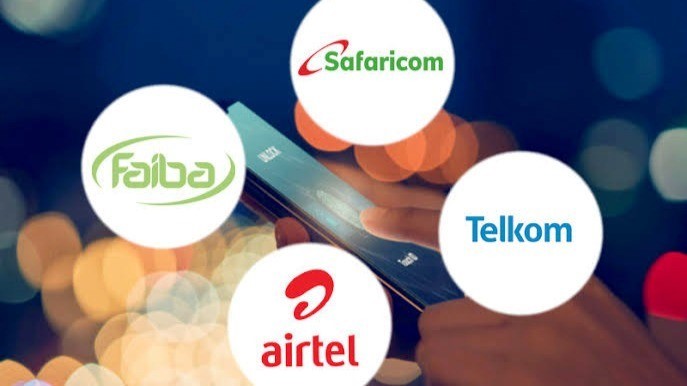
By Fintech Association of Kenya
On 10 August 2026, a Safaricom customer named Samuel Waititu wrote on the company’s social feed that Safaricom had begun to deteriorate, the one-hour bundle was gone and Data B-Live was unavailable. Safaricom replied the same day that it was sorry to hear about his experience and had taken his feedback. It did not say whether the product had been withdrawn, restricted or repriced. The company confirmed the position later: one B-Live offering at KSh 25 would be available daily between 23:00 and 16:00.
Eight days afterwards, Airtel subscribers dialled *544# and found Smarta priced exactly as it had been on Sunday. Smarta 1500 still cost KSh 1,500. It now contained 32GB rather than 90GB. On-net minutes fell from 3,000 to 1,000. Smarta 500’s off-net SMS allowance fell 72 per cent.


Neither event was a price increase, if price means the number printed beside the shilling sign. Each raised the effective cost of connectivity for the customers affected by between 25 and 181 per cent. In the same three weeks, Safaricom cut the effective price of its mainstream monthly bundle by more than half.
Two movements, one movement
Safaricom’s Pata More campaign, launched 31 July, took the KSh 1,000 thirty-day bundle from 10GB to 21.5GB, cutting the implied cost per gigabyte from KSh 100 to roughly KSh 47. Airtel’s Smarta 1500 moved from KSh 16.67 per gigabyte to KSh 46.88.
In July the gap between the market leader and its only serious challenger at the KSh 1,000 monthly tier was a factor of 4.5. It is now about two shillings. There is no evidence of coordination and none is alleged: the sequence is consistent with Airtel discovering it no longer needed to undercut by so wide a margin. The consumer consequence does not depend on which explanation is right.
The small end moved the other way. B-Live sold time rather than volume, from KSh 20 for an hour to KSh 150 for six. One product survives. The hourly price rose 25 per cent, offset by ten voice minutes. Withdrawal of the multi-hour blocks raised the cost of an afternoon online from KSh 16.67 an hour to KSh 25, an increase of 50 per cent. The third change appears in no per-unit figure at all: access is unavailable between 16:00 and 23:00, the seven hours in which a boda boda rider finishes a shift, a student opens a laptop and a trader posts stock to WhatsApp Status. Safaricom has described the exercise as a review of data bundles. A congestion rationale is plausible, and on 1 August the company announced 300 additional masts, which is what a congestion constraint calls for. Safaricom has not made that argument.
Why the smallest bundle is the important one
The Kenya National Bureau of Statistics recorded 18.1 million people in informal employment in 2025 against 3.31 million in formal wage employment, 83.8 per cent of all jobs. Those 18.1 million are paid when a fare is completed or a harvest sells, not on the twenty-fifth. Real wages for the salaried minority stand at 85.84 against a 2009 base of 100.
A household holding KSh 300 today and an uncertain KSh 300 tomorrow cannot pre-commit KSh 1,000 for thirty days, whatever the per-unit price. The binding constraint is the size of the smallest purchase that unlocks any gigabyte at all. Two independently derived figures agree on what Kenyans actually consume: the Communications Authority’s quarterly data implies about 5.0GB a month per subscription, and Safaricom’s audited figure gives 4.92GB. Safaricom’s chief financial officer, Dilip Pal, told investors that customers not using 1GB in a month represent a large opportunity. Roughly half of Safaricom’s mobile data subscribers are in that group. For them the hourly bundle is not a marginal product. It is the entire product.
What the accounts show
Withdrawing an acquisition subsidy is not the same as raising a price, and 90GB for KSh 1,500 was never a sustainable tariff. That defence holds better for Airtel than for Safaricom.

Airtel’s East Africa segment lifted capital expenditure 220.5 per cent to $138 million in the June quarter while operating free cash flow fell 15.8 per cent and consumption per customer rose from 8.8GB to 11.9GB a month. Segment EBITDA margin nonetheless rose 252 basis points to 48.7 per cent.
Safaricom’s Kenyan EBITDA margin reached 56.8 per cent in the year to March 2026 while capital expenditure fell 18.4 per cent to KSh 74.5 billion and the declared dividend rose 66.7 per cent to KSh 80 billion. Data revenue of KSh 83.4 billion overtook voice for the first time. A company with falling capital intensity, expanding margin and rising distributions cannot ground the B-Live restriction in investment need.
The same mechanism appeared in Ethiopia eight months earlier, where Safaricom’s subsidiary cut a daily bundle from 150MB to 100MB at an unchanged 5 birr, citing operating costs and foreign exchange shortages. Shrinking the denominator rather than raising the numerator is a group practice. In Ethiopia, the company explained itself publicly.
The surviving KSh 25 B-Live includes a KSh 1 contribution to Ziidi, Safaricom’s money market fund. A connectivity product that cannot be bought without simultaneously buying a regulated financial instrument engages both the Communications Authority and the Capital Markets Authority. Neither has commented.
The record that does not exist
The Communications Authority publishes granular quarterly statistics. It does not maintain a historical tariff archive. There is no authoritative, time-stamped record of what a KSh 500 bundle contained in January 2026 or on the day before it changed. Operator websites are overwritten. When two outlets reported the new Smarta 300 as 3GB and 3.5GB, no register existed to settle it. Safaricom’s own terms give the KSh 1,000 bundle as 21GB where its campaign announcement said 21.5GB.
Where offers are algorithmically personalised, as Safaricom’s suspended targeted bundles were, there is no such thing as the price of a bundle. There is the price offered to a particular handset at a particular moment. The 2010 tariff regulations assume a printed price list. A market whose historical prices are unrecorded is one in which price changes cannot be measured by consumers, researchers, regulators or investors.
What this changes for anyone building on mobile data
- Half your users have under 1GB a month. Product decisions that assume a monthly bundle are designed for the wrong customer.
- The evening is now the expensive window. Between 16:00 and 23:00, Safaricom customers have no hourly option. Anything requiring sustained data in those hours just got dearer.
- USSD is not legacy infrastructure. It is the channel that works when the bundle has lapsed.
- Two firms hold 96.5 per cent of subscriptions. Telkom lost 160,464 subscribers in a single quarter. Distribution strategy that assumes a third force is planning around a market that does not exist.
- Watch payment structure, not price. poa! Internet is the most expensive fixed provider per megabit and possibly the most accessible, because it bills weekly. Safaricom launched prepaid fibre at KSh 800 in December 2025 and has begun tokenised hourly Wi-Fi.
Safaricom is building hourly pricing on fibre in the same year it withdrew hourly pricing on mobile between 16:00 and 23:00. Marginal capacity on fixed infrastructure is cheap; marginal capacity on mobile spectrum at the evening peak is the scarcest asset the company owns. The two positions reconcile. Safaricom has not reconciled them publicly.
A KSh 2,000 fibre package delivering 100 Mb/s has an effective cost per gigabyte so low as to be almost unmeasurable. It is unavailable to a household that cannot assemble KSh 2,000 on one day each month. A daily earner who finds KSh 70 most days pays KSh 2,100 across the month and still cannot buy it, because the payment architecture requires a lump sum she never holds.
The household planning a month of connectivity has never had it better. The household buying an hour of it has lost the seven hours of the day it most wanted. Both statements are true, both describe lawful commercial decisions, and the customer who gained is not the customer who lost.
Courtesy: Fintech Association of Kenya