By
By 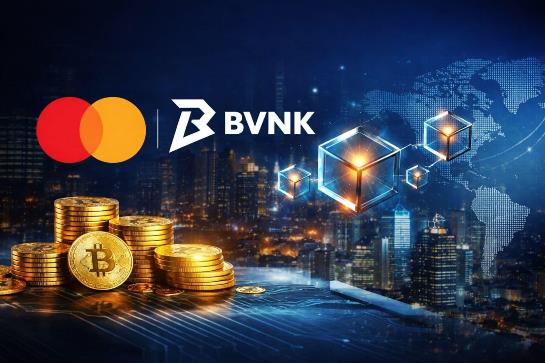
deVere Group’s CEO says acquisition confirms digital currency infrastructure is becoming core global payments infrastructure
Stablecoins have moved from the fringes of digital finance into the core of global payments infrastructure, according to Nigel Green, Chief Executive Officer of deVere Group, following Mastercard’s agreement to acquire London-based stablecoin infrastructure company BVNK in a deal worth up to $1.8 billion.
RELATED: Why regulators remain cautious as Stablecoins gain traction in Africa’s digital payments push
The transaction, which includes $300 million in performance-linked payments, represents Mastercard’s largest investment in digital currency infrastructure to date and the biggest stablecoin infrastructure acquisition on record, surpassing Stripe’s $1.1 billion acquisition of Bridge in 2024.


ALSO READ: Nigeria targets Africa’s digital asset leadership as regulators unite behind crypto, stablecoin growth
Green said the deal marks a significant institutional endorsement of stablecoins as permanent financial infrastructure rather than a speculative technology trend.
“Mastercard doesn’t make an acquisition like this on a hunch. This is one of the most conservative, risk-averse companies in global finance putting real capital behind stablecoins as permanent infrastructure, not a passing trend,” Green said.
Record Deal Signals Institutional Confidence
According to deVere Group, the scale of the acquisition demonstrates that Mastercard is acquiring a mature operating business rather than an experimental technology company.
Green noted that BVNK already processes approximately $30 billion in annualised payment volume, with transaction activity having more than doubled year-on-year.
“Mastercard is buying proven infrastructure with real transaction volume behind it, not a concept,” he added.
The acquisition is expected to strengthen Mastercard’s capabilities in digital settlement, cross-border payments and tokenised financial infrastructure.
Traditional Finance Shifts Its View on Stablecoins
Green argued that the deal reflects a broader change in attitude among established financial institutions toward digital currencies.
For years, major payments companies approached stablecoins cautiously because of regulatory uncertainty and concerns about financial stability. Mastercard’s decision to acquire BVNK outright, rather than pursue a partnership or build similar infrastructure internally, suggests the company views stablecoin technology as strategically important to the future of payments.
“What we’re watching now is the opposite. Mastercard chose to buy this capability outright rather than partner or build it internally, and that tells you how seriously it takes the competitive threat of standing still,” Green said.
Cross-Border Payments Seen as Key Growth Driver
Green identified cross-border business-to-business payments, remittances, settlement services and treasury operations as the principal commercial opportunities behind the acquisition.

These payment corridors remain expensive and relatively slow under traditional banking rails, creating a large addressable market for stablecoin-based infrastructure.
“These are unglamorous but enormous markets, and traditional rails moving money through them have stayed slow and expensive for years. Stablecoin infrastructure fixes that problem directly, and that’s where the real commercial value sits,” he said.
BVNK Already Embedded in Global Payments Network
BVNK operates across more than 130 countries and works with major payment companies including Worldpay and Visa Direct, indicating that stablecoin infrastructure is already integrated into mainstream payment ecosystems.
Green said Mastercard is buying into adoption that has already occurred rather than betting solely on future growth.
“This technology is already sitting inside some of the biggest names in global payments. Mastercard isn’t betting on future adoption. It’s buying into adoption that has already happened.”
Consolidation in Stablecoin Infrastructure Accelerates
Industry observers expect the acquisition to intensify consolidation across the stablecoin and digital payments sector.
Green noted that stablecoin-related transactions have increased steadily in recent years, with numerous strategic acquisitions announced across the payments, fintech and blockchain industries.
He suggested that Mastercard’s move could pressure other incumbent payment networks and financial institutions to secure comparable capabilities more quickly.
“Nobody wants to be the payments giant left without this capability,” he said.
Implications for Investors
Green argued that investors should begin treating digital currency infrastructure as a core component of the financial system rather than a niche, high-risk asset class.
He said the involvement of established global financial institutions with substantial balance sheets changes the investment case for stablecoin infrastructure.
“Digital currency infrastructure is no longer a fringe allocation for investors comfortable with high risk. It’s becoming a core part of how global payments actually function, backed by companies with decades of credibility and enormous balance sheets.”
He added that investors waiting for universal acceptance of stablecoin infrastructure may miss the period during which the greatest value creation occurs.
Why the Deal Matters
Analysts say the Mastercard-BVNK transaction highlights several important trends shaping global finance:
-
Stablecoins are increasingly being used for real-world payment and settlement functions.
-
Major payment networks are integrating blockchain-based infrastructure into existing systems.
-
Cross-border payment efficiency remains a major commercial opportunity.
-
Institutional adoption is accelerating faster than retail adoption in many markets.
-
Stablecoin infrastructure is emerging as a strategic layer of the global payments ecosystem.
The acquisition is widely viewed as yet another signal that digital asset infrastructure is becoming embedded within mainstream financial architecture. This shift carries significant implications for payment networks, banks, fintech firms, and investors worldwide.