By
By 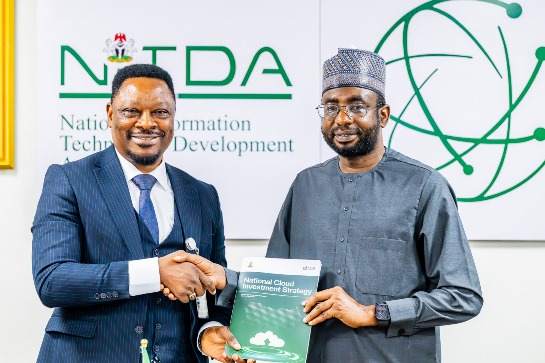

Signing of the NSCI, a flagship Federal Government programme coordinated by NITDA
New Regulatory Framework Seeks to Position Nigeria as West Africa’s Trusted Cloud Infrastructure Hub
The National Information Technology Development Agency (NITDA) has unveiled the National Sovereignty Cloud Initiative (NSCI) Regulatory Instruments, marking a major milestone in Nigeria’s drive to strengthen digital sovereignty, secure critical national data, expand indigenous cloud infrastructure and accelerate the country’s digital economy.
RELATED: NITDA calls for stronger government-industry collaboration to accelerate Nigeria’s digital economy
The launch represents one of the Federal Government’s most ambitious policy interventions aimed at ensuring that sensitive government and strategic national data remain within Nigeria’s jurisdiction while creating a trusted regulatory environment capable of attracting investment into local cloud infrastructure and digital services.


The NSCI, a flagship Federal Government programme coordinated by NITDA, introduces a comprehensive governance framework designed to establish technical standards, investment incentives, regulatory certainty and digital infrastructure assurance for Nigeria’s rapidly expanding cloud ecosystem.
Four Regulatory Instruments to Drive Nigeria’s Sovereign Cloud Vision
The initiative comprises four key regulatory instruments that will guide cloud adoption across the public and private sectors:
- National Computing Guideline
- National Cloud Technical Guideline
- National Digital Infrastructure Assurance Framework
- National Cloud Investment Strategy
Collectively, the instruments are expected to promote secure cloud adoption, strengthen cyber resilience, encourage local data hosting and stimulate investment in Nigerian cloud infrastructure.
Digital Sovereignty Critical to Nigeria’s Economic Future
Speaking during the unveiling ceremony in Abuja, the Director-General of NITDA, Kashifu Inuwa Abdullahi, described the initiative as a strategic foundation for protecting Nigeria’s digital future while unlocking new opportunities for innovation and economic growth.
According to him, the framework provides the regulatory certainty and technical standards required to build a trusted national cloud ecosystem.
“These instruments provide the regulatory certainty, technical standards and assurance framework required to build a trusted cloud ecosystem that safeguards Nigeria’s digital sovereignty while creating new opportunities for investment, innovation and sustainable economic growth.”
Abdullahi noted that Nigeria possesses the market size, digital talent and strategic location to become the preferred cloud services hub for West and Central Africa.
“We should position ourselves not to serve Nigeria alone, but to serve West and Central Africa. Nigeria is already the digital gateway to West Africa and can extend to every part of Africa. But we can only realise that goal when we build our infrastructure.”
He added that the launch marks the beginning of a broader national effort to build sovereign digital infrastructure capable of supporting government services, financial systems, businesses and emerging technologies.

The NITDA boss also commended members of the NSCI Technical Working Group and industry stakeholders whose collaboration resulted in the successful development of the regulatory instruments.
Federal Government Targets Local Data Hosting and Regulatory Compliance
Declaring the event open, the Permanent Secretary, Federal Ministry of Communications, Innovation and Digital Economy, Engr. Nadungu Gagare, said the NSCI demonstrates the Federal Government’s commitment to protecting Nigeria’s digital assets while expanding local cloud capacity.
According to him, ensuring that government data remains within Nigeria’s jurisdiction strengthens national security, regulatory compliance and public trust.
“By ensuring that government data remains strictly within national jurisdiction and under local operational control, we are guaranteeing data sovereignty and regulatory compliance.”
He explained that the initiative would stimulate investments in local cloud infrastructure, create employment opportunities, strengthen indigenous technology companies and encourage local innovation.
Gagare assured stakeholders that the Ministry would work closely with NITDA and other government agencies to ensure effective implementation of the initiative across Ministries, Departments and Agencies (MDAs).
CBN Backs Collaborative Digital Regulation
The Governor of the Central Bank of Nigeria (CBN), Dr. Olayemi Cardoso, also endorsed the initiative, describing institutional collaboration as essential to building a resilient digital economy.
Represented by the Director of the Payment System Supervision Department, Dr. Rakiya Opemi Yusuf, Cardoso said modern digital governance requires regulators to work together rather than in isolation.
He noted that while the CBN regulates Nigeria’s financial ecosystem, NITDA provides the national governance framework for digital infrastructure, cloud computing and assurance.
“These responsibilities are complementary, not competing. Together, they create a coherent national architecture.”
According to him, sustained collaboration between both institutions will strengthen Nigeria’s financial ecosystem while positioning the country as Africa’s trusted destination for digital finance and cloud innovation.
He reaffirmed the apex bank’s commitment to providing clear regulatory guidance, proportionate implementation and continuous engagement with industry stakeholders.
Galaxy Backbone Sees Major Boost for Indigenous Cloud Industry
Also speaking, the Managing Director and Chief Executive Officer of Galaxy Backbone Limited, Prof. Ibrahim Adeyanju, described the launch of the NSCI as timely, particularly following the Central Bank’s recent directive requiring banks and financial institutions to localise critical data.
He said the initiative would significantly strengthen Nigeria’s digital infrastructure ecosystem by encouraging investments in indigenous cloud services, creating employment opportunities and developing local technical expertise.
Adeyanju likened the potential impact of the initiative to the transformational effects of Nigeria’s telecommunications liberalisation, which attracted billions of dollars in investment and accelerated digital connectivity nationwide.
Governance Committee to Oversee Implementation
As part of implementation, NITDA announced plans to establish the Sovereign Cloud Governance Committee (SovGov) within the next two weeks.
The committee will comprise representatives from government institutions, sector regulators, industry associations and private sector stakeholders, with NITDA serving as its Secretariat.
The committee will coordinate implementation, promote compliance and oversee the execution of the National Sovereignty Cloud Initiative across critical sectors.
Why the National Sovereignty Cloud Initiative Matters
Industry experts believe the NSCI represents one of Nigeria’s most significant digital policy reforms in recent years.
Beyond protecting sensitive government data, the initiative is expected to:
- Strengthen Nigeria’s digital sovereignty by reducing dependence on foreign cloud infrastructure.
- Encourage investment in indigenous cloud data centres and digital infrastructure.
- Improve cybersecurity, resilience and regulatory compliance.
- Support emerging technologies including Artificial Intelligence (AI), fintech, GovTech and digital public infrastructure.
- Create high-value jobs across cloud engineering, cybersecurity and digital infrastructure management.
- Position Nigeria as a regional cloud services hub for West and Central Africa.
As governments worldwide increasingly prioritise data localisation and sovereign cloud infrastructure, Nigeria’s new framework places the country on a stronger footing to compete in Africa’s rapidly expanding digital economy while safeguarding national digital assets.