By
By 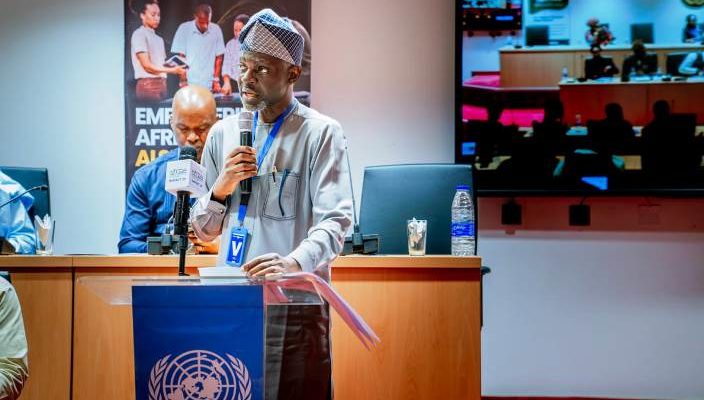
Agency says Nigeria is building a globally competitive AI ecosystem through strategic investments in digital infrastructure, talent development and responsible artificial intelligence adoption.
The National Information Technology Development Agency (NITDA) has reaffirmed Nigeria’s commitment to building an inclusive, innovation-driven Artificial Intelligence (AI) ecosystem as government officials, development partners and private sector stakeholders launched the ECOWAS Small Business Coalition (ESBC)-INNOPOWER Free MSMEs AI Master Trainer Programme in Abuja.
RELATED: NITDA calls for stronger government-industry collaboration to accelerate Nigeria’s digital economy
The programme, unveiled at the United Nations House, is designed to equip Micro, Small and Medium Enterprises (MSMEs) with practical artificial intelligence skills that will improve productivity, stimulate innovation and strengthen business competitiveness across Nigeria and the wider ECOWAS region.


Speaking during the launch, the Director General of NITDA, Kashifu Inuwa Abdullahi, described AI as a transformational technology that is already reshaping economies, industries and public institutions around the world.
Represented by the Director of Digital Development Services, Mr. Oladejo Olawunmi, Abdullahi said the initiative reflects a shared commitment to preparing Nigerian businesses for an increasingly AI-driven global economy.
AI No Longer the Future but Today’s Economic Driver
According to Abdullahi, artificial intelligence has evolved from an emerging technology into one of the most significant drivers of economic growth and digital transformation.
“Artificial Intelligence is no longer a technology of the future but a defining force of the present, reshaping economies, transforming industries and redefining how governments, businesses and societies create value,” he said.
He noted that the rapid evolution of AI presents Nigeria with a unique opportunity to emerge as a producer of globally relevant AI solutions rather than remaining solely a consumer of technologies developed elsewhere.
NITDA Driving Nigeria’s National AI Strategy
Abdullahi said NITDA is implementing Nigeria’s National Artificial Intelligence Strategy to accelerate AI adoption across critical sectors of the economy while ensuring responsible innovation.
According to him, the strategy focuses on:
- Developing AI infrastructure
- Building a world-class innovation ecosystem
- Accelerating AI adoption across key sectors
- Promoting responsible and trustworthy AI
- Establishing an effective AI governance framework
- Supporting indigenous AI research and development
He stressed that Nigeria has deliberately chosen to position itself among countries shaping the future of artificial intelligence.

“Nigeria has made a deliberate choice. Rather than remain a passive consumer of AI built elsewhere, we are building the foundations to become an active contributor to the global AI ecosystem,” he stated.
Investing in Indigenous AI and Digital Talent
The NITDA Director General highlighted several flagship initiatives designed to strengthen Nigeria’s AI capabilities and digital workforce.
These include:
- National Centre for Artificial Intelligence and Robotics (NCAIR)
- Nigeria AI Collective
- N-ATLAS Multilingual Large Language Model
- Digital Literacy for All (DL4ALL)
- 3 Million Technical Talent (3MTT) Programme
He explained that these initiatives are helping to build local AI expertise, develop indigenous technologies and prepare millions of Nigerians for opportunities within the digital economy.
Abdullahi also emphasized the importance of preserving indigenous languages within AI systems and expanding digital literacy to ensure inclusive participation in Nigeria’s digital transformation journey.
AI Holds Huge Potential for MSMEs
Highlighting the significance of the ECOWAS AI Master Trainer Programme, Abdullahi described Micro, Small and Medium Enterprises as the backbone of Nigeria’s economy.
He said AI adoption can significantly improve MSME productivity through automation, smarter business processes, enhanced customer engagement and wider market access.
According to him, empowering entrepreneurs with AI knowledge will improve business competitiveness while supporting sustainable economic growth.
Partnerships Key to Africa’s AI Future
Abdullahi stressed that Africa’s success in the AI era will depend less on technology itself and more on investments in human capital, institutions and strategic partnerships.
He noted that countries that dominate the AI economy will be those that invest in talent development, digital infrastructure and innovation ecosystems capable of supporting responsible AI deployment.
“The countries that lead the AI economy will not be those that consume the most AI solutions, but those that cultivate talent, build infrastructure and create ecosystems where innovation can flourish responsibly,” he said.
He commended INNOPOWER and the ECOWAS Small Business Coalition (ESBC) for creating a platform that brings together governments, businesses, innovators and development organisations to accelerate responsible AI adoption across West Africa.
ESBC Sees AI Training as Investment in Africa’s Human Capital
Earlier, the Regional President of the ECOWAS Small Business Coalition, Dr. Abdulrashid Yerima, described the AI Master Trainer Programme as a strategic investment in Africa’s human capital.
He said the initiative aims to equip trainers with practical AI competencies that can be transferred to entrepreneurs and small businesses across the region.
According to Yerima, strengthening AI capabilities among MSMEs will create quality jobs, expand economic opportunities and accelerate industrial development.
He called for stronger collaboration among governments, academia, financial institutions, development organisations and the private sector to build an AI-driven economy capable of enhancing Africa’s global competitiveness.
Building Africa’s AI Economy
NITDA reaffirmed its commitment to working closely with government institutions, academia, industry and development partners to build a resilient, inclusive and globally competitive artificial intelligence ecosystem.
Abdullahi concluded that Africa stands at a defining moment in its technological evolution and must seize the opportunity to become a creator of AI solutions capable of driving sustainable development and economic prosperity.
“History shows that every technological revolution reshapes the global balance of power. The nations that prosper are not always those with the greatest resources, but those with the foresight to invest in their people and build ecosystems that turn ideas into prosperity.”