By
By 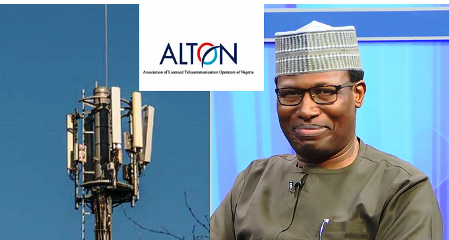
By Osadome, C.O
LCCI ICTEL EXPO 2026 spotlights telecommunications as the backbone of Nigeria’s digital economy and AI-driven future
Nigeria’s ability to compete in the global digital economy will increasingly depend on the strength, resilience and reach of its telecommunications infrastructure, according to the Chairman of the Association of Licensed Telecommunications Companies of Nigeria (ALTON), Gbenga Adebayo.
RELATED: NCC’s market-driven pricing attracts $1 billion telecom investment in 2025
Delivering the keynote address at the 12th Lagos Chamber of Commerce and Industry (LCCI) ICTEL EXPO 2026, Adebayo said telecommunications has evolved far beyond connecting people and has become the critical infrastructure powering investment, innovation, productivity and national economic growth.


ALSO READ: Telecom sector poised for greater investment and growth, says NCC boss
The annual technology conference, organised by the ICT Group of the Lagos Chamber of Commerce and Industry under the theme “Africa’s Next Tech Frontier: Building, Securing & Scaling Digital Prosperity,” brought together policymakers, telecom operators, technology companies, investors and other digital economy stakeholders to discuss Africa’s next phase of digital transformation.
Telecommunications now powers every sector of the economy
Adebayo stressed that digital connectivity has become as important as traditional infrastructure in determining a country’s economic competitiveness.
“The future competitiveness of Nigeria will depend not simply on the quality of our roads and ports, but equally on the quality, reach and resilience of our digital infrastructure,” he said.
According to him, virtually every sector—including banking, manufacturing, healthcare, agriculture, education, logistics, commerce and government services—now relies on robust telecommunications networks.
“Telecommunications is no longer simply about connecting people. It is about connecting opportunities, industries, innovation and investment,” Adebayo stated.
He noted that telecommunications has transformed from a communications utility into one of the country’s most strategic enablers of productivity, investment attraction and economic resilience.
Private investment remains critical to Nigeria’s digital future
Despite Nigeria’s position as one of Africa’s largest digital markets, Adebayo warned that the country’s enormous digital potential can only be realised through sustained private-sector investment.
He explained that telecommunications remains one of Nigeria’s most capital-intensive industries, requiring billions of dollars annually to expand fibre optic infrastructure, extend rural connectivity, deploy nationwide 5G services and prepare for emerging technologies.

Every kilometre of fibre laid, every telecommunications tower built, every base station deployed and every rural community connected requires significant long-term capital investment, he said.
However, attracting such investment depends largely on creating an enabling business environment supported by:
- Policy consistency
- Regulatory certainty
- Protection of telecom investments
- Faster Right-of-Way approvals
- Elimination of multiple taxation
- Protection against infrastructure vandalism
- Efficient approval processes for network deployment
According to Adebayo, every improvement in Nigeria’s investment climate directly translates into better digital infrastructure and improved connectivity for citizens and businesses.
Tariff reforms restoring investor confidence
The ALTON Chairman commended the Federal Government for approving telecommunications tariff adjustments in 2025, describing the decision as a turning point for industry sustainability.
He said the tariff review helped operators recover from severe financial pressures and restored investor confidence, enabling renewed capital investment and accelerated network expansion.
“I would like to acknowledge the Federal Government for the strategic tariff adjustment approved in 2025. That policy intervention played a pivotal role in restoring industry sustainability, enabling operators to move from a period of severe financial pressure to one of renewed capital reinvestment and network expansion,” he said.
Industry commits nearly ₦4 trillion to network expansion
Adebayo revealed that Nigeria’s telecommunications industry continues to demonstrate strong investment confidence despite prevailing macroeconomic challenges.
According to him, Mobile Network Operators (MNOs), tower companies and other industry players invested approximately ₦2.13 trillion in capital expenditure during 2025.
For 2026, operators have already planned an additional ₦1.86 trillion investment to:
- Expand broadband infrastructure
- Increase fibre deployment
- Modernise telecommunications networks
- Improve network resilience
- Enhance nationwide quality of service
- Support next-generation digital technologies
He noted that these investments underscore the sector’s commitment to building Nigeria’s digital economy despite economic headwinds.
ALTON seeks better telecom investment reporting
Adebayo observed that current national investment statistics do not adequately reflect the true level of investment flowing into Nigeria’s telecommunications industry.
He explained that a significant proportion of telecom investments are financed through retained earnings, domestic financing and alternative investment structures that are often excluded from conventional capital importation reports.
To address this gap, ALTON has proposed stronger collaboration among the Nigerian Communications Commission (NCC), the National Bureau of Statistics (NBS) and the Central Bank of Nigeria (CBN) to develop a more comprehensive telecommunications investment reporting framework.
According to him, improved transparency would strengthen investor confidence, provide policymakers with more accurate industry data and enhance Nigeria’s attractiveness as a preferred investment destination.
Reliable broadband is the foundation of the AI economy
Looking ahead, Adebayo said emerging technologies such as Artificial Intelligence (AI), cloud computing, fintech, e-commerce, digital media, Industry 4.0, precision agriculture and smart manufacturing all depend fundamentally on reliable broadband infrastructure.
“Without resilient telecommunications networks, there can be no meaningful AI economy. Without fibre infrastructure, there can be no digital industrialisation or sustainable digital transformation.”
He described telecommunications as the digital backbone upon which Nigeria’s future innovation ecosystem will be built.
Protection of telecom infrastructure remains a national priority
Adebayo also welcomed the Federal Government’s designation of telecommunications facilities as Critical National Information Infrastructure (CNII), describing the policy as timely and strategically important.
He said disruptions to telecommunications infrastructure result in significant economic losses, lower productivity and reduced investor confidence.
According to him, safeguarding telecom infrastructure should not be viewed solely as a government responsibility but as a shared national obligation involving regulators, operators, businesses, security agencies and host communities.
“Protecting telecommunications infrastructure requires a whole-of-society approach. Infrastructure protection must become a shared national responsibility,” he said.
Industry committed to transparency and improved customer experience
The ALTON Chairman reaffirmed the industry’s commitment to transparency, regulatory compliance and continuous improvement in customer experience.
He said telecommunications operators welcome constructive engagement, evidence-based policy discussions and effective regulatory oversight, noting that such collaboration ultimately strengthens public confidence and improves service delivery across the sector.