By
By 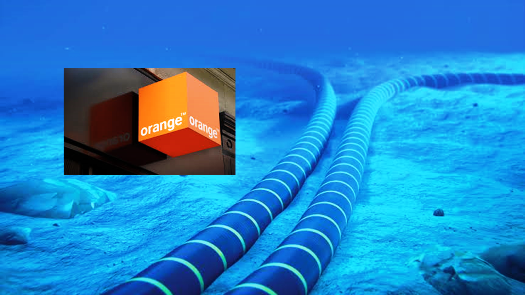
By Osasome, C.O
Orange Launches Via Africa to Reinforce Africa–Europe Connectivity
French telecommunications giant Orange has partnered with a consortium of regional digital operators to launch Via Africa, a 20,000-kilometre subsea cable project designed to connect Nigeria and nearly 20 other African countries directly to Europe via the Atlantic corridor.
RELATED: Internet outage strikes Sub-Saharan nations following undersea cable damage
The initiative comes in response to recent simultaneous undersea cable failures along the West African coast that triggered widespread internet outages, disrupting banks, businesses, fintech platforms, and telecom services across multiple countries.


ALSO READ: NCC, ALTON confirm undersea cable cuts disrupt data and voice services along African West Coast
A New Infrastructure Race for Africa’s Digital Economy
As Africa’s digital economy accelerates, Via Africa positions Nigeria at the heart of a new infrastructure race.
Rising demand for cloud computing, artificial intelligence, fintech services, streaming platforms, and digital public services has exposed the fragility of existing connectivity routes.
Via Africa is expected to rank among the continent’s largest subsea cable projects, significantly enhancing redundancy and long-term internet reliability across West Africa and beyond.
Key Details of the Via Africa Project
- Cable Length: Over 20,000 kilometres across the Atlantic Ocean
- Route: Direct Europe–West Africa connection
- Strategic Landing Points: Nigeria, Senegal, Guinea, Côte d’Ivoire, and Mauritania
- Timeline: Construction and route studies estimated at three to four years
- Consortium Members: Led by Orange Wholesale, with Sonatel, Orange Côte d’Ivoire, GUILAB, Canalink, International Mauritania Telecom, and Silverlinks
Nigeria is expected to be one of the most critical landing points due to its large internet user base and central role in Africa’s digital economy.
Why Via Africa Matters for Nigeria and West Africa
Eliminating Single Points of Failure
Nigeria already hosts eight submarine cables, the highest concentration in West Africa, but recent history has shown that shared marine routes create systemic risk.
Past incidents, such as undersea rockfalls near Abidjan that simultaneously damaged multiple cables, highlighted the dangers of route concentration. Via Africa is designed with entirely new subsea pathways to strengthen redundancy.
Stronger Physical Protection
The cable will integrate advanced physical reinforcement technologies to withstand deep-sea activity and ship anchor damage, which remain the leading causes of global cable disruptions.
Powering AI, Cloud and Data Growth
By injecting significant new bandwidth capacity, Via Africa aims to attract hyperscalers, international cloud providers, and data centre investors seeking scalable, low-latency infrastructure across Africa.
Supporting Broader Digital Transformation Goals
Announced during the Africa Forward Summit in Nairobi, the project aligns with Orange’s broader digital ecosystem strategy.
This includes commitments to train more than three million young Africans in digital skills by 2030 and expand Orange Digital Centres across Africa and the Middle East.
Nigeria’s Strategic Role in Africa’s Internet Backbone
Although Nigeria carries more than half of Africa’s international internet bandwidth, the country still faces challenges such as fibre cuts, vandalism, congestion, and power instability.
According to Orange, Via Africa is not just about adding capacity but creating alternative routes that ensure connectivity even when existing systems fail.
“You need different routes to make sure that when you have one or two cable cuts, you still have connectivity,” said Michaël Trabbia, CEO of Orange Wholesale.
Beyond Bandwidth: Building Long-Term Resilience
Africa currently has more than 77 active or planned subsea cable systems, yet international bandwidth remains concentrated in a few markets. Via Africa highlights how internet infrastructure is now a core component of economic strategy.
For Nigeria and West Africa, the value lies in resilience. Reliable connectivity is essential for banks, telecom operators, startups, public services, and the wider digital economy.
However, the cable’s full impact will depend on complementary investments in inland fibre networks, power supply, data regulation, and local cloud and data centre infrastructure.