By
By 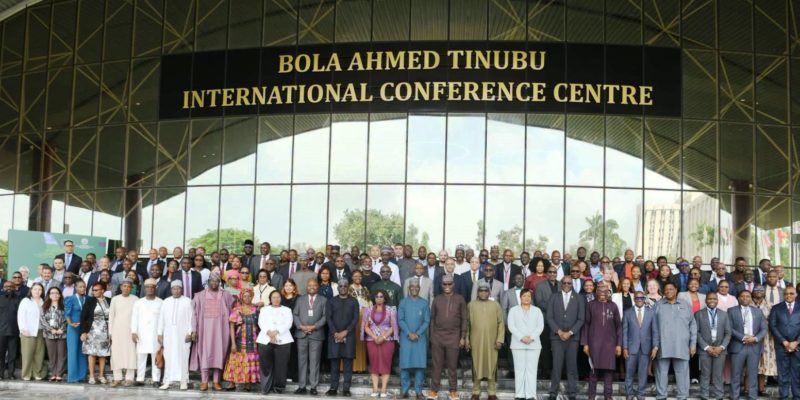
By Osasome, C.O
At ATU Plenipotentiary Conference, African leaders seek coordinated strategy to strengthen the continent’s influence in global telecommunications, artificial intelligence, digital policy and international technology governance.
Nigeria Leads Continental Call for Unified African Digital Voice Ahead of Global Telecom Elections
Nigeria has called on African nations to forge a united front and speak with one voice in shaping the future of global telecommunications, artificial intelligence (AI), digital governance and international technology policy.

RELATED: AfriLabs and ATU in Pan-African alliance to boost digital innovation
The call was made during the 7th Ordinary Session of the African Telecommunications Union (ATU) Conference of Plenipotentiaries held in Abuja, where policymakers, telecommunications regulators, government officials and industry leaders from across Africa gathered to develop a common continental strategy ahead of major international telecommunications elections and policy negotiations.
ALSO READ: EXECUTIVE NOTE – Leveraging technology for development: Building Africa’s digital powerhouse and accelerating Nigeria’s journey to a one trillion dollar economy
The conference comes at a pivotal moment as Africa seeks greater representation in global technology leadership institutions, including the forthcoming International Telecommunication Union (ITU) Plenipotentiary Conference 2026 (PP-26), where key decisions on global digital governance, spectrum management, connectivity, cybersecurity and emerging technologies will be made.
Africa Must Act Together to Shape the Digital Future, Nigeria Says
Representing Vice President Senator Kashim Shettima, the Deputy Chief of Staff to the President (Office of the Vice President), Senator Ibrahim Hassan Hadejia, said Africa’s long-term competitiveness will depend on deeper regional cooperation and collective action in the digital economy.
He observed that technologies such as broadband infrastructure, artificial intelligence, cloud computing, satellite communications and secure digital networks have become the backbone of modern economies, public administration and innovation.
According to him, no African nation, regardless of its economic size or technological advancement, can independently realise the continent’s digital aspirations.
“For Africa, this presents both an enormous opportunity and a profound responsibility. No single nation, regardless of its size or resources, can fully realise Africa’s digital ambitions in isolation. Our future depends on collaboration,” he said.
The Vice President stressed that African countries must coordinate efforts to expand broadband access, strengthen cybersecurity resilience, accelerate digital infrastructure development and promote responsible innovation that reflects Africa’s priorities.
Nigeria Champions African AI Innovation Through APLAS Initiative
Nigeria also used the conference to reinforce its ambition to become one of Africa’s leading innovation hubs.

Minister of Communications, Innovation and Digital Economy, Dr. Bosun Tijani, highlighted the launch of the African Public Large AI Systems (APLAS) Network, an initiative that builds on Nigeria’s National AI Language Systems (N-ATLAS) programme.
The initiative is designed to accelerate the development of African large language models (LLMs), promote indigenous AI innovation and ensure greater representation of African languages, cultures and local realities in next-generation artificial intelligence systems.
According to Tijani, Africa must move beyond being merely a consumer of emerging technologies to becoming an active creator, innovator and global contributor to AI development.
He emphasized that investing in locally developed AI models will strengthen digital sovereignty, preserve African languages and create technology solutions tailored to the continent’s unique socio-economic realities.
United African Position Critical to Global Telecom Leadership
Executive Vice Chairman and Chief Executive Officer of the Nigerian Communications Commission (NCC), Dr. Aminu Maida, described the conference as a strategic platform for forging continental consensus ahead of major global telecommunications engagements.
He noted that Africa’s influence within international institutions would be significantly enhanced if Member States coordinate their positions and collectively support African candidates seeking leadership roles.
“This is a very important moment for us in Nigeria, especially because of the elections coming up in which we will be contesting for some positions. As I mentioned during the opening ceremony, Africa’s unity in taking decisions is important as we move forward and secure our place in the telecommunications sector,” Maida said.
He reaffirmed Nigeria’s commitment to strengthening regional cooperation, expanding digital inclusion, accelerating broadband deployment and ensuring Africa plays a more influential role in global telecommunications governance.
According to Maida, greater collaboration among African administrations will help harmonise digital policies, strengthen technical cooperation and improve Africa’s negotiating power in international digital policy forums.
He expressed optimism that the conference would deliver:
- Stronger African alignment ahead of the ITU Plenipotentiary Conference 2026 (PP-26)
- Improved inter-conference collaboration among African telecommunications administrations
- Sustained technical participation in global telecommunications standard-setting processes
- Greater continental consensus on digital development priorities
ATU and ITU Back Stronger African Representation
Secretary-General of the African Telecommunications Union (ATU), John Omo, commended Nigeria for successfully hosting the conference and reaffirmed the importance of maintaining a unified African position in advancing continental digital development objectives.
He noted that stronger regional cooperation remains essential for accelerating telecommunications growth, digital inclusion and innovation across Africa.
Similarly, Secretary-General of the International Telecommunication Union (ITU), Doreen Bogdan-Martin, encouraged African countries to become active architects of the future digital economy rather than passive consumers of global technologies.
She urged African governments, regulators and technology stakeholders to increase their participation in developing future telecommunications standards, digital policies and emerging technologies.
Preparing Africa for ITU PP-26 Elections
A major focus of the Abuja conference was building continental consensus ahead of the 2026 ITU Plenipotentiary Conference (PP-26), where elections will be conducted for key leadership positions within the International Telecommunication Union.
The gathering also provided an opportunity for African Member States and candidates seeking election or re-election to present their priorities while securing regional support.
Participants agreed that Africa’s bargaining power and global influence would be significantly strengthened through a coordinated continental voting strategy and unified policy positions.
Why the Conference Matters for Africa’s Digital Future
Industry stakeholders believe the Abuja conference represents more than a routine telecommunications meeting.
Its outcomes could shape Africa’s digital future in several strategic areas, including:
Digital Sovereignty
A coordinated African voice can help ensure that global digital policies better reflect the continent’s developmental priorities and economic interests.
Artificial Intelligence Leadership
Greater investment in indigenous AI models could reduce dependence on foreign technologies while promoting African languages, cultures and local innovation.
Broadband Expansion
Regional cooperation can accelerate cross-border fibre infrastructure, satellite connectivity and universal broadband access.
Cybersecurity
Joint cybersecurity frameworks and information-sharing mechanisms will improve Africa’s resilience against increasingly sophisticated cyber threats.
International Influence
Speaking with one voice enhances Africa’s ability to influence global decisions on spectrum allocation, internet governance, AI regulation and telecommunications standards.
Digital Economy Growth
A harmonised regulatory environment can encourage investment, innovation and digital trade across African markets under the African Continental Free Trade Area (AfCFTA).
Nigeria Strengthens Leadership in Africa’s Digital Transformation
By hosting the 7th Ordinary Session of the African Telecommunications Union Conference of Plenipotentiaries, Nigeria has reinforced its position as one of Africa’s leading advocates for digital transformation, regional cooperation and technology-driven economic development.
The conference further underscores Nigeria’s growing leadership in promoting digital infrastructure, artificial intelligence, telecommunications innovation and collaborative policy frameworks aimed at positioning Africa as a stronger player in global digital governance.