By
By 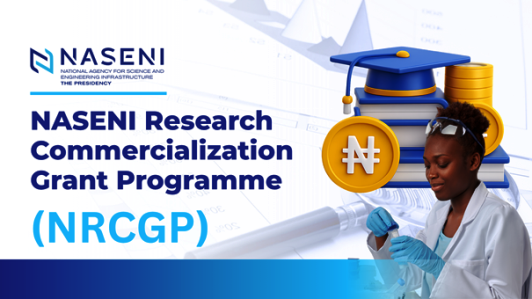
NASENI Shortlists 12 Innovations from 169 Research Proposals for Commercialisation Grants
The National Agency for Science and Engineering Infrastructure (NASENI) has shortlisted 12 innovative research projects from an initial pool of 169 proposals submitted by universities, polytechnics and research institutes across Nigeria’s six geopolitical zones under its flagship NASENI Research Commercialisation Grant Programme (NRCGP).
RELATED: LAUTECH and FUT Minna researchers showcase NASENI-funded innovations in Abuja
The initiative represents one of Nigeria’s most strategic efforts to transform research findings into commercially viable products, bridge the longstanding gap between academia and industry, and accelerate indigenous technology development capable of driving industrialisation, job creation and economic diversification.
The shortlisted innovations have now progressed to the due diligence stage, after which six projects will emerge as the inaugural grant beneficiaries.


169 Research Proposals Submitted Nationwide
Speaking on the latest edition of the NASENI Window Podcast, recorded at the Agency’s headquarters in Abuja, the Team Lead of the NRCGP and Deputy Director of Monitoring and Evaluation, Ms. Joy Elugbe, disclosed that the programme attracted 169 proposals from eligible higher institutions and research organisations across Nigeria.
The submissions came from universities, polytechnics and specialised research institutions located across the country’s six geopolitical zones, reflecting growing interest in research commercialisation and innovation-driven economic development.
According to Elugbe, the overwhelming response demonstrates the enormous reservoir of untapped research and technological innovations existing within Nigeria’s academic and research ecosystem.
Rigorous Evaluation Ensures Transparency and Quality
To ensure credibility, transparency and technical excellence throughout the selection process, NASENI constituted an independent evaluation panel comprising 21 professors with expertise spanning the Agency’s approved thematic areas.
Following an initial screening exercise, duplicate entries and proposals that failed to meet eligibility requirements were eliminated, reducing the number of submissions from 169 to 49.
The remaining proposals then underwent detailed technical assessment and commercial viability evaluation by NASENI’s Innovation Hub.
“The objective is not simply to fund research but to invest in innovations that can successfully reach the market and deliver real impact,” Elugbe explained.

12 Finalists Advance to Due Diligence Stage
Following the technical and commercial evaluation process, 12 proposals—two from each of Nigeria’s six geopolitical zones—have advanced to the final due diligence stage.
The Agency will now undertake detailed verification of the shortlisted innovations before selecting the final six beneficiaries for grant support.
The regional representation reflects NASENI’s commitment to promoting inclusive innovation and ensuring that commercially promising research from every part of Nigeria has an opportunity to compete on merit.
Transforming Research into Market-Ready Products
According to Elugbe, the NRCGP was established to solve one of Nigeria’s most persistent innovation challenges—the inability to convert valuable academic research into commercial products that create economic value.
For decades, numerous research breakthroughs developed in Nigerian universities and research institutes have remained confined to laboratories due to inadequate funding, weak industry linkages and limited commercial support.
She explained that the programme seeks to unlock the economic potential of these innovations by providing financial support and commercialization pathways.
“The idea behind the programme is to identify innovative and commercially viable research outputs that have remained on the shelves because of lack of funding, and provide the support needed to transform them into products that can impact the economy,” she said.
Supporting Nigeria’s Industrialisation Agenda
The programme is championed by NASENI’s Executive Vice Chairman and Chief Executive Officer, Mr. Khalil Suleiman Halilu, as part of the Agency’s broader strategy to stimulate indigenous technology development and strengthen Nigeria’s industrial base.
Successful projects are expected to:
- Accelerate local manufacturing
- Create sustainable employment opportunities
- Reduce dependence on imported technologies
- Strengthen Nigeria’s innovation ecosystem
- Support economic diversification
- Improve national industrial competitiveness
The initiative aligns with NASENI’s strategic objective of transforming scientific research into commercially sustainable enterprises capable of contributing to national economic growth.
Commercialisation Beyond Funding
Elugbe emphasised that the Agency’s support extends well beyond grant disbursement.
Beneficiaries will receive continuous technical mentoring through NASENI’s Innovation Hub, including:
- Commercialisation advisory services
- Product development support
- Market validation
- Business mentorship
- Technology refinement
- Industry partnerships
- Investor engagement
- Go-to-market strategy support
The comprehensive support model is designed to improve the likelihood that funded innovations will successfully transition from prototype stage to sustainable commercial products.
Nationwide Sensitisation Boosted Participation
To encourage wider participation, NASENI conducted extensive sensitisation campaigns across Nigeria’s six geopolitical zones following the launch of the application portal.
The outreach programme included stakeholder engagements, institutional visits and radio awareness campaigns designed to educate researchers about the programme’s objectives, eligibility requirements and application procedures.
According to Elugbe, the nationwide awareness initiative significantly improved both the number and quality of proposals received.
Advancing the ‘3Cs’ Strategy
The Research Commercialisation Grant Programme is anchored on NASENI’s strategic framework built around the Three Cs—Collaboration, Creation and Commercialisation.
Elugbe explained that innovation only achieves meaningful value when research outputs move beyond academic publications and laboratory experiments to become commercially successful products capable of solving societal problems.
She described commercialisation as the process of transforming research outcomes, inventions and technologies into profitable products and services that address real market needs while generating economic returns.
Driving Nigeria’s Innovation Economy
Launched in March 2025, the NASENI Research Commercialisation Grant Programme is a key component of the Federal Government’s broader efforts to strengthen Nigeria’s science, technology and innovation ecosystem under the Renewed Hope Agenda of President Bola Ahmed Tinubu.
Industry observers believe the initiative could significantly improve technology transfer between academia and industry, encourage applied research, attract private-sector investment in innovation and accelerate the emergence of globally competitive Nigerian technologies.
By supporting commercially viable research rather than academic outputs alone, NASENI is positioning innovation as a strategic driver of industrialisation, wealth creation and long-term economic transformation.