By
By 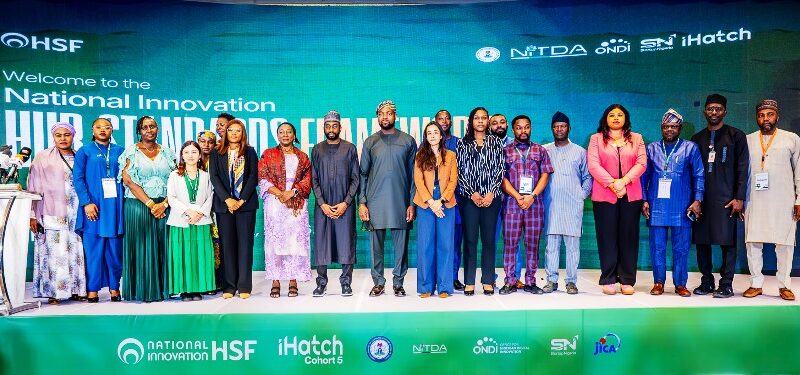
The Federal Government has called for increased investment in technology hubs, innovation spaces and ecosystem builders across Nigeria, describing them as critical infrastructure for nurturing talent, supporting entrepreneurs and accelerating the country’s digital economy.
RELATED: NITDA, Budget Office inaugurate committee to drive Nigeria’s sovereign cloud initiative
The call was made in Abuja at the National Innovation Hub Standards Framework Validation Workshop, where the Minister of Communications, Innovation and Digital Economy, Dr. Bosun Tijani, and the Director-General of the National Information Technology Development Agency (NITDA), Kashifu Inuwa Abdullahi, highlighted the need to strengthen the institutions and communities supporting Nigeria’s growing innovation ecosystem.
Innovation Hubs Key to Nigeria’s Digital Economy
Tijani said Nigeria could not build a diversified and prosperous economy without deliberate investment in the structures that enable innovation, entrepreneurship and technology development.


According to the minister, while successful startups often attract public attention, the innovation hubs, co-working spaces and ecosystem builders that provide the foundation for their growth are frequently overlooked.
He described innovation hubs as important meeting points where young people, entrepreneurs, creators and technology professionals can collaborate, build networks, access knowledge and transform ideas into viable businesses.
Drawing from his previous experience managing a technology hub, Tijani said Nigeria’s expanding technology ecosystem had benefited significantly from spaces that provide mentorship, knowledge, networks and other forms of support to entrepreneurs.
He stressed that greater investment in such ecosystems would enable more young Nigerians to develop solutions to local challenges while creating jobs and new economic opportunities.
Infrastructure Alone Will Not Drive Digital Transformation
The minister said the Federal Government was investing in critical digital infrastructure, including fibre-optic networks, telecommunications facilities, satellite connectivity, digital identity and cloud infrastructure.
However, he warned that infrastructure alone would not guarantee economic transformation without adequate investment in the people and institutions capable of turning technology infrastructure into commercially viable solutions.
Tijani said innovation hubs required stronger institutional and financial support to attract and retain skilled professionals and provide entrepreneurs with the environment needed to develop their ideas.

“Imagine if we had all the hubs in Nigeria at the same level of quality as the best hubs in the country. There would be more technology businesses, more innovation and better opportunities across the country,” he said.
He added that successful innovation ecosystems could create wider economic benefits through job creation, new businesses, tax revenues and increased private-sector activity.
Government Seeks to Decentralise Nigeria’s Innovation Ecosystem
The NITDA Director-General, Kashifu Inuwa Abdullahi, said the proposed National Innovation Hub Standards Framework was part of efforts to create a more structured and inclusive innovation ecosystem across Nigeria.
According to him, innovation activities remain heavily concentrated in Lagos, Abuja and a limited number of other states, despite the availability of talented young people and entrepreneurial potential across the country.
Abdullahi said research conducted by NITDA had identified more than 339 innovation hubs nationwide, although many are concentrated in Lagos, Abuja and about 10 other states.
He said the proposed framework would provide innovation hubs with a structured pathway for assessing their capabilities, identifying gaps and improving their level of maturity.
The framework, he explained, is not intended to impose rigid requirements on hub operators but to serve as a guide for strengthening their operations, services and institutional capacity.
“Innovation does not happen in isolation; it happens in an ecosystem. And that ecosystem does not happen by accident; it happens by design,” Abdullahi said.
NITDA Framework to Strengthen Innovation Hubs
Abdullahi said the proposed standards framework contains seven key dimensions and about 35 assessment categories that innovation hubs can use to evaluate their strengths and weaknesses.
The objective, he said, is to help hubs develop beyond basic training centres into stronger platforms for innovation, incubation, entrepreneurship and technology commercialisation.
He noted that many young Nigerians have the talent and entrepreneurial ambition needed to build successful businesses but often lack access to funding, mentorship, networks, infrastructure and other forms of support.
According to him, a functional innovation ecosystem requires collaboration among key stakeholders, including talented individuals, investors, large corporations, government institutions, universities and development partners.
The NITDA boss said the framework would encourage innovation ecosystems to develop around the unique economic opportunities and challenges of individual communities rather than attempting to replicate a single model across Nigeria.
Universities and Private Sector Urged to Play Bigger Roles
Abdullahi also called for stronger collaboration between universities and industry, arguing that higher institutions must become more active participants in Nigeria’s innovation ecosystem.
He said universities should strengthen research, entrepreneurship, digital skills development and partnerships with industry to enable students and researchers to translate ideas into practical solutions and businesses.
The NITDA DG added that the agency was working with the Federal Ministry of Education to integrate digital skills into formal education as part of efforts to prepare young Nigerians for opportunities in the digital economy.
He also emphasised the importance of private-sector participation, particularly in providing risk capital for startups and emerging technology businesses.
According to him, government alone cannot sustainably finance the growth of Nigeria’s innovation ecosystem, making private investment and stronger collaboration essential.
Building Innovation Beyond Lagos and Abuja
Both Tijani and Abdullahi stressed that Nigeria’s innovation potential should not be limited to major technology centres.
A stronger national network of innovation hubs, they argued, would enable communities across the country to harness local talent, develop solutions to local problems and create new economic opportunities.
The proposed National Innovation Hub Standards Framework is therefore expected to support efforts to improve the quality and sustainability of innovation hubs while reducing the pressure on young entrepreneurs to relocate to Lagos, Abuja or other major cities before accessing the resources needed to develop and scale their ideas.
As Nigeria pursues a technology-driven and diversified economy, the Federal Government is increasingly positioning innovation hubs as more than shared workspaces. They are emerging as critical infrastructure for talent development, entrepreneurship, research, investment and the creation of the next generation of Nigerian technology companies.