By
By 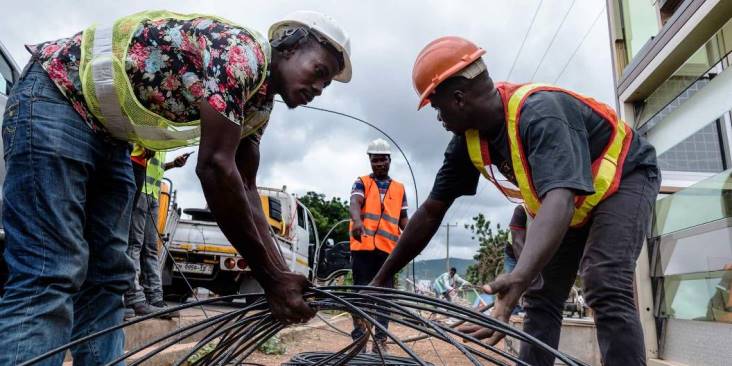
The Federal Government has announced that implementation of its ambitious 90,000-kilometre nationwide fibre-optic network project, known as Project BRIDGE, will begin in October 2026 after securing funding for the critical digital infrastructure initiative.
RELATED: Nigeria to channel $460m of World Bank loan into national fibre company for 90,000km broadband rollout
The project is expected to significantly expand Nigeria’s broadband backbone, improve connectivity in underserved communities and provide the infrastructure needed to support the country’s growing digital economy.
Minister of Communications, Innovation and Digital Economy, Dr Bosun Tijani, disclosed the October commencement date on Thursday in Abuja at the National Innovation Hub Standards Framework Workshop, where stakeholders gathered to validate proposed standards, assessment criteria and an implementation framework for innovation hubs across Nigeria.


Project BRIDGE to Expand Nigeria’s Fibre Backbone to 125,000km
Tijani said the Federal Government was investing in an additional 90,000 kilometres of fibre-optic infrastructure as part of efforts to deepen connectivity across the country.
According to the minister, the project has now secured the required funding and is set to move into its implementation phase.
“President Bola Tinubu approved that we must deepen connectivity and we’re investing in 90,000 kilometres of fibre optic network.
“By the time we are done, it’s going to be either the third or second longest fibre optic network on the African continent, somewhere between what we have in South Africa and Egypt. And this is a project that is starting implementation in October. We have raised the funding for it,” Tijani said.
The October timeline provides a clearer commencement date for Project BRIDGE — Building Resilient Digital Infrastructure for Growth — which had earlier been scheduled to begin implementation in the fourth quarter of 2026.
The initiative is designed to increase Nigeria’s existing fibre backbone from approximately 35,000 kilometres to about 125,000 kilometres through a public-private partnership model.
Development Partners Assemble Funding for Digital Infrastructure
Funding for Project BRIDGE has been assembled through support from multiple development finance institutions and international partners.

The World Bank approved $500 million in financing in October 2025, while the European Bank for Reconstruction and Development committed an additional $100 million, alongside a €22 million grant from the European Union.
In April 2026, the African Development Bank also approved $200 million for Nigeria’s Digital Value Chain Infrastructure for Boosting Employment project, which incorporates Project BRIDGE.
The financing package is expected to support the expansion of broadband infrastructure and provide a stronger foundation for digital services, businesses and technology-driven innovation.
Fibre, Towers, Satellites and Data Centres Form Nigeria’s Digital Infrastructure Strategy
Tijani said the fibre expansion project formed part of a broader government strategy to develop the foundational infrastructure required to support Nigeria’s digital transformation.
He noted that digital infrastructure had become increasingly important to productivity across major sectors, including agriculture, healthcare, education, financial services and commerce.
According to the minister, the government’s strategy is built around three interconnected layers.
The first focuses on foundational infrastructure, including fibre-optic networks, electricity, telecommunications towers, satellites and data centres.
The second layer involves digital platforms, including systems for digital identity and payments.
The third consists of innovators, entrepreneurs and businesses building services and solutions on top of the infrastructure and platforms.
The approach reflects the government’s effort to create an ecosystem in which infrastructure, digital public systems and private-sector innovation can reinforce one another.
Government Targets 3,700 Telecom Towers for Unconnected Communities
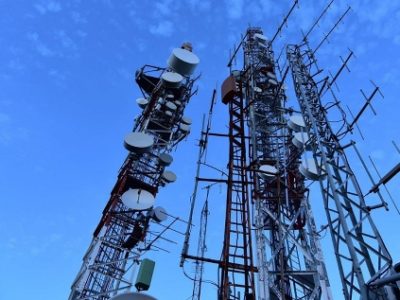
Beyond the nationwide fibre rollout, the Federal Government is also planning to deploy close to 3,700 telecommunications towers in communities that currently lack network coverage.
Tijani said more than 20 million Nigerians live in areas without access to telecommunications services.
“There are over 20 million of those people in this country today living in communities where there’s no access to telecommunications at all,” he said.
The planned tower deployment is expected to complement the fibre infrastructure programme and extend access to communities where connectivity remains limited or unavailable.
The minister also said Nigeria’s communications satellite would be renewed as part of efforts to provide connectivity in locations where conventional terrestrial infrastructure and telecommunications towers may be difficult to deploy.
Digital Infrastructure Linked to Nigeria’s $1 Trillion Economy Ambition
Tijani linked the government’s investment in digital infrastructure to Nigeria’s broader ambition of building a $1 trillion economy.
He argued that the country could not achieve sustained economic expansion by relying solely on oil and gas.
According to him, stronger digital infrastructure could support the creation and growth of technology companies capable of generating jobs, attracting investment and contributing to government revenues.
“The bigger our economy gets, the more jobs we create, the more taxes we’re able to capture, the more money we have available to deliver roles and services to our people,” he said.
Tijani pointed to technology companies such as Andela, Paystack and Flutterwave as examples of businesses demonstrating the potential of Nigeria’s innovation ecosystem.
The government’s broader strategy is therefore focused on creating the infrastructure and environment required for more technology-driven companies to emerge and scale.
NITDA Moves to Address Gaps in Nigeria’s Innovation Hub Ecosystem
Earlier at the workshop, Director-General of the National Information Technology Development Agency (NITDA), Kashifu Inuwa Abdullahi, said the proposed National Innovation Hub Standards Framework was designed to address disparities in the quality and distribution of innovation hubs across Nigeria.
According to Abdullahi, research identified more than 339 innovation hubs nationwide.
However, the hubs remain heavily concentrated in Lagos, Abuja and a limited number of other states, highlighting the uneven development of Nigeria’s innovation ecosystem.
The proposed standards framework is expected to provide clearer assessment criteria and implementation guidelines for innovation hubs, potentially helping to improve their quality, sustainability and geographical spread.
Project BRIDGE Signals Nigeria’s Push for Universal Digital Connectivity
The planned October commencement of Project BRIDGE represents a significant step in Nigeria’s effort to address persistent gaps in broadband and telecommunications infrastructure.
With an additional 90,000 kilometres of fibre planned, thousands of new telecom towers proposed and satellite infrastructure expected to complement terrestrial networks, the government is pursuing a multi-layered approach to expanding connectivity.
The success of the programme will depend on effective implementation, coordination between public and private-sector partners and the ability to ensure that new infrastructure translates into affordable and reliable digital access for businesses and communities.
For Nigeria’s fast-growing technology ecosystem, Project BRIDGE could provide the physical backbone needed to support everything from digital financial services and artificial intelligence to e-commerce, online education, healthcare and next-generation startups.