By
By 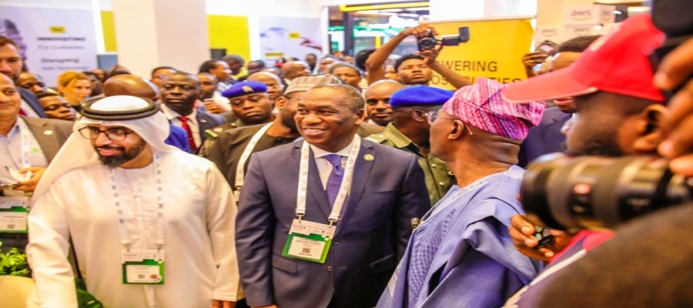
Africa’s banking and financial services sector is entering a new phase of digital transformation, with the continent’s digital payments economy projected to reach US$1.5 trillion by 2030.
RELATED:
Against this backdrop, FDX by GITEX will make its debut at GITEX Nigeria 2026, bringing together policymakers, regulators, institutional investors, banks, technology companies and high-growth startups to explore the infrastructure, capital and innovation required to shape Africa’s next financial frontier.


The platform will focus on expanding financial inclusion, modernising financial infrastructure, accelerating cross-border commerce and strengthening collaboration between governments, investors and technology innovators.
GITEX Nigeria 2026 Returns Across Abuja and Lagos
Held under the patronage of President Bola Ahmed Tinubu, GITEX Nigeria is billed as West Africa’s largest technology, artificial intelligence and startup event.
The second edition will take place across Abuja and Lagos from August 31 to September 3, 2026.
Supported by the Federal Ministry of Communications, Innovation and Digital Economy in collaboration with the National Information Technology Development Agency, NITDA, the event is endorsed by the Lagos State Government and organised by KAOUN International, the global organiser of GITEX events.
FDX by GITEX will hold at the Landmark Centre, Lagos, on September 3, focusing specifically on the forces reshaping banking, payments, capital markets, digital assets and financial infrastructure across Africa.
The platform will bring together public-sector leaders and private-sector players to examine how finance, technology and policy can work together to unlock broader economic participation.
Lagos Positions Itself for Africa’s Digital Finance Future
Deputy Governor of Lagos State, Dr Kadri Obafemi Hamzat, said Lagos remained committed to building a modern, technology-driven financial ecosystem capable of expanding opportunities and financial access.
According to him, FDX by GITEX provides an important platform for developing forward-looking policies and accelerating innovation in the financial sector.
“As the commercial and innovation engine of West Africa, Lagos is committed to building a modern, tech-driven financial ecosystem that leaves no one behind,” Hamzat said.
He added that aligning banking and finance policies with modern digital infrastructure could help deepen financial inclusion, facilitate cross-border trade and create sustainable economic value.
Hamzat also linked the development of Nigeria’s digital finance ecosystem to the country’s broader ambition of building a US$1 trillion economy.
FDX by GITEX to Connect Policy with Institutional Capital
Beyond technology and innovation, the platform will also focus on one of Africa’s most pressing economic challenges: mobilising long-term capital for infrastructure, businesses and strategic sectors.
Ahead of his keynote address, the Managing Director and Chief Executive Officer of the Ministry of Finance Incorporated, MOFI, Dr Armstrong Ume Takang, said achieving Nigeria’s US$1 trillion economic ambition would require more than policy declarations.
He said the country must effectively mobilise institutional capital and direct investment towards high-impact sectors.
“At MOFI, we aim to professionalise the management of government-owned assets while pursuing a long-term vision to build a ₦100 trillion portfolio that can catalyse investment, strengthen strategic sectors, and create sustainable national value,” Takang said.
According to him, FDX by GITEX provides an opportunity for policymakers, investors and innovators to build partnerships capable of accelerating Nigeria’s economic transformation and strengthening its position as a financial and investment hub.
Digital Assets, AI and Capital Markets Take Centre Stage
FDX by GITEX will examine several of the technologies and policy issues shaping the future of finance in Africa and other emerging markets.
Key discussions will cover intelligent payments, digital assets, decentralised finance, institutional capital, financial infrastructure, digital identity, cross-border payments, trust, regulatory compliance and financial inclusion.
Among the headline sessions is “Access to Real World Assets and the Rewiring of Capital Markets in Africa,” which will examine how African economies can connect underlying assets and pools of capital with investable markets to unlock new value and broaden participation.
Another session, “Trust by Design: Navigating the Security Paradoxes Holding Back Digital Assets and CBDCs,” will focus on the challenge of balancing innovation, security and public confidence as digital assets and central bank digital currencies move closer to mainstream implementation.
Confirmed speakers include Jean Kambuni, Deputy Director of Capital Markets at the Nairobi International Financial Centre in Kenya; Erwin Anet N’guetta, Chief Digital Officer for Operational Excellence, Digital Transformation and Innovation at the National Bank of Investment in Côte d’Ivoire; and Henry Amadiegwu, Chief Information Officer at Zenith Bank UK.
Modern Infrastructure Critical to Africa’s Financial Transformation
Amadiegwu said Africa’s transition towards a more inclusive digital financial future would depend heavily on the intelligent deployment of artificial intelligence, automation and modern technology infrastructure.
He said the continent must also ensure that innovation is supported by strong security, resilience and regulatory compliance.
“As Africa advances towards a more inclusive digital financial future, the intelligent use of AI, automation, modern infrastructure, and technological integration will be critical to building agile, secure, resilient, and compliant-by-design ecosystems,” he said.
According to him, the objective should not simply be to deploy technology for its own sake but to ensure that next-generation financial systems deliver greater access and sustainable value for businesses and individuals across Africa.
Mastercard to Showcase Cross-Border Payment Solutions
Global technology company Mastercard will also participate in GITEX Nigeria, showcasing solutions designed to improve payment acceptance, reduce friction in cross-border transactions and expand financial access.
Among the solutions expected to feature is Mastercard Move, which connects more than 200 countries and territories across over 150 currencies to support cross-border payments.
The company will also showcase digital payment acceptance technologies, including Tap on Phone, QR-on-Card and Pay by Link.
Dr Folasade Femi-Lawal, Country Manager for West Africa at Mastercard, said Nigeria’s growing technology ecosystem made it an important market for collaboration around digital transformation.
“Nigeria is one of Africa’s most dynamic technology and innovation ecosystems, and GITEX NIGERIA is an important platform for bringing together public and private sector leaders to shape the future of digital transformation across the region,” she said.
She added that trusted technology, secure infrastructure and stronger public-private collaboration would be essential to unlocking inclusive growth.
Banks, Fintechs and Digital Finance Companies Join GITEX Nigeria
The financial technology and digital banking ecosystem will also be represented by exhibitors including BMONI, Edge Penny, GOSAR, Monica Technologies, Moove Payment, Raenest Technology Services and Softgem.
Their participation reflects the growing convergence between traditional financial institutions, fintech companies, payment platforms, technology startups and digital infrastructure providers.
As Africa’s digital economy expands, the boundaries separating banking, payments, technology and capital markets are becoming increasingly blurred.
The emergence of platforms such as FDX by GITEX reflects this shift, creating a forum where the institutions controlling capital and regulation can engage directly with the entrepreneurs and technology companies building the next generation of financial services.
FDX by GITEX and Africa’s Next Financial Frontier
With digital payments, AI, blockchain-based assets, cross-border commerce and digital identity reshaping financial services, Africa faces an opportunity to build financial infrastructure suited to the realities of a rapidly digitising economy.
However, technology alone may not be enough.
The discussions at FDX by GITEX are expected to highlight the importance of complementary investments in infrastructure, cybersecurity, regulatory frameworks, institutional capital and consumer trust.
By bringing together governments, regulators, investors, banks, fintech companies and startups, the platform aims to move conversations beyond innovation rhetoric towards practical partnerships and investments.
As Nigeria seeks to deepen its role as a regional technology and financial centre, FDX by GITEX could become an important meeting point for the people and institutions shaping how capital, technology and financial services evolve across Africa.