By
By 
AI and IoT Take Centre Stage in Lagos Traffic Management
The Lagos Metropolitan Area Transport Authority (LAMATA) has begun deploying artificial intelligence (AI)–powered traffic management systems across key corridors in Lagos to reduce congestion, improve traffic flow, and enhance road safety.
RELATED: Lagos deploys drones to revolutionize traffic management and public safety
The initiative uses cameras, sensors, and AI-driven analytics to monitor traffic conditions. It dynamically adjusts traffic light timings in real time based on vehicle volume. The system also enables automated detection of traffic violations.
Smart Traffic Infrastructure for Real-Time Response
Selected corridors are already receiving smart traffic infrastructure that responds instantly to traffic demand, according to LAMATA. The system uses cameras, sensors, GPS, and RFID technology to prioritise public transport at intersections and optimise traffic flow.


According to the agency, data generated from the system will support traffic planning, forecasting, and long-term transport investment decisions. It will also enable AI tools to predict future traffic patterns.
Insights from IoT West Africa Conference
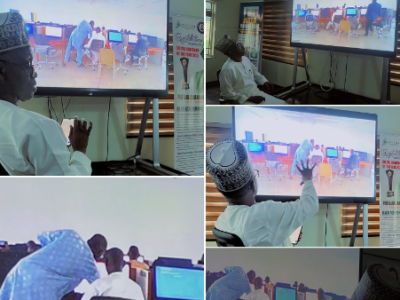
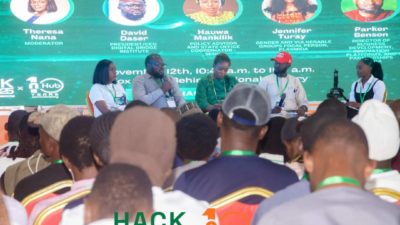
Speaking during a panel session at the IoT West Africa Conference and Data Centre Cloud Expo held at the Landmark Event Centre, Lagos, Mr. Adeyemi Adeniji, Technical Adviser, Public Transport Roads at LAMATA, said implementation of the AI-driven system is already underway to address long-standing coordination challenges.
The panel session, themed “AI-Enhanced Mobility: Revolutionising Nigeria’s Urban Transport with IoT Integration,” brought together experts from the transport, infrastructure, and technology sectors.
AI-Driven Enforcement and Solar-Powered Expansion
Adeniji explained that smart enforcement tools are being deployed alongside the traffic control systems to automatically detect speeding and other traffic violations, transmitting incidents to control centres in real time.
He added that the infrastructure would be deployed in phases and powered by solar energy, ensuring sustainability while enabling gradual scale-up as system integration improves.
Stakeholders Call for Better Coordination
Also speaking at the event, Ms. Hadiza Adukonu, Vice President, Opportunity Maturation and New Ventures at Oando Clean Energy, said the biggest obstacle to AI-driven urban mobility in Nigeria is not technology availability but weak coordination among stakeholders.
She noted that fragmented implementation across agencies and transport modes continues to limit the full impact of AI and Internet of Things (IoT) solutions, stressing that infrastructure, policy, and technology alignment is critical for success.

Data-Driven Mobility for Smarter Cities
Another panelist, Mr. Najeeb Abdussalam, Managing Director of Trust Synergy Infrastructure Ltd., explained that AI-powered IoT sensors installed at junctions would enable real-time traffic analysis and automated signal timing.
He said the system would reduce delays, predict congestion, guide motorists to alternative routes, and significantly improve overall traffic efficiency, while generating actionable data for urban transport planning.
Aligning with Lagos Transport Master Plan
The AI traffic initiative aligns with the Lagos State Strategic Transport Master Plan. This blueprint seeks to build a digitally enabled, safe, and efficient transport ecosystem across the Lagos State. The programme is expected to reduce reliance on manual traffic management. It will also position Lagos as a leading smart mobility hub in Africa.
Key Features of LAMATA’s AI Traffic Initiative
- Intelligent Monitoring: Integration of sensors, cameras, GPS, and RFID
- Dynamic Signal Control: Real-time traffic light adjustment based on vehicle flow
- Public Transport Priority: Faster movement for buses at intersections
- Smart Enforcement: Automated detection of traffic violations
- Phased Rollout: Solar-powered deployment starting with critical corridors