By
By 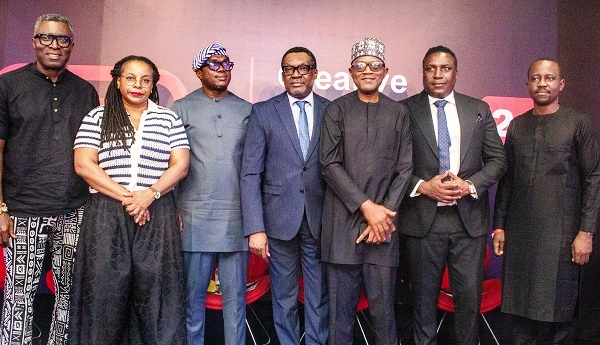
Nigeria’s creative economy must move beyond the celebration of talent and build stronger structures for financing, skills development, intellectual property protection and distribution if the sector is to realise its full economic potential, stakeholders have said.
RELATED: Malaysian investors target $500m deal flow at Lagos WIEG investment summit focused on SMEs, creative economy
The call was made at the second edition of the QEDNG Creative Powerhouse Summit, organised by Mighty Media Plus Network Limited, publishers of QEDNG, in Lagos.
ALSO READ: NITDA deepens digital support for Nigeria’s $9bn creative economy, targets global competitiveness
The summit brought together filmmakers, musicians, content creators, journalists, business leaders, government representatives, and other industry stakeholders.
Together, they examined the critical infrastructure, funding mechanisms, skills development, intellectual property frameworks, and platforms required to grow Nigeria’s creative sector. The overarching goal was to chart a path toward building a sustainable and globally competitive Nigerian creative economy.
Talent Alone Cannot Sustain Nigeria’s Creative Economy
Publisher of QEDNG and convener of the summit, Olumide Iyanda, said Nigeria’s creative sector was rich in talent. But it lacked some of the institutional and structural support required to help creatives build sustainable careers and businesses.
Reflecting on his experience in the industry, Iyanda said he had witnessed talented creatives emerge with significant potential. But many of them have had to struggle because the structures required to support their growth were inadequate.
“I have been around this industry long enough to see talent sprout. I’ve also regrettably seen some of them wither before they could bloom,” Iyanda said.
According to him, the challenge was not necessarily a lack of ambition among Nigerian creatives but the absence of an adequate institutional and structural backbone.
He called for stronger Nigerian platforms capable of supporting, showcasing and distributing local creative works, arguing that the stories Nigerians tell about themselves should become part of the country’s wider national conversation.
Creative Economy Requires Infrastructure, Capital and IP Protection
Representing the chairman of the summit, Demola Aladekomo, managing director of SmartCity Plc, Gabriel Ukachukwu, said Nigeria needed to develop an ecosystem around creativity rather than depend on individual talent.
He identified infrastructure, capital, intellectual property protection, skills, distribution, technology and viable business models as essential components of a functioning creative economy.

“A creative economy requires infrastructure. It requires capital. It requires intellectual protection. It requires skills. It requires distribution. It requires technology. It requires serious business models,” Ukachukwu said.
He argued that the global importance of the creative economy had grown to a point where countries could no longer afford to leave its development to chance.
Citing a United Nations trade and investment estimate, Ukachukwu said global exports of creative services reached $1.7 trillion in 2024, underscoring the economic significance of the sector.
He said Nigeria must confront three fundamental questions: how to transform talent into enterprise, how to finance creative businesses, and how to protect and monetise intellectual property.
“Talent without structure is just a hustle,” he said.
iDICE: Nigeria Must Turn Creative Talent Into Economic Value
Delivering the keynote address, National Coordinator of the Investment in Digital and Creative Enterprises (iDICE), Ife Adebayo, said Nigeria possessed enormous creative talent and cultural influence but needed stronger systems to convert those assets into economic value.
Adebayo used the 1986 American film Top Gun to demonstrate how creative works can influence national image and even generate tangible economic outcomes.
The film, which portrayed United States Navy fighter pilots, was followed by a reported increase in applications to join the US Navy. According to Adebayo, this illustartes the power of storytelling to influence public perception and behaviour.
“Think about that. The most powerful military on earth, with the largest budget in human history, confessing that its most effective recruiter was not a weapon, was not a general, was not a budget line. It was a story. It was culture,” he said.
Adebayo challenged Nigeria to consider the untapped potential of its creative industries. He urged the country to imagine what its film, music, fashion, comedy, and animation sectors could achieve if deliberately developed. The goal, he argued, would be to transform these industries into powerful instruments of cultural influence and economic strength.
Nigeria Risks Losing Its Stories
Adebayo also warned that Nigeria was paying a price for leaving important national stories untold.
He recalled the death of a military officer, whom he identified as his godfather, S.K. Umaru, who died in an improvised explosive device blast while fighting insurgents in 2014.
“What stays with me most is that this story has never been told,” he said, adding that Umaru was among thousands of Nigerians who had fought and continued to fight for the country.
For Adebayo, the creative economy is therefore not simply about entertainment. It is also a vehicle through which Nigeria can document its history, shape its identity and influence how the country is perceived globally.
Nigeria Needs Stronger Creative Economy Structures
Adebayo said Nigeria’s creative economy currently contributes about 1.2 per cent of GDP, compared with close to three per cent in South Africa, which he attributed partly to stronger structures around the country’s creative industries.
“The difference is that they count it, they structure it, they finance it. We have the louder voice; they build the microphone, provide a better infrastructure, supported with better policies,” he said.
He also pointed to South Korea’s deliberate investment in cultural exports as another example of how a country can use creative industries to extend its global influence.
From Korean music to film and television, Adebayo said South Korea demonstrated the economic and geopolitical value that could emerge when creativity is supported by deliberate policy, investment and infrastructure.
Skills Gap Threatens Nigeria’s Creative Ambitions
The iDICE coordinator identified skills, capital and structure as major weaknesses in Nigeria’s creative economy.
He pointed to shortages in areas including cinematography, product management and animation, while noting that access to professional equipment and expertise remains expensive for many Nigerian creatives.
He also highlighted the financing constraints facing the film industry.
“The average Nollywood film has historically been made on a budget a fraction of what a single day costs a serious studio abroad. A great script in this country does not die because it is bad; it dies because it is broke,” Adebayo said.
He argued that Nigeria needed stronger intellectual property protection and clearer pathways through which creative ideas could be converted into bankable businesses.
iDICE Announces Creative and Digital Financing Opportunities
Adebayo disclosed that the iDICE programme had established a $45 million debt fund and a $65 million Islamic finance facility, alongside equity options intended to attract additional private and international investment into Nigeria’s technology and creative sectors.
He urged financial institutions to recognise creative businesses as legitimate investment opportunities rather than informal ventures.
“To the financiers in the room and every institution, we should stop treating film like a personal loan and start treating it like the asset class that it has become everywhere else on earth,” he said.
He also challenged corporate Nigeria to move beyond sponsoring creative events and commit capital directly to the sector.
“Do not just sponsor the summit; fund the sector,” Adebayo said.
Government Must Strengthen Intellectual Property Protection
According to Adebayo, government also has a critical role to play in creating an environment where creative businesses can thrive.
He called for stronger intellectual property protection and policies that can respond more quickly to changes in the creative economy.
He also urged Nigerian creatives to continue telling local stories, stressing that the industry has the capacity to shape how Nigeria is understood both domestically and internationally.
“The next chapter of Nigeria will not be written by the government alone, nor will it be written by the private sector alone,” he said.
Adebayo said the next phase of Nigeria’s development would require creators, financiers, policymakers and entrepreneurs to work together. This is critical to ensuring the country’s stories are not left untold or its creative potential unfunded.
Industry Leaders Debate the Future of Nigeria’s Creative Economy
The summit featured two panel discussions focused on the challenges and opportunities confronting Nigeria’s creative industries.
The first panel, titled “Building Tomorrow’s Creative Economy Today,” featured Steve Babaeko, chief executive officer of X3M Ideas; Dr Olamide Okulaja, technical adviser at the Lagos State Ministry of Commerce, Cooperatives, Trade and Investment; Anwuli Ojogwu, co-founder and chief executive officer of Narrative Landscape Press; and Yibo Koko, director general and chief executive officer of the Rivers State Tourism Development Agency.
The session was moderated by Steve Ayorinde, former Lagos State commissioner for tourism, arts and culture.
The second panel, “What Creatives Need for Nigeria,” featured veteran actress Joke Silva, president of Women in Film and TV Nigeria; Efe Omorogbe, founder of Buckwyld Media Network; content creator Oluwabukunmi Adeaga-Ilori, popularly known as Kiekie; and technology and finance content creator Fisayo Fosudo.
Funke Treasure moderated the session.
QEDNG Summit Brings Creative Industry Stakeholders Together
The event was hosted by Gbenga Adeyinka and featured a special musical performance by saxophonist Temilayo Abodunrin.
Resource persons at the summit also received plaques in recognition of their contributions.
The summit was supported by FirstBank, NLNG, Zenith Bank, Fidelity Bank, The Africa Soft Power Group, Lagos State Internal Revenue Service and Polaris Bank.
The second QEDNG Creative Powerhouse Summit builds on the inaugural edition held on August 12, 2025, which focused on “Financing as Catalyst for a Thriving Creative Economy.”
The latest edition has expanded the conversation from financing alone to the broader ecosystem required to transform Nigeria’s vast creative talent into sustainable businesses, globally competitive intellectual property and a stronger contributor to national economic development.