By
By 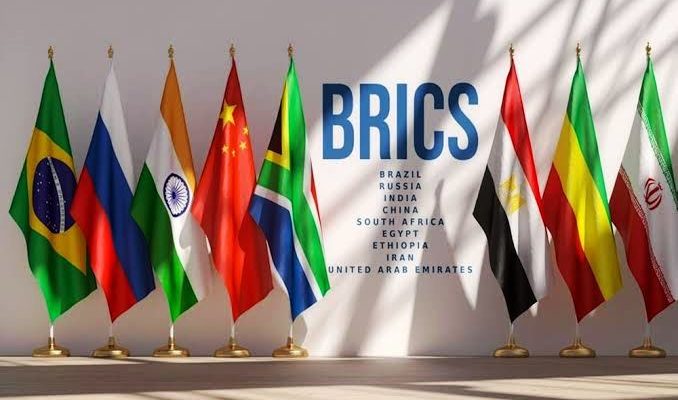
BRICS member countries are exploring the possibility of linking their national instant payment platforms and central bank digital currencies (CBDCs) as the bloc intensifies efforts to make cross-border transactions faster, cheaper and more efficient.
RELATED: Africa at the digital crossroads – Why Ghana must lead a sovereign AI future
The initiative is part of broader discussions on financial integration among BRICS economies, with members examining how their increasingly digital financial infrastructures could work together despite differences in currencies, regulations and payment systems.
BRICS Eyes Digital Infrastructure for Cross-Border Payments
Governor of the Reserve Bank of India (RBI), Sanjay Malhotra, disclosed the development as BRICS countries continue discussions on strengthening financial cooperation.


His comments, reported by Brazilian media and relayed by TV BRICS, a partner of the News Agency of Nigeria (NAN), indicate that improving cross-border payments has become a key priority for the group.
“Cross-border payments are of interest to all of us, including the BRICS countries, as we believe there is great potential here for reducing costs,” Malhotra said.
According to the RBI governor, discussions are focused on identifying ways to improve the efficiency of international payments while bringing financial systems that currently operate independently closer together.
However, BRICS countries have not yet agreed on a specific model for connecting their payment platforms, while no implementation timetable has been established.
CBDC Integration Still at Exploratory Stage
The proposed integration remains at an exploratory stage, with technical specifications for any potential shared financial infrastructure still under discussion.
The RBI had previously recommended that the integration of central bank digital currencies be placed on the agenda of the 2026 BRICS Summit.
India is chairing BRICS in 2026 and is hosting the bloc’s annual meeting, giving New Delhi an opportunity to advance discussions around digital financial infrastructure and the future of international payments.

A successful framework could potentially enable participating countries to settle transactions more directly through their domestic payment systems, reducing dependence on traditional cross-border payment channels.
India Pushes Greater Use of National Currencies
The discussions also form part of India’s broader efforts to expand the international use of the Indian rupee and encourage greater use of national currencies in international trade.
Malhotra said the RBI would continue working towards increasing the international use of the rupee while supporting arrangements that enable national currencies to play a greater role in cross-border payments.
Greater use of local currencies could reduce reliance on traditional payment mechanisms and potentially lower transaction costs for trade between BRICS economies.
Different Financial Systems Pose Integration Challenges
Despite the potential benefits, connecting the payment systems of BRICS countries would present significant technical and regulatory challenges.
The bloc’s members operate different banking systems, currencies, regulatory regimes and monetary policy frameworks. Any shared infrastructure would therefore require substantial coordination among central banks, financial regulators and payment-system operators.
Countries would need to address issues including interoperability, cybersecurity, settlement mechanisms, data governance, regulatory compliance and monetary policy implications before a fully integrated system could become operational.
BRICS’ Expanding Digital Finance Agenda
BRICS currently comprises Brazil, Russia, India, China, South Africa, Egypt, the United Arab Emirates, Ethiopia, Indonesia and Iran.
The exploration of interconnected instant payment systems and CBDCs represents another step in the bloc’s broader effort to strengthen financial cooperation and facilitate trade among member countries.
For businesses and consumers, greater interoperability between national payment systems could eventually mean faster and less expensive international transactions.
For BRICS governments and central banks, however, the more fundamental challenge will be developing a common technological and regulatory architecture that allows different national financial systems to interact without compromising monetary sovereignty or financial stability.