By
By 
Nigeria’s Youth Advantage Can Drive Global Competitiveness – NITDA
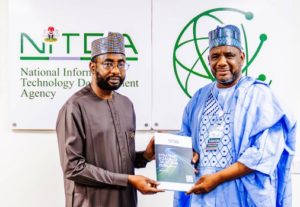

The Director General of the National Information Technology Development Agency (NITDA), Kashifu Inuwa Abdullahi, has underscored the strategic importance of Nigeria’s human capital in driving national development and positioning the country for global competitiveness.
RELATED: Digital literacy will drive employment, new opportunities – NITDA
Speaking while receiving a delegation from the National Commission for Almajiri and Out-of-School Children’s Education at NITDA’s headquarters in Abuja, Abdullahi said Nigeria’s youthful and rapidly growing population represents a major opportunity at a time when many advanced economies are grappling with ageing populations and shrinking workforces.


ALSO READ: Techprenuer Ekeh, Zinox boss, offers roadmap on turning Almajiris to digital armies, millionaires
Global Talent Shortage Opens Window for Nigeria
Abdullahi noted that global demand for technical and digital talent is projected to significantly outstrip supply by 2030, creating a unique window for Nigeria to emerge as a major contributor to the global workforce.
“With the right investments in education and digital skills, Nigeria can transform its demographic advantage into a powerful engine for economic growth and global relevance,” he said.
He added that Nigeria has the potential to become a global talent hub and a net exporter of skilled professionals, particularly in technology-driven sectors.
Almajiri System: From Education Model to Social Crisis
Addressing the Almajiri challenge, Abdullahi acknowledged that the traditional Islamic education system in Northern Nigeria has degenerated into a major social and security concern, with an estimated 9–10 million children trapped in poverty, neglect, and street begging.
Many of these children, he noted, lack access to basic healthcare, proper nutrition, and formal education, making them vulnerable to exploitation, radicalisation, and criminal recruitment.
Digital Skills as a Pathway to Inclusion and Security
The NITDA boss said equipping underserved and out-of-school children with digital and vocational skills could unlock vast economic opportunities while helping to bridge the global talent gap.
Drawing parallels with India, Abdullahi explained that sustained investment in human capital development enabled the country to produce globally competitive technology leaders and executives, driven by a deliberate system of talent development and international placement.
National Digital Literacy Framework Targets 95% by 2030
Central to NITDA’s strategy, Abdullahi said, is the National Digital Literacy Framework, which aims to achieve 95 per cent digital literacy across Nigeria by 2030.

The framework focuses on six core areas:
- Device and software operation
- Information and data literacy
- Digital content creation
- Digital marketing
- Online safety
- Digital problem-solving
He added that digital skills can transform critical sectors such as agriculture and commerce, enabling farmers to make data-driven decisions and small businesses to expand their reach through online platforms.
‘Digital Literacy for All’ and Partnerships Take Centre Stage
On implementation, Abdullahi unveiled the Digital Literacy for All initiative, targeting students, workers, and participants in the informal sector. He also disclosed ongoing partnerships with global organisations to train civil servants and strengthen institutional capacity.
He reaffirmed NITDA’s commitment to working closely with the Almajiri Commission to establish digital learning centres, develop training programmes in indigenous languages, and deploy instructors to Almajiri schools nationwide.
Almajiri Commission Seeks Deeper Collaboration
Earlier, the Executive Secretary of the commission, Muhammad Sani Idris, commended NITDA’s digital literacy drive, describing it as critical to bridging Nigeria’s education and skills gap.
He expressed concern over the growing number of out-of-school children, noting that years of neglect and socioeconomic pressures have weakened the Almajiri system, exposing children to exploitation and insecurity.
Idris called for coordinated action involving government, communities, and development partners, stressing the trans-border nature of the Almajiri challenge and the need for strategic collaboration.
Digital Inclusion Seen as Catalyst for National Transformation
Both organisations expressed optimism that deeper collaboration and the deployment of digital innovation could expand access to education, reduce vulnerability, and create sustainable opportunities for millions of Nigerian children—turning a long-standing social challenge into a pathway for national growth and global relevance.