By
By 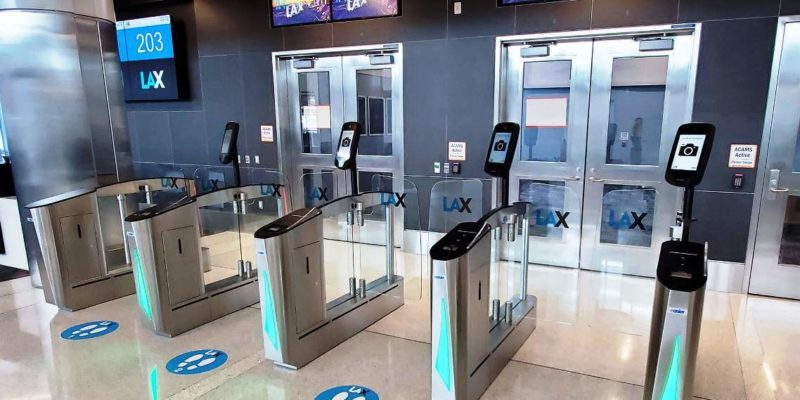


Festus Keyamo signs concession agreement to deploy facial recognition technology, linking passengers’ NIN to airport databases to strengthen aviation security and align with global contactless travel standards.
Nigeria has approved the deployment of a contactless biometric passenger verification system (VPASS) across the country’s domestic airports. This is part of efforts to strengthen aviation security, enhance data integrity, and improve revenue generation.


RELATED: Nokia: The time for airports to digitalize is now
The Minister of Aviation and Aerospace Development, Festus Keyamo, announced the development on Friday via his official X page. He disclosed that he had signed a concession agreement for the rollout of the VPASS system on behalf of the Federal Government.
“Yesterday, I signed a concession agreement on behalf of the Federal Government for the deployment of a contactless biometric passenger verification system, known as VPASS, across Nigeria’s domestic airports as part of efforts to strengthen aviation security, enhance data integrity, and improve revenue generation,” Keyamo said.
Regulatory Clearance Secured
The Minister stated that the approval followed regulatory clearance from the:
- Infrastructure Concession Regulatory Commission (ICRC)
- Office of the Attorney-General of the Federation
- Federal Executive Council
The initiative is designed to address inconsistencies in passenger data arising from inconsistent airline records. It will also tighten identity verification processes within the domestic aviation system.
“The initiative is designed to eliminate discrepancies in passenger data arising from inconsistent airline records, while also addressing unauthorised boarding practices,” Keyamo explained.
Closing Security Loopholes
The VPASS system will ensure proper identification of all passengers on domestic flights. Ultimately, it will help close existing gaps that allow individuals to bypass Standard Identification Procedures.
“The system will ensure that all passengers on domestic flights are properly identified, thereby closing existing gaps that allow individuals to bypass Standard Identification Procedures,” the Minister said.
Keyamo noted that while strict identity verification measures already apply to international travel, the VPASS system will extend similar standards to domestic operations.
The project will be implemented through a concession arrangement, with infrastructure deployment expected to precede public sensitisation. The initiative will involve collaboration with key agencies, including the Federal Airports Authority of Nigeria (FAAN) , which oversees airport operations in the country.
How VPASS Works
The VPASS system links passengers’ National Identification Numbers (NIN) to airport databases, enabling seamless, contactless verification using facial recognition technology.

| Step | Process |
|---|---|
| Enrollment | Passengers link their facial biometrics to their NIN and boarding pass through an airline app or airport kiosk |
| Verification | High-performance cameras capture a live image and match it against the stored digital template |
| Seamless Flow | Automated e-gates open instantly, eliminating repeated physical ID checks |
Global Context: Contactless Travel Becomes the Standard
Contactless biometric verification systems are rapidly becoming the global standard for air travel, utilizing facial recognition and digital identity to replace physical documents like passports and boarding passes.
IATA Confirms Fully Contactless International Travel Is Now Achievable
The International Air Transport Association (IATA) has confirmed that fully contactless international travel is now achievable following a series of successful digital identity trials conducted across Europe and Asia Pacific.
The successful Proofs of Concept (PoCs) demonstrated that contactless, biometric-enabled international travel is already achievable with digital identity replacing paper documentation. Working together as part of the IATA Strategic Partnerships Program, partners tested how digital identity stored in mobile wallets and biometric verification can support seamless passenger journeys without repeated paper document checks.
Importantly, the PoCs demonstrated that interoperability of systems is sufficiently advanced to support contactless journeys involving multiple carriers and using different digital identity wallets, including:
- Digital ID in Apple Wallet for US Passport holders
- Google ID Pass for UK and US passport holders
- National digital identity programs such as India’s Digi Yatra
This includes enabling passengers to securely share identity data in advance to facilitate their travel. The PoCs were designed using the IATA Contactless Travel Directory, IATA’s One ID standards, and ISO, OpenID, and W3C international standards.
“We have proven that digital identity for international travel works securely and efficiently. For travelers to benefit from this important modernization, governments must accelerate efforts to issue and accept Digital Travel Credentials (DTCs)—secure digital versions of passports. The result will be stronger security, smoother journeys, and greater efficiency,” said Willie Walsh, IATA’s Director General.
Global Implementation Status
| Region/Country | Status & Key Features |
|---|---|
| United States | TSA’s CAT-2 technology performs 1:1 facial matching at security checkpoints in major hubs like Miami, Washington D.C., and Phoenix |
| European Union | Entry/Exit System (EES) set for 2025/2026, requiring biometric registration for all non-EU travelers |
| Singapore | Changi Airport aims for 95% automated immigration processing by 2026 |
| United Arab Emirates | Dubai and Abu Dhabi use “smart gates” for biometric verification at every checkpoint |
Key Recent Developments (April 2026)
- Nigeria’s VPASS Rollout: The Federal Government approved and signed a concession agreement for VPASS, a contactless biometric passenger verification system for all domestic airports, linking passengers’ NIN to airport databases to enhance security and meet international standards.
- IATA “Contactless Travel” Success: IATA confirmed that fully contactless international travel is achievable, with successful trials in Europe and Asia demonstrating that passengers can use digital wallets to share identity data in advance and move through airports via biometric scans alone.
- Expansion of TSA Touchless ID: In the U.S., TSA PreCheck Touchless ID has expanded to more airports and airlines, allowing registered travelers to pass through security in as little as 30 seconds using facial recognition.
Privacy and Participation Considerations
Opt-Out Rights
In many regions, including the U.S. (TSA) and for some international departures, participation is voluntary. Travelers can request a manual ID check instead.
Data Protection
Systems generally do not store raw photos; instead, they use encrypted templates and strict access controls to safeguard passenger privacy.
Initiative aligns with International Standards
With infrastructure deployment expected to precede public sensitisation, Nigeria’s VPASS system positions the country alongside global leaders in aviation security modernization.
The initiative aligns with international standards and sets the stage for a more secure, efficient, and seamless domestic air travel experience.