By
By 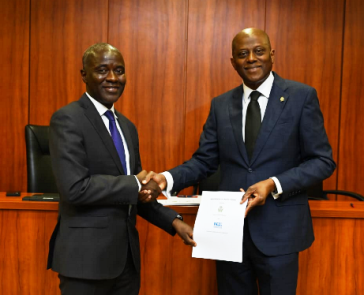
The Nigerian Communications Commission (NCC) and the Central Bank of Nigeria (CBN) have signed a landmark Memorandum of Understanding (MoU) aimed at strengthening consumer protection, enhancing payment system integrity, and combating fraud across Nigeria’s telecommunications and financial ecosystems.
RELATED: NCC, CBN unveil joint framework to end failed airtime and data transactions
The MoU signing coincided with the inauguration of two joint structures: the Joint Committee on Payment Systems and Consumer Protection, and the Joint Committee on the Telecoms Identity Risk Management System (TIRMS) Portal.
A Framework for Secure and Inclusive Digital Growth
Speaking at the event, NCC Executive Vice Chairman and Chief Executive Officer, Aminu Maida, described the MoU as a strategic framework for collaboration in critical areas such as fraud mitigation, digital inclusion, payment system integrity, and the protection of consumers and micro, small, and medium-sized enterprises (MSMEs).

According to him, the agreement represents a major milestone in Nigeria’s regulatory stewardship of the digital economy, reinforcing trust, resilience, and inclusion in an increasingly interconnected digital landscape.
Building on Proven Regulatory Collaboration
Dr. Maida noted that the NCC and CBN have a history of effective cooperation, citing the resolution of the long-standing USSD debt dispute as a key example of how structured collaboration can address complex cross-sector challenges.
He explained that the new MoU institutionalises such cooperation, providing a clear framework for coordinated policy responses, joint action, and sustained engagement as new risks and opportunities emerge in the digital and financial sectors.
TIRMS Portal to Strengthen Fraud Prevention
A major highlight of the collaboration is the deployment of the Telecoms Identity Risk Management System (TIRMS) Portal. The platform aggregates data on recycled, inactive, swapped, and flagged phone numbers, giving financial institutions greater visibility into the status of mobile numbers used for transactions.
According to Dr. Maida, this enhanced data visibility will enable banks and other financial institutions to better detect and prevent electronic fraud, particularly schemes perpetrated through compromised or recycled phone numbers.
“This MoU provides a clear framework for cooperation in critical areas such as payment system integrity, consumer protection, fraud mitigation, and the responsible use of digital infrastructure. In particular, it supports initiatives that promote secure digital payments, enhance trust in mobile-enabled financial services, and extend safe access to underserved populations and MSMEs,” Maida declared.
Putting Consumer Protection First
The NCC boss emphasised that consumer protection remains a shared priority for both regulators. Under the MoU, issues such as failed airtime recharges and digital service disputes will be addressed through faster, more coordinated resolution mechanisms.
He said the agreement positions both institutions to proactively protect consumers as mobile numbers increasingly underpin identity, authentication, and access to financial services.

CBN Commits to Safer Digital Financial Services
CBN Governor, Olayemi Cardoso, described the MoU as a catalyst for stronger coordination on regulatory approvals, technical standards, and innovation trials, including sandbox testing.
“Going forward, the Central Bank of Nigeria remains fully committed to working with the Nigerian Communications Commission to deliver a safer, more resilient, and more inclusive digital financial system. One that supports national productivity, protects consumers, and strengthens trust in Nigeria’s digital economy,” Cardoso said.
He reaffirmed the apex bank’s commitment to working closely with the NCC to deliver a safer, more resilient, and inclusive digital financial system that supports productivity, protects consumers, and strengthens confidence in Nigeria’s digital economy.
Joint Committees Inaugurated
Following the signing, the CBN Governor formally inaugurated the Joint Committee on Payment Systems and Consumer Protection and the Joint Committee on the TIRMS Portal, underscoring the regulators’ shared resolve to place consumer safety and fraud prevention at the centre of Nigeria’s digital transformation agenda.