By
By 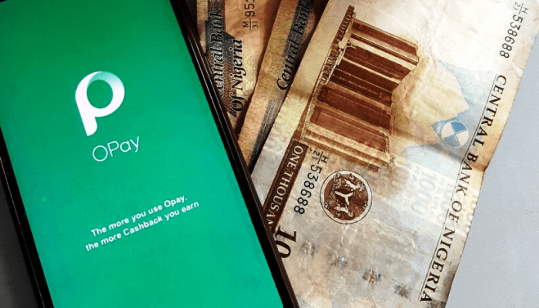

I rarely write about Fintech in Nigeria. Perhaps it’s because I feel so close to the action, that I think my opinion may not be considered on its independent or objective merits, since my company Sycamore is also in the credit business. But I’m making an exception this time for 2 reasons.
RELATED: OPay, PalmPay IPO plans spark fresh debate over Nigeria’s share of fintech wealth
The first is because last week, I tried to send money to a Sytizen (a staff of Sycamore), and he sent me an Opay account, even if this person receives his monthly salary through his Sycamore wallet. I felt betrayed to say the least! It reminded me of a story about Aliko Dangote’s grandchild asking for Indomie while his own company was producing noodles. I have never been able to properly verify the story, so take it for the illustration rather than the history.
While I was still licking my wounds from the knife this Sytizen put through my back, I found this post on the streets of X:


Up until the post above, I hadn’t heard anything about Opay’s revenue before, not to mention profit. I was genuinely curious to find out more, and that’s the 2nd reason I’m writing this.
On August 13, Nairametrics reported that OPay achieved a net profit of approximately $72.5 million in 2025, rebounding from a $51 million loss in 2024. Revenue grew by 161% to $536.3 million, and transaction volume doubled to $358 billion. Additionally, OPay is preparing for a potential U.S. IPO valued at around $4 billion. Sharing some insights I learned while digging.
First, a sense check on the numbers
The figures regarding OPay’s financials come from an investment document reviewing its audited statements rather than a full public annual report, as reported by Nairametrics. Because OPay is still a private company, complete financial comparisons are still unavailable at this time.
That said, to see if the numbers “make sense” from an industry perspective, I did a check on its two closest competitors (Moniepoint and PalmPay), based on numbers that have been reported on them via different reports, year end summaries, and various interviews. Moniepoint and Palmpay are private companies too so these figures are also not from audited financials, but give us an idea of scale as you can see below:

Translating the figures for annual transaction values to a visual format, also gives us an idea of how close they are:

Note that the user metrics from the earlier table, are not perfectly directly comparable mind you: OPay measures monthly active users, PalmPay references registered and monthly users, and Moniepoint aggregates businesses and individuals. The revenue figures are also two years apart, and given what the naira did in between, the 2023 dollar numbers understate the businesses behind them.
However, the broader context is clear: it tells us the OPay figures are not so far off, and it also demonstrates that multiple Nigerian fintechs are operating at a massive scale.

Background on OPay
Initially a super app offering ORide, OFood, OBus, OTrike, and OExpress to drive payments adoption, OPay shuttered those verticals (often attributed to Lagos’s 2020 motorcycle ban and regulatory shifts) to focus purely on financial services.
Today, OPay is a leading Nigerian transfer platform with 39.3 million monthly active users. Though active in Egypt, Indonesia and Pakistan, over 88% of its revenue comes from Nigeria. Despite outsizing major Nigerian commercial banks in active users, its bottom line remains around a tenth of giants like Zenith and GTCO.
Now let’s talk about its revenue, profit and public listing dynamics.
1. If OPay transfers are cheap (or free), how is it making so much money?
Opay reportedly made over $536.3m in revenue in 2025. But OPay to OPay transfers are free, and OPay to other banks cost ten naira per transfer. So where does the money come from?
There are several possible sources beyond transfer fees, from merchant and payment-related income to returns on eligible treasury funds. Without a full revenue breakdown, we cannot tell how much each contributes. But one revenue engine particularly caught my attention: credit.
It’s no surprise that OPay’s total loans disbursed reached about $938 million in 2025, almost four times the previous year. I did a quick check of its interest rate and found:

For a one-month loan from Opay (or EaseMoni, its Microfinance lending product), borrowers will pay roughly 18% per month, 1% per day if there’s any default. Annualise those rates and you begin to see why credit could be a significant revenue engine. In fairness though, it is reported that you can get interest rates for as low as 3% a month, after one has built a credible borrowing history. But the best I could see on my Opay app (I only opened it for this research, I promise), is 12% and that’s for 2 months.
The same way Opay started verticals like ORide and OBus to pull users into its payment services, perhaps, that’s the same role “transfers” is playing to pull users into credit.
2. How real is the $72.5m net profit?
Things get a bit technical here so stay with me.
OPay reported $72.5 million in net profit, and $152 million in operating cash flow, demonstrating solid underlying earnings and cash generation. Yet reports also show a loss attributable to ordinary shareholders. How can both be true at the same time?
OPay’s investors hold what are called redeemable convertible preferred shares. In simple terms, these are shares with extra protections for investors. “Redeemable” means the investors are entitled to their initial capital plus an agreed return, while “convertible” means those shares can eventually become ordinary shares, including upon a qualifying IPO.
Even when the actual business makes a profit, accounting rules may require the growing amount owed to these preferred investors to be deducted before calculating what is left for ordinary shareholders.
For example, if an investor contributes ₦100 million and their expected return grows by ₦20 million in a year, that increase isn’t an operational expense. However, if the business earns ₦10 million in profit, accounting rules require deducting the investor’s ₦20 million growing claim first, leaving ordinary shareholders with a negative ₦10 million balance. See table below:

The loss attributable to ordinary shareholders does not necessarily mean the underlying business was loss-making at an operating level. OPay still reported $152 million in operating cash flow. The preferred-share obligations help explain how strong operating results and a negative result for ordinary shareholders can exist at the same time. If those preferred shares convert into ordinary shares upon a qualifying IPO, that particular accounting effect would no longer arise in the same way.
“Can OPay’s profitability be sustained as it scales towards an IPO and beyond?”
The primary issue is whether OPay’s profitability can be sustained as it scales towards an IPO and beyond. With new lending growing 285% in a single year to $938 million, rapid loan expansion naturally creates more risks, which may be adverse if not properly managed.
While OPay has achieved operational success, the performance of this rapidly growing loan book will be an important factor in determining whether its profitability is sustainable.
3. Why is Opay listing in New York, even if it makes 88% of its Revenue in Nigeria?
This one is fairly straight forward. The simple truth is that the USA has much deeper capital markets and liquidity pools, particularly for a company seeking a $4 billion valuation. This X post summed the core of this argument:

The thing about the Nigerian stock market is that it tends to favour highly profitable and dividend-paying companies. U.S. capital markets can be much more generous to high-growth companies. SpaceX, for example, listed recently at a valuation of about $1.8 trillion despite making a loss in the previous year.
To use Zenith and GTCO again, they are both valued at less than OPay’s proposed $4 billion valuation even though they make around 10 times its profit. Besides, OPay was already valued at $2 billion about five years ago, so going to IPO in a market that can give its investors a decent return is not an unreasonable thing to do.
“Nigerians are not entirely shut out of Opay”
Still one can understand why Nigerians would want to participate in the upside of a product they use everyday, especially one that makes most of its money from Nigeria.
Temi Popoola, the GMD of the Nigerian Exchange Group (NGX) made a version of this argument to the President recently, urging that companies earning their profits here should also list here. He is right and I agree but I would phrase mine differently.
The truth is that Nigerians are not entirely shut out. The same report noted that an offering for Opay of up to $150 million, is being structured for institutional, high net worth and retail participation through vehicles distributed by Zedcrest, a Nigerian financial services firm. But this is an allocation, and receiving an allocation if we’re being honest, is not the same as participating in a market directly, especially when a middleman is involved.
Maybe dual listings – where a company lists its shares on both an international exchange like the NYSE and a local one like the NGX – eventually become part of the answer. Companies like Seplat Energy did this. I’m pretty sure the people that contribute to the company’s value creation, would love to benefit from that value too: as both product users, and shareholders.
So, is OPay okay?
OPay’s achievements are undoubtedly remarkable. The numbers suggest a business operating at enormous scale, generating operating profits and increasingly monetising the ecosystem it has built. But the $72.5 million headline still doesn’t tell us everything. We don’t yet have enough public information about its revenue mix, credit quality and some of the other details that would matter to someone considering OPay as an investment.
Interestingly, when my Sytizen colleague requested that I transfer money to his OPay account, none of those things were probably on his mind. He simply wanted his money to arrive quickly and reliably.
And perhaps that is the distinction.
As a product, OPay appears to be more than okay for millions of Nigerians. As a business, the $72.5 million profit is encouraging. But as a prospective $4 billion investment, there are still questions the headline alone cannot answer.
For now, maybe that’s the real answer to whether OPay is okay: it depends on who’s asking.
Courtesy: Substack