By
By 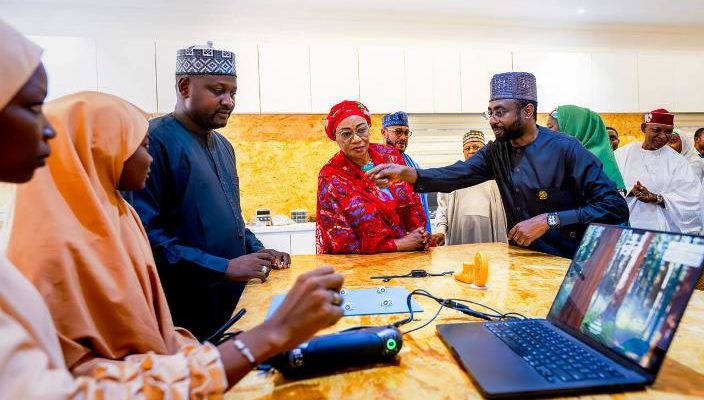
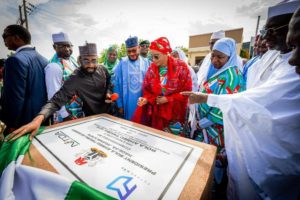
Senator Tinubu cuts the ceremonial ribbon to officially commission the Senator Oluremi Tinubu Clinic and Dialysis Centre in Hadejia Local Government Area of Jigawa State. She was joined by the Governor Namadi, and DG of NITDA, Abdullahi.
Nigeria’s First Lady, Oluremi Tinubu, has commissioned the President Bola Ahmed Tinubu Academy, alongside a state-of-the-art clinic and dialysis centre named in her honour, reinforcing the Federal Government’s commitment to education, healthcare access, and human capital development.
RELATED: First Lady Tinubu ocmmissions NITDA Community IT Centre in Benue, unveils N100m grant for women traders
The projects were unveiled in Hadejia, Jigawa State, as part of a broader effort to strengthen infrastructure. It is designed to expand quality healthcare services, and prepare young Nigerians for a technology-driven future.

Investing in Education and Human Capital Development
The President Bola Ahmed Tinubu Academy, established with the support of Bola Ahmed Tinubu and the National Information Technology Development Agency (NITDA), is designed as a sustainability-focused institution that blends advanced learning with innovation.
Equipped with a fabrication laboratory, maker spaces, AI-enabled learning tools, and start-up incubation facilities, the academy aims to translate technical education into real-world solutions.
Its structure reflects the administration’s emphasis on innovation-led growth, digital skills development, and long-term national productivity.
Speaking at the event, the First Lady described the academy as a symbol of the President’s dedication to securing “a better tomorrow” by investing in education today.
Expanding Access to Quality Healthcare in Underserved Communities
Complementing the academy is the newly commissioned Senator Oluremi Tinubu Clinic and Dialysis Centre, built and fully equipped by FutureMap Foundation and eHealth Africa.
The modern healthcare facility includes a dedicated dialysis unit, operating theatre, maternity wards, and continuous oxygen supply. It also has renewable energy systems to ensure uninterrupted service delivery.
According to Senator Tinubu, the clinic will provide “relief and hope” to patients in Hadejia and surrounding communities. It will address the region’s burden of chronic kidney disease and improving maternal and emergency care outcomes.

Education and Healthcare Working in Synergy
A defining feature of the project is the deliberate integration of education and healthcare. The academy’s fabrication laboratory will support medical research by developing diagnostic tools and organ prototypes—particularly kidneys—while the clinic applies these innovations in patient care.
This model promotes early disease detection, prevention, and local health-tech innovation, positioning Hadejia as a potential hub for community-driven medical solutions.
Launch of the National Food Bank Programme
In addition to the education and health infrastructure, the First Lady launched the National Community Food Bank Programme for the North-West Zone, describing it as a sustainable response to food insecurity and malnutrition among vulnerable Nigerians.
The initiative targets children under six, pregnant women, and lactating mothers. This aligns with the Renewed Hope Agenda’s focus on food security, nutrition, and improved health outcomes.
The programme is implemented through partnerships involving the Office of the First Lady, the Federal Ministry of Health and Social Welfare, the National Primary Health Care Development Agency, and the Bank of Agriculture.
Senator Tinubu revealed that the programme has already enrolled hundreds of beneficiaries in earlier pilot states. She expressed confidence that Jigawa State would set even higher standards due to its strong agricultural base.
Jigawa State Commits to Nutrition and Social Protection
Jigawa State Governor, Umar Namadi, commended the First Lady’s leadership. He described the food bank initiative as a timely intervention that complements the state’s existing food and social protection policies.
He highlighted Jigawa’s nutrition programme, which has screened hundreds of thousands of children and trained women in local food production. The initiative has delivered tangible results at the state level. The national food bank, he said, would amplify these gains through better coordination and accountability.
A Model for Integrated National Development
The commissioning of the academy, clinic, and food bank reflects a coordinated national development strategy. It brings together education, healthcare, technology, and food security as complementary sectors. Each reinforces the others, creating a more resilient and integrated development framework.
The Hadejia projects exemplify a practical model of federal-state collaboration. They are designed to deliver inclusive growth and protect vulnerable populations. Ultimately, they contribute to building resilient communities across Nigeria.