By
By 
By Osasome, C.O, Dayo Fadairo and Hassan U. Ahmed

At WACC 2026, Arise Funds Unveils Workforce Capital Framework to Bridge Skills and Employment Gaps


The Chief Executive Officer of U.S.-based Arise Funds, Aisha Saaka, has called on policymakers, operators, and investors to prioritize funding for workforce capacity as Nigeria accelerates its digital transformation.
RELATED: MOFI positions federal assets as the backbone of Nigeria’s digital economy
Saaka delivered an Operator’s Insight titled “Workforce Capital: A New Investment Framework for Digital Economic Growth” at the West Africa Convergence Conference (WACC) 2026 in Lagos, challenging stakeholders to move beyond ambition to measurable productivity.
From Digital Ambition to Productive Reality
Opening her session, Saaka posed a defining question for Nigeria’s digital future: How do we build economies that are not only digital in ambition, but productive in reality?
She acknowledged the growing national focus on artificial intelligence, cybersecurity, cloud computing, digital infrastructure, and innovation—describing them as the “right conversations” for the moment.
However, she stressed that conversations must translate into systems that create jobs, exports, and enterprise at scale.
Government Foundations Are Emerging—but Gaps Remain
Saaka commended the Federal Government for initiatives such as the 3 Million Technical Talent (3MTT) programme, the broader digital economy agenda, and student financing mechanisms like NELFUND. While these efforts signal progress, she noted that skills development must be linked to employability and enterprise outcomes.
According to her, the decisive infrastructure of the digital age is human capacity.

“In the industrial age, nations competed with roads and factories. In the digital age, nations compete through the productive capacity of their people.”
Why Talent Is Nigeria’s Most Critical Infrastructure
Saaka emphasized that even in the era of artificial intelligence, human capability remains central. From cybersecurity analysts and software engineers to AI-enabled workers and global service professionals, people—not buildings—drive digital competitiveness.
Despite Nigeria’s abundant talent, she argued that workforce development has not yet been structured as an investable asset class, leading to fragmented outcomes.
The Workforce Capital Solution
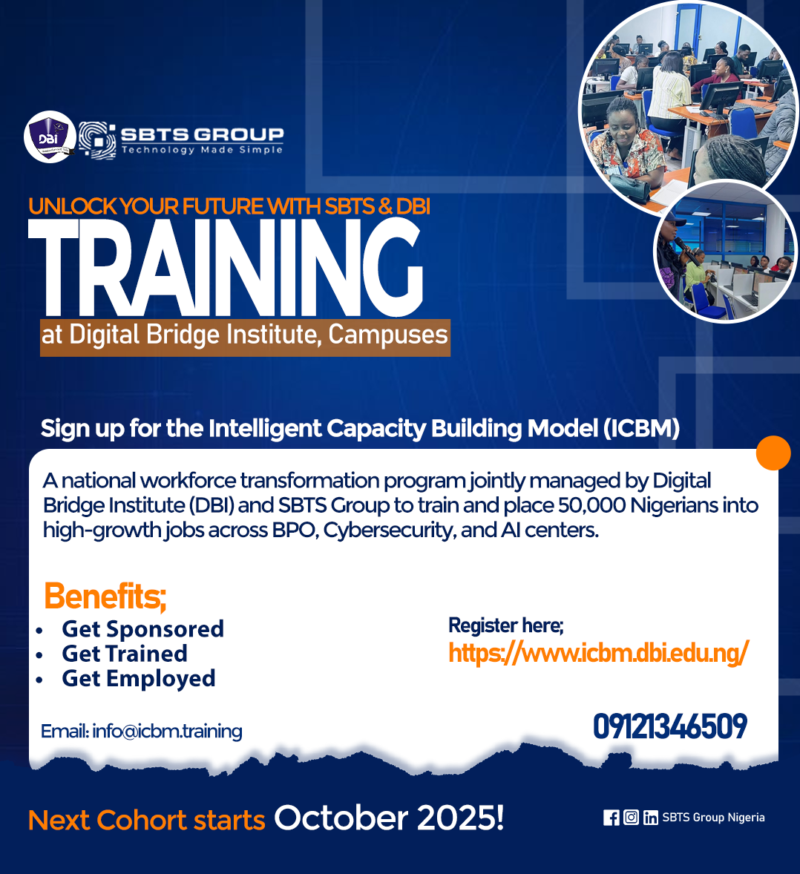
To close this gap, Arise Funds has developed Workforce Capital, an integrated investment framework that connects skills, institutions, infrastructure, technology, and employment into a single productive ecosystem.
“Workforce Capital is not charity, not just training, and not only student loans. It is the financing of productive capacity,” Saaka explained.
Global research underscores the urgency. By 2030, more than 230 million jobs in Sub-Saharan Africa will require digital skills, representing a $130 billion digital skilling opportunity.
Five Layers Powering Workforce Capital
Saaka outlined five interconnected pillars underpinning the Arise Funds model:
- Institutional Capital – Strengthening training institutions with governance, modern curricula, employer engagement, and outcome-based accountability.
- Infrastructure Capital – Repurposing underutilized buildings into digital workforce hubs, AI labs, cybersecurity centers, and BPO facilities.
- Human Capital – Bridging the gap for young people through access to tools, connectivity, certifications, and workplace-like learning environments.
- Employment Capital – Transforming training centers into employment and production hubs that enable real work, exports, and entrepreneurship.
- Product Capital – Supporting the creation of local digital products and intellectual property, including platforms like Aegis360AI.
Arise Funds’ Catalytic Role in Closing the Gap
Saaka revealed that Arise Funds, through its family office, has committed over $1 million in direct catalytic capital and deployed more than $4 million in digital architecture, platforms, and enabling technologies across the ecosystem.
This early-risk capital, she said, demonstrates that workforce development can be structured, de-risked, and scaled—if supported by blended finance involving government, development finance institutions, commercial banks, pension funds, philanthropy, and private sector players.
WACC 2026 Reinforces Policy, Capital, and Technology Alignment
The 15th edition of WACC reaffirmed its status as more than an annual industry gathering—it has become a de facto national policy institution for Nigeria’s digital economy. The high-level colloquium featured a keynote address by Professor Nentawe Yilwatda, National Chairman of APC, while Dr. Armstrong Ume Takang, Managing Director and CEO of MOFI, offered an investment-focused perspective.
Other speakers included Dr. Vincent Olatunji, National Commissioner and CEO of the NDPC, who delivered an Executive Regulatory Insight titled “From Awareness to Accountability: Strengthening Data Protection Compliance in Nigeria’s Digital Economy,” and Kashifu Inuwa Abdullahi, Director General of NITDA, who provided regulatory insights on “Digital Convergence and the Confidence Mandate: NITDA’s Vision for a Competitive, Innovative and Trusted Nigeria IT Ecosystem.”
According to WACC leadership, the forum has evolved into a space where political intent, capital deployment, and technological strategy converge to shape Nigeria’s digital future.
Making Workforce Development Investable
Saaka concluded by announcing an upcoming policy publication, Workforce Capital: A New Investment Framework for Digital Economic Growth, which will invite collaboration across government, finance, education, and technology sectors.
“When workforce development becomes investable, talent becomes scalable. And when talent becomes scalable, economies become competitive.”
For Nigeria and Africa, she said, the challenge is no longer whether talent exists—but whether it can be financed into sustained productivity.