By
By 
By Osasome C.O
Nigeria’s Digital Ambition at Risk Without Coordinated Fibre Protection — Equinix
Equinix has warned that Nigeria’s digital transformation ambitions could be severely undermined without a synchronized National Dig-Once Policy and rigorous enforcement of the Critical National Information Infrastructure (CNII) Protection Order, 2024.
RELATED: Nigerian government enacts Critical National Information Infrastructure Protection Order, 2024
Speaking at the PIAFo 8.0 National Dig-Once Policy Forum held in Lagos, Oluwasayo Oshadami, Director, Solutions Architecture and Engineering at Equinix, stressed that Nigeria must adopt a proactive, coordinated approach to safeguarding investments in national fibre infrastructure.


ALSO READ: NCC, NSCDC warn construction firms as fibre optic cable damage now attracts prosecution
Scaling Fibre Without Protection Will Multiply Failures
Oshadami warned that Nigeria risks scaling its vulnerabilities if fibre expansion is not matched with strong protection frameworks.

Oluwasayo Oshadami, Equinix
“Today, our 30,000km of fibre suffers approximately 50,000 cuts annually. If we simply scale our current approach without a synchronized Dig-Once policy and rigorous enforcement of the CNII protection order, we risk building a 120,000km network that experiences an estimated 125,000 cuts every year. We cannot afford to scale our vulnerabilities; we must protect the backbone to secure the future,” he said.
At the forum, Oshadami contributed both as a keynote speaker and as a panellist, reinforcing Equinix’s perspective on sustainable digital infrastructure development.
‘Shortening the Path to Boundless Connectivity’
In his keynote presentation titled “Shortening the Path to Boundless Connectivity,” Oshadami highlighted the contradiction between Nigeria’s ambitious broadband goals and the persistent fragility of its fibre backbone.
Nigeria continues to experience an alarming surge in fibre-optic cable damage. Over 19,384 fibre cuts were recorded between January and August 2025 alone. These incidents are largely driven by uncoordinated road construction, excavation, vandalism, and cable theft. They have resulted in more than 2,400 outages monthly, significantly degrading internet services, particularly in Lagos and Abuja.
CNII Order 2024: Strong Framework, Weak Enforcement
The Designation and Protection of Critical National Information Infrastructure (CNII) Order, 2024, was signed by President Bola Tinubu. It is designed to secure critical digital assets across 13 key sectors, including telecommunications, finance, energy, transport, and health.
Key highlights of the CNII Order include:
- Protection of telecom towers, fibre-optic cables, and data centres
- Criminalisation of unauthorised access, damage, or vandalism
- Creation of a Trusted Information Sharing Network (TISN)
- Oversight led by the Office of the National Security Adviser (ONSA)
- Alignment with the Cybercrime Act, 2015
However, Oshadami and other speakers at PIAFo 8.0 noted that enforcement remains weak, limiting the order’s effectiveness in curbing infrastructure sabotage.
Inland Fibre Is Nigeria’s Real Connectivity Bottleneck
During the second panel session, “Subsea Cables, Data Centres and Robust Connectivity: Establishing the Missing Fibre Link,” Oshadami identified three structural challenges:
1. Inland transmission, not coastal capacity, is the biggest gap
Nigeria’s main challenge lies in distributing capacity inland due to fragmented right-of-way policies and lack of coordination.
2. Subsea cable diversity is a strategic necessity
He pointed to recent investments by Meta and MainOne in a second cable landing station in South-South Nigeria as a positive development. This underscores the need for direct routes to North America, South America, and other regions, beyond traditional European paths.
3. Fixing inland fibre will increase—not reduce—coastal demand
Serving over 220 million Nigerians at 100Mbps will require massive international bandwidth growth, unlocking multiplier effects across fintech, e-commerce, healthcare, education, and agriculture.
Demand Creation Is the Missing Link
Oshadami challenged regulators and policymakers to look beyond telecoms when driving digital growth.
“Supply without demand is dark infrastructure. Regulators in healthcare, education, finance, and agriculture must be held accountable for driving technology adoption. Who is ensuring these sectors use the very infrastructure being built?”
He stressed that cross-sector digital adoption is essential to justify large-scale infrastructure investments and unlock economic value.
PIAFo 8.0: Aligning Policy With Nigeria’s Fibre Expansion Goals
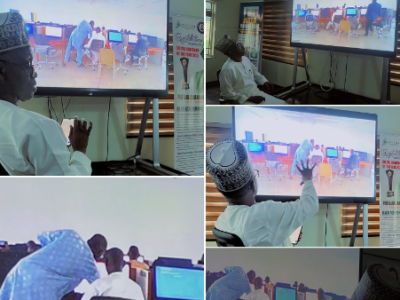
The PIAFo 8.0 National Dig-Once Policy Forum, organised by Business Metrics Nigeria, was held on April 16, 2026. It brought together industry leaders and policymakers to accelerate adoption of a National Dig-Once Policy. The event was designed in support of Nigeria’s target to expand fibre coverage to 125,000km.
A policy focused forum, it featured senior stakeholders including executives from Galaxy Backbone, ipNX, Infratel Africa, NatCom, Dimension Data, ATCON, ALTON, FiberOne, and others.
Discussions at the forum underscored a shared consensus: Nigeria’s digital economy cannot thrive without coordinated fibre deployment. There must be strict protection enforcement, and sustained demand creation across all sectors.