 By
By 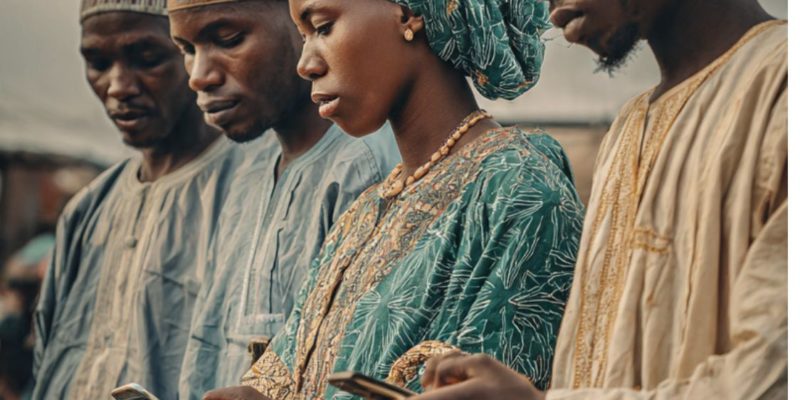
From private traditions to global exposure, Northern Nigeria is entering a new phase of cultural evolution driven by smartphones, social media and digital connectivity.
RELATED: Truth and misinformation: social media in the Jos crisis
For decades, the conservative communities of Northern Nigeria existed within carefully protected cultural walls. Family traditions shaped social behaviour, religion influenced public morality, and community elders often determined what was acceptable or forbidden. Information moved slowly, relationships were closely monitored, and society largely evolved at the pace of local customs.


Then the internet arrived, not all at once, and not evenly. First through cybercafés, then cheap Android phones, and now through TikTok livestreams, encrypted chats, online influencers, AI-generated content and global social media trends that enter villages and cities alike in seconds. Today, a teenager in Kano can consume the same content as someone in London, Seoul or New York before breakfast. A university student in Kaduna can secretly participate in online communities that would have been unimaginable a decade ago. A young woman in Sokoto can build a digital identity completely different from the one expected of her offline.
The internet is no longer just a communication tool in Northern Nigeria. It has become a cultural disruptor.
The Digital Collision Between Tradition and Modern Life
Recent online controversies, including the widely discussed case involving a young Hausa woman, Halima Shehu, whose private video allegedly surfaced online without consent, have once again exposed the collision between conservative values and digital realities. While the incident itself triggered debates about privacy, cybercrime and morality, the larger issue runs much deeper: the internet is quietly reshaping identity, relationships, religion, gender expectations and social authority across Northern Nigeria.
The transformation is happening faster than many institutions can respond.
In the past, cultural gatekeepers controlled narratives. Religious leaders interpreted morality. Parents determined social boundaries. Communities enforced conformity through proximity and shared values. But digital platforms have weakened those traditional controls.
Young Northerners now exist in two worlds simultaneously: the physical society around them and the borderless online universe inside their phones.
A Generation Growing Up Online
On social media, young people encounter alternative lifestyles, opposing religious views, feminism, atheism, celebrity culture, global dating norms, digital entrepreneurship and discussions about sexuality that were previously inaccessible in conservative settings. Whether society approves or not, exposure changes people. Even when individuals reject certain ideas, the mere act of encountering them introduces questions that older generations never had to confront.

That may be the internet’s most powerful effect: it creates questions before society has prepared answers.
Across Northern Nigeria, there is already visible evidence of this shift. Young Muslim women are increasingly becoming influencers, entrepreneurs and public voices online despite traditionally conservative expectations around visibility and gender roles. Hausa content creators now command millions of followers on TikTok and YouTube. Islamic scholars themselves have adapted by moving sermons online, competing for influence in digital spaces once dominated by entertainers.
The internet has not erased religion in Northern Nigeria. If anything, it has expanded religious participation online. But it has changed how religion is consumed, debated and interpreted.
The Rise of Digital Faith and Decentralised Religious Authority
A generation ago, questioning religious interpretations publicly could provoke immediate backlash within local communities. Today, anonymous accounts and online forums allow young people to ask difficult questions about faith, marriage, women’s rights and culture with reduced fear of direct social consequences. Digital anonymity has become a gateway to intellectual curiosity.
This does not necessarily mean Northern Nigeria is becoming less religious. Rather, religion itself may be entering a new phase of decentralisation.
Authority is shifting.
Instead of relying solely on local clerics or family structures, many young people now learn from international scholars on YouTube, Islamic podcasts, online debates and AI-powered search tools. Competing interpretations now exist side-by-side on smartphones. A teenager in Katsina can follow a Saudi preacher, an American Muslim influencer and a Nigerian feminist simultaneously. That level of exposure inevitably reshapes cultural certainty.
Privacy, Reputation and the Fragility of Digital Life
At the same time, online life is creating tensions between public morality and private behaviour. Conservative communities often maintain strong public standards, but the internet has created private spaces where individuals experiment with identities, relationships and behaviours away from traditional oversight.
This contradiction explains why scandals involving leaked intimate content generate such intense reactions in Northern Nigeria. The outrage is not only about morality; it is also about visibility. The internet exposes what communities once assumed remained hidden.
Technology has made secrecy fragile, private chats become public. Hidden relationships become viral content. Reputation, once protected by geography and community silence, can now collapse overnight through a single upload. In deeply conservative societies, where family honour and social perception carry enormous weight, the consequences can be devastating.
Yet these incidents also force society to confront uncomfortable realities. They raise difficult questions about consent, digital ethics, surveillance, trust and the weaponisation of technology in relationships. Increasingly, conversations that were once considered taboo are becoming unavoidable.
What Comes Next for Northern Nigeria?
Northern Nigeria now stands at an important cultural crossroads.
One possible future is greater digital conservatism. Governments, religious institutions and traditional leaders may push for tighter online regulation, stricter cyber laws and stronger digital morality campaigns to preserve existing values. Already, there are periodic calls to regulate TikTok, censor explicit content and punish online behaviour considered immoral or culturally offensive.
Another possibility is gradual cultural adaptation.
Rather than outright rejecting digital change, communities may slowly redefine what conservatism means in the internet age. Younger generations may continue blending religious identity with modern digital lifestyles in ways that seem contradictory to older observers but feel natural to them. A woman can wear the hijab and still run a successful beauty brand online. A devout Muslim can participate in global digital culture while maintaining religious practices. Identity is becoming more layered than previous generations anticipated.
There is also the possibility of generational fragmentation.
Older generations may continue defending traditional structures while younger people increasingly build parallel realities online. In such a future, outward conformity may remain strong publicly while private beliefs and behaviours become far more diverse than society openly acknowledges.
This silent divergence may already be happening.
The Smartphone as a Cultural Turning Point
The internet has introduced something Northern Nigeria historically managed carefully: individualism. Digital culture encourages self-expression, personal branding and independent thought. These values do not always align easily with collective cultural systems built around family reputation and communal expectations.
Still, the internet is not simply destroying culture. It is also preserving and amplifying parts of it.
Hausa language content is thriving online. Local fashion, food, music and storytelling have gained global audiences through digital platforms. Young creators are documenting traditions in ways older generations never imagined. Cultural evolution does not always mean cultural disappearance.
The real question is not whether Northern Nigeria will change. That process has already begun. The deeper question is what kind of balance will emerge between tradition and digital modernity.
History suggests cultures rarely remain frozen when exposed to global communication systems. They adapt, resist, negotiate and eventually transform. Northern Nigeria is now experiencing that process in real time.
The smartphone has become more than a device. It is now a doorway into competing realities, moral frameworks and identities. And once people have seen those possibilities, it becomes difficult to fully return to older boundaries.
The next phase of cultural and religious evolution in Northern Nigeria may therefore not be defined by rebellion or abandonment of tradition. Instead, it may emerge through negotiation, a gradual, sometimes uncomfortable blending of deeply rooted beliefs with the irreversible influence of digital life.
That negotiation is already unfolding quietly in homes, schools, mosques, relationships and smartphones across the region every single day.