 By
By 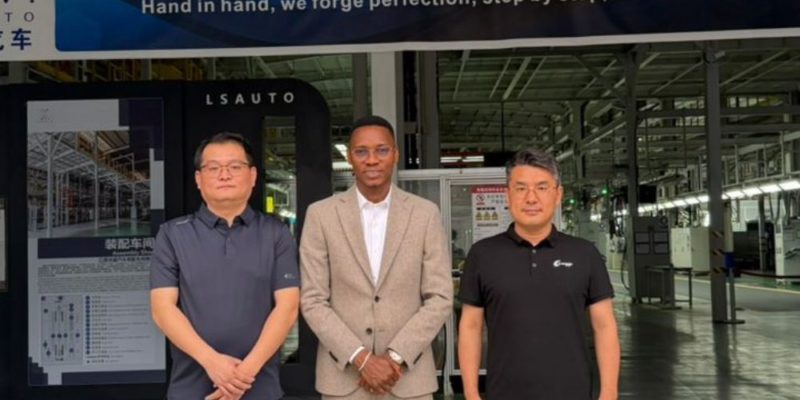
Nigeria’s ambition to become a major player in Africa’s automotive industry received a significant boost as Chinese automotive company Launch Design Shanghai entered into a strategic partnership with Hybrid Motors Nigeria to support electric vehicle manufacturing in the country.
RELATED: NDPC, NGF partner to deepen data protection across states
The partnership, which was formalised in Shanghai, is expected to accelerate the production and assembly of electric vehicles in Nigeria while also strengthening the country’s growing clean energy and transportation sector.


According to the Chief Executive Officer of Hybrid Motors Nigeria, Jubril Arogundade, the collaboration will establish manufacturing and assembly operations in both Lagos and Abuja, positioning Nigeria as an emerging hub for electric vehicle production in West Africa.
Building Nigeria’s Indigenous Electric Vehicle Brand
At the centre of the partnership is “Acely,” Hybrid Motors Nigeria’s indigenous electric vehicle brand developed specifically for the Nigerian market.
Arogundade explained that the goal is not only to manufacture vehicles locally but also to create products that truly address the realities of transportation in Nigeria. From road conditions to consumer affordability and durability, the company believes locally designed electric vehicles can better serve the needs of Nigerians.
He described the agreement as an important milestone for the country’s automotive future, noting that it represents more than just a commercial arrangement between two companies.
According to him, the partnership reflects a long-term commitment to developing Nigeria’s local automotive industry and proving that world-class vehicles can be built within the country.
“This partnership is more than a business agreement; it is a commitment to building Nigeria’s automotive future,” Arogundade said.
With Acely, we are proving that world-class vehicles can be designed, engineered, and assembled in Nigeria, by Nigerians, for Nigerians. Arogundade
The partnership combines Hybrid Motors Nigeria’s understanding of the local market with Launch Design Shanghai’s advanced automotive engineering and manufacturing expertise. Both companies say this combination will ensure that the vehicles meet global quality standards while remaining practical for Nigerian roads and driving conditions.

Major Manufacturing Plants Planned for Lagos and Abuja
As part of the collaboration, the companies plan to establish two major production facilities in Nigeria.
The primary production hub will be located along the Lekki-Epe corridor in Lagos. The plant is projected to produce up to 50,000 electric vehicles annually when fully operational.
Lagos was selected because of its strategic importance as Nigeria’s commercial centre, its growing infrastructure, and its proximity to major ports, which would support logistics and supply chain operations.
The second facility will be located within the Centenary Economic City in Abuja. Unlike the Lagos plant, which will focus mainly on large-scale production, the Abuja facility will function as both a manufacturing and technology centre.
The Abuja plant is expected to have an annual production capacity of 20,000 units, bringing the combined annual output of both facilities to about 70,000 vehicles at full operational maturity.
Industry analysts say the development could significantly transform Nigeria’s automotive sector, which has for decades relied heavily on imported vehicles.
Technology Transfer and Skills Development
Beyond manufacturing, the partnership is expected to play a major role in technology transfer and workforce development.
According to the companies, the agreement includes plans for technical training, knowledge exchange, and the gradual development of a local electric vehicle supply chain.
This means Nigerian engineers, technicians, and automotive professionals will have opportunities to acquire specialised skills in electric vehicle production and advanced automotive technologies.
Experts believe this aspect of the partnership could have long-term economic benefits for the country, especially as global demand for electric vehicles continues to rise.
Nigeria currently faces high youth unemployment rates, and initiatives that create skilled industrial jobs are increasingly viewed as critical to economic growth and stability.
The companies noted that the project would support job creation across multiple sectors, including engineering, manufacturing, logistics, maintenance, and component supply.
In addition, local suppliers and small businesses may also benefit from the expansion of supporting industries connected to electric vehicle production.
Supporting Cleaner Transportation in Nigeria
The partnership also aligns with Nigeria’s broader push toward cleaner transportation and reduced carbon emissions.
As countries around the world increasingly transition from fuel-powered vehicles to electric alternatives, Nigeria has been exploring ways to participate in the global shift while addressing local transportation challenges.
Electric vehicles are generally considered more environmentally friendly because they produce lower emissions compared to conventional petrol or diesel-powered vehicles.
For Nigeria, where fuel costs and environmental concerns continue to grow, local electric vehicle manufacturing could help encourage wider adoption of cleaner mobility solutions.
The companies said the initiative supports Nigeria’s automotive development plans and complements the country’s long-term sustainability goals.
Observers believe that local production could also help lower the cost of electric vehicles over time, making them more accessible to ordinary Nigerians.
Reducing Dependence on Imported Vehicles
Nigeria imports thousands of vehicles annually, a situation that places pressure on foreign exchange reserves and increases dependence on international markets.
By establishing local manufacturing facilities, the partnership aims to reduce that dependence while strengthening domestic industrial capacity.
The companies say local assembly and production will not only create economic opportunities but also help develop a stronger automotive ecosystem within Nigeria.
This includes the growth of supporting industries such as battery production, spare parts manufacturing, vehicle servicing, charging infrastructure, and automotive software development.
For many industry stakeholders, the project represents a step toward repositioning Nigeria as a competitive manufacturing destination in Africa.
A Vision for the Future
Chief Executive Officer of Launch Design Shanghai, Wang Xun, described the collaboration as transformative, saying it goes beyond simply building cars.
Together, we are not just building vehicles, we are building an industry,” Xun.
That vision reflects the growing belief among both local and international investors that Nigeria has the potential to become a major player in Africa’s electric mobility future.
With its large population, expanding urban centres, and rising demand for transportation solutions, Nigeria presents a significant market opportunity for electric vehicles.
While challenges such as infrastructure, electricity supply, and charging networks still remain, industry experts say partnerships like this could accelerate progress and encourage further investment into the sector.
If successfully implemented, the Launch Design Shanghai and Hybrid Motors Nigeria collaboration could mark the beginning of a new chapter for Nigeria’s automotive industry, one driven by innovation, local production, and cleaner transportation solutions.