By
By 
New global study reveals SMBs struggle to scale AI despite widespread adoption, offering a practical roadmap for moving from experimentation to business impact.
Nearly 70% of small and midsized businesses (SMBs) remain in the experimental or opportunistic stages of artificial intelligence (AI) maturity, according to a new global report commissioned by SAS, a leader in data and AI, and IDC.

RELATED: AI startups drive 2026’s unicorn boom, representing more than 25% of new billion-dollar companies
The report, titled AI for SMBs: Closing the Readiness Reality Gap, is based on a global survey of more than 1,600 SMB leaders across 28 countries.
Significance for Nigeria’s Digital Economy
For Nigeria, where SMBs account for over 90% of businesses and contribute approximately 50% of GDP, this research carries profound implications.
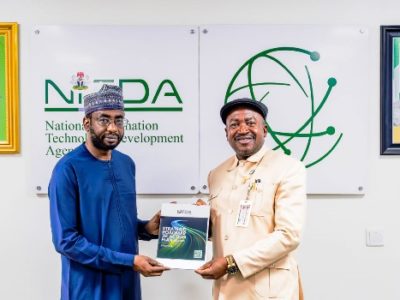
Nigeria is pursuing an ambitious digital transformation agenda, including NITDA’s SRAP 2.0 which aims for 70% digital literacy by 2027. The federal government is also targeting a $1 trillion digital-enabled economy. In this context, the capacity of SMBs to adopt and scale AI will be crucial to the nation’s competitive standing.
The report’s findings on the readiness-reality gap resonate strongly with the Nigerian SMB context. Nigerian small businesses face similar obstacles, including fragmented data and limited digital skills. Insufficient governance frameworks further compound these challenges.Closing this gap is not merely a business imperative but a national economic priority.
The Readiness-Reality Gap
The report reveals a critical disconnect between AI aspirations and organisational readiness. While SMB leaders are increasingly motivated to use AI, many struggle with fragmented data and tools, isolated AI initiatives, limited skills and organisational readiness, and insufficient governance and ROI measures.
“To actually make something of their AI strategy, SMBs need to move from disconnected pilots to true alignment of their data, people and resources. Experimenting with the technology is one thing. Deploying it strategically and sustainably is quite another,” said Daniel-Zoe Jimenez, Vice President of Research at IDC.
Spotlight on Five Key Industries
Although survey respondents hail from SMBs across several sectors, the report offers deeper analysis for five spotlight industries:

- Banking: Ahead on AI strategy and governance, but most still struggle to turn pilots into consistent, organisation-wide impact.
- Insurance: Actively using AI for real business problems, yet fragmented data and uneven execution keep many from scaling what works.
- Government: Show strong planning and oversight for AI, but legacy systems and data silos continue to slow execution.
- Health Care: Experimenting with AI to improve efficiency, but data complexity, regulation, and skills gaps limit adoption.
- Life Sciences: See high AI potential, but complex data environments and regulatory demands restrict widespread adoption.
A Practical Growth Framework
The report introduces the AI Readiness Index, a framework for evaluating SMBs’ readiness across four areas: planning, building, enabling, and executing.
As they progress, SMBs navigate four stages of maturity: Experimental, Opportunistic, Structured, and Integrated.
The Index provides a clear diagnostic lens for SMBs to evaluate their progress and map a path forward to implementing AI that meets their unique business needs.
“SMBs don’t need more hype. What they need are results that translate into a meaningful return on their AI investments. This research shows that AI adoption is already widespread, but operationalising AI at the company level remains a challenge. SAS outlines a path forward with tools and resources that make sense for SMB customers,” said John Carey, Senior Vice President of Global Channels at SAS.
SAS Launches AI Readiness Calculator for SMBs
Alongside the report, SAS has launched an AI Readiness Calculator for SMBs, enabling organisations to evaluate their current maturity, identify gaps, and receive personalised recommendations for next steps based on their size and readiness level.