 By
By 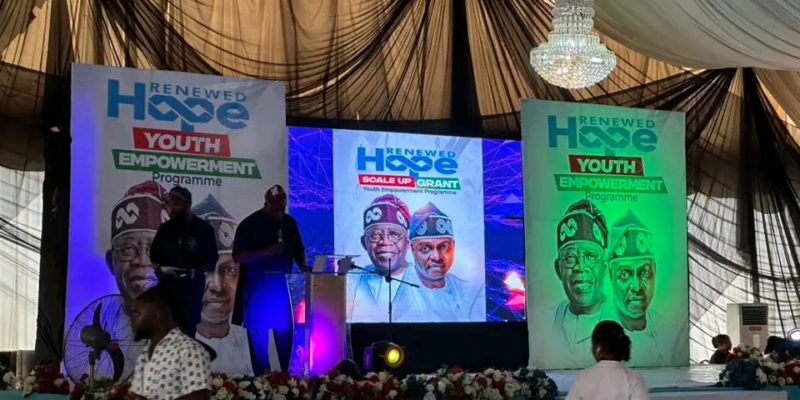
By Nana T.T., Elisha Chebwawaza G. and Anna-Nancy E.
Nigeria’s youth enterprise landscape received a major boost on Wednesday as Professor Nentawe Yilwatda Goshwe, National Chairman of the All Progressives Congress (APC), launched a ₦300 million empowerment initiative designed to help small businesses grow and support new ventures.


The programme, unveiled at the Tamarald Event Centre in Jos, marks a significant step in expanding the Federal Government’s “Renewed Hope” economic agenda at the grassroots level. It also signals Professor Nentawe’s first major policy action in his home state since his re-election as APC National Chairman in March.
Addressing a large audience of entrepreneurs, policymakers, and community leaders, Nentawe framed the initiative as a practical tool for economic transformation—one that places responsibility and opportunity directly in the hands of Nigerians.
Change is possible, and change comes from people, When individuals take responsibility and contribute, they can transform lives. That is exactly what we aim to achieve with this programme.” Professor Nentawe Yilwatda Goshwe
A Dual Approach to Economic Empowerment
The initiative, branded the Renewed Hope Scale-Up Grant, adopts a two-track approach. It provides financial support to existing small businesses ready to expand while also equipping new entrepreneurs with tools and starter packs to launch viable ventures.
Organisers designed the scheme to address a persistent challenge in Nigeria’s economy: the gap between informal hustle and structured, sustainable enterprise. By supporting both early-stage and growth-stage businesses, the programme aims to create a pipeline of resilient entrepreneurs capable of generating employment and driving local production.
Professor Nentawe stressed that the programme reflects a broader national ambition to build a trillion-dollar economy powered by local enterprise and export-driven growth.
If Nigeria must achieve a one-trillion-dollar economy, we must support small businesses and local production, Young people must move from the informal economy into structured, productive ventures that can scale.”
Rigorous Selection Process
The scale of interest in the programme underscored the urgent demand for economic support among Nigeria’s youth. According to officials, more than 48,000 applications were submitted.
After a detailed screening process, organisers selected 870 primary beneficiaries based on business viability, impact potential, and readiness for growth.

The Director General of the Nigerian Governors’ Forum described the process as highly competitive, noting that only applicants with clear plans and demonstrable commitment made the final list.
To ensure the initiative delivers long-term impact, the Jos Business School will oversee a structured mentorship programme. This support system will guide beneficiaries, track progress, and help prevent business failure after initial funding.
Financial Support and Starter Packs
The programme offers a mix of direct financial grants and practical tools tailored to different categories of beneficiaries.
A detailed breakdown shows:
- 60 beneficiaries will receive ₦1 million each
- 140 beneficiaries will receive ₦500,000 each
- Over 1,200 individuals will receive grants ranging from ₦100,000 to ₦200,000
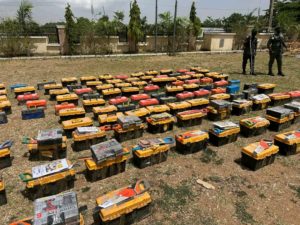
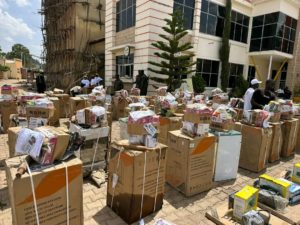
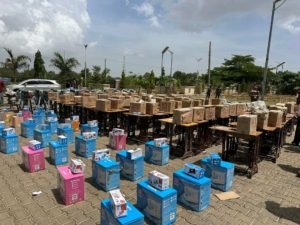
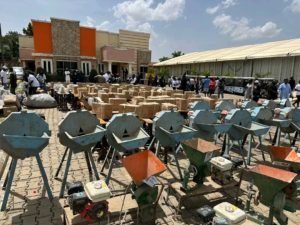
In addition, organisers distributed 727 starter packs to new entrepreneurs. These include tricycles for transport businesses, catering equipment, welding machines, and specialised kits for auto mechanics and phone repair technicians.
The initiative also extends support to grassroots traders. Four hundred market women received ₦50,000 each, while 20 individuals within that group qualified for additional funding of up to ₦500,000.
This layered approach ensures that the programme reaches both urban entrepreneurs and informal sector participants who often lack access to structured financing.
Government Backing and Strategic Alignment

The launch attracted key government figures, including Plateau State Deputy Governor Ngo Josephine Piyo, who represented Governor Caleb Mutfwang, alongside members of the National Assembly and state executives.
In her remarks, the Deputy Governor urged beneficiaries to treat the opportunity as a foundation for long-term independence rather than short-term relief.
The tools and funding must translate into sustainable income and job creation within communities. Ngo Josephine Piyo
Meanwhile, Dr. Armstrong Ume Takang, speaking through Chukwuemeka Gerald Okafor, highlighted the role of the Ministry of Finance Incorporated (MOFI) in supporting economic transformation.
He pointed to MOFI’s track record, including savings of ₦3.3 billion for the government and its involvement in large-scale initiatives such as the ₦1 trillion Mortgage Reform and Energy Fund (MREF), which aims to deliver 700,000 homes annually.
The ministry also confirmed its commitment to supporting beneficiaries through non-interest, Shariah-compliant financing options and renewable energy initiatives, measures designed to expand access and reduce operational costs for small businesses.
Building Infrastructure for Growth

Beyond the immediate grant programme, Professor Nentawe used the platform to outline a broader vision for Nigeria’s economic future—one built on infrastructure, connectivity, and export capacity.
He highlighted ongoing investments in road networks, rail systems, and logistics corridors designed to move goods efficiently from production hubs to ports and international markets.
We are building the infrastructure that will support a productive economy, From roads to rail to export corridors, every investment aims to help Nigerian businesses compete globally.” Professor Nentawe
He noted that improved transportation systems, expanded agricultural corridors, and enhanced export facilities will create opportunities for entrepreneurs to scale beyond local markets.
Accountability and Long-Term Impact
A key feature of the programme lies in its accountability framework. Professor Nentawe made it clear that beneficiaries will undergo strict monitoring and evaluation to ensure funds are used effectively.
“We will track progress and ensure that this investment delivers results, This is not just about giving money; it is about building businesses that last.” Professor Nentawe
This emphasis on accountability reflects lessons from past interventions where lack of follow-up led to limited impact.
By combining funding, mentorship, and oversight, the APC-led initiative aims to create a sustainable model for youth empowerment—one that can be replicated across other states.
A Message to Beneficiaries
In a candid moment during his address, Professor Nentawe reminded beneficiaries that selection into the programme carries both privilege and responsibility.
“Many people applied, and many were qualified, Do not take this opportunity for granted. Use it to build something meaningful for yourself and for others.”
He encouraged recipients to focus on growth, innovation, and discipline, noting that their success will determine the programme’s credibility and future expansion.
A Step Toward Inclusive Growth
The ₦300 million youth empowerment scheme arrives at a critical time for Nigeria’s economy, where inflation and unemployment continue to challenge households and small businesses.
By targeting young entrepreneurs and informal sector participants, the initiative addresses a key gap in economic policy—access to capital and support for those outside formal financial systems.
If implemented effectively, the programme could serve as a model for inclusive growth, demonstrating how targeted investments in people can drive broader economic transformation.
For now, hundreds of beneficiaries in Plateau State hold not just financial support, but a renewed opportunity to build, scale, and succeed.
And as Professor Nentawe made clear, the real measure of success will not lie in the launch but in the businesses that grow from it.