By
By 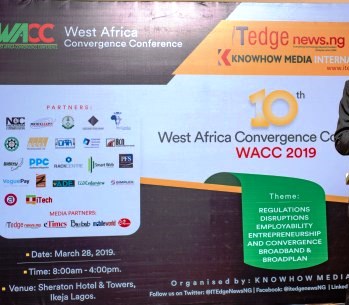
By Osasome C.O
Policy, Capital and Technology Converge at West Africa’s Premier Digital Economy Forum
The 15th West Africa Convergence Conference (WACC) 2026 and the 50 Most Influential Figures in Nigeria’s Digital Economy officially hold today in Lagos, reaffirming the city’s status as the epicentre of Nigeria’s economic and digital transformation.
RELATED: WACC 2026 converges Nigeria’s policy, politics and technology leaders to shape the post-2027 digital economy
More than an annual industry gathering, WACC has evolved into a national institution—consistently bridging government policy with private-sector innovation, and political vision with technological execution.
ALSO READ: Why WACC 2026 matters now: New report shows Meta injects $820m annually into Nigeria’s digital economy
As Nigeria prepares for a new political and economic cycle (2027–2031), WACC 2026 is positioned as a strategic forum for defining how digital innovation will drive inclusive growth, competitiveness, and national resilience.
High-Level Keynotes Set the Tone
Today’s high-level colloquium is headlined by the National Chairman of the All Progressives Congress (APC), Nentawe Yilwatda, who delivers the keynote address, while Armstrong Ume Takang, Managing Director and Chief Executive Officer of Ministry of Finance Incorporated (MOFI), presents an investment-forward perspective.
Professor Yilwatda is opening the conversation on “Leveraging Technology for Development: Building Africa’s Digital Powerhouse and Accelerating Nigeria’s Journey to a $1 Trillion Economy.”
Dr. Takang is reinforcing the dialogue with insights on “Mobilising Federal Assets, Capital and Partnerships for Nigeria’s Digital Economy.”
According to Chairman of the WACC 2026 Committee, Sola Afolabi, the conference remains critical to shaping national dialogue around digital transformation and economic development.
Why Macroeconomic Stability Matters to Technology
A key theme emerging from Yilwatda’s presentation is that technology does not thrive in isolation—macroeconomic stability matters as much to digital growth as innovation itself.
Over the last three years, Nigeria has embarked on far-reaching economic reforms focused on:
- Foreign exchange reform and market transparency
- Strengthening government revenues and fiscal sustainability
- Restoring domestic and international investor confidence
- Infrastructure-led growth across transport, energy, and digital infrastructure
“Investors do not invest in promises; they invest in trajectories. The question is not whether Nigeria has solved all its challenges, but whether Nigeria is moving in the right direction,” Yilwatda states.
He highlights key economic indicators pointing to renewed confidence, including improved balance of payments, stronger foreign reserves, sovereign credit rating upgrades, and rising capital inflows—signals he described as “market verdicts” rather than political claims.

Technology as Nigeria’s Growth Engine (2027–2031)
At WACC 2026, consensus is emerging that technology is no longer an emerging sector—it is now a primary driver of economic growth.
ICT currently contributes an estimated 18–19% of Nigeria’s GDP, with the sector recording 26.34% growth in Q4 2025. Government projections aim to raise ICT contribution to 22% of GDP by 2027, positioning the digital economy as a central pillar of Nigeria’s $1 trillion ambition.
Global recognition is also reinforcing Nigeria’s digital narrative. Technology intelligence platform Dealroom recently ranked Lagos as the world’s leading “Rising Star” and the fastest-growing emerging tech ecosystem globally, citing startup performance, innovation depth, investment flows, and ecosystem value.
Mobilising Assets and Capital for Digital Productivity
From an investment and asset-management perspective, Takang asserted that Nigeria’s next growth frontier is digital productivity.
According to him, diversification beyond oil increasingly depends on how effectively federal assets are digitised, optimised, and integrated into productive economic use.
MOFI’s strategy positions idle public infrastructure as a foundation for revenue generation, private capital mobilisation, and inclusive growth—directly aligning with the Renewed Hope Agenda.
Regulators Framing Trust, Security and Compliance
Trust and regulation feature prominently on the WACC 2026 agenda. Executive regulatory addresses are being delivered by Nigeria’s leading digital regulators.
The Nigeria Data Protection Commission (NDPC), led by Vincent Olatunji, is examining the shift “From Awareness to Accountability” in data protection—particularly in the context of AI adoption, digital identity, and election-year data risks.
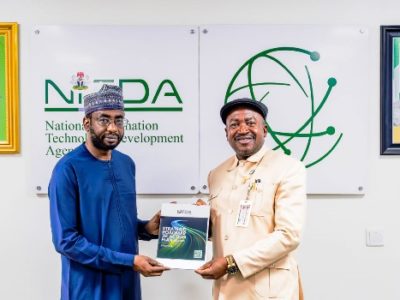
Similarly, the National Information Technology Development Agency (NITDA), under Kashifu Inuwa Abdullahi, is outlining priorities around digital infrastructure, talent development, innovation-driven regulation, and public–private collaboration.
Infrastructure, Capital and the Private Sector Lens
From the operators’ perspective, WACC 2026 spotlights the infrastructure powering Nigeria’s digital economy.
Digital Realty Nigeria, represented by Ikechukwu Nnamani, is leading discussions on the strategic role of data centres in scaling digital services and attracting global capital.
Meanwhile, Aishat Lewis, CEO of Arise Fund, is driving conversations on talent funding, job creation, and offshore capital, while Yele Okeremi, CEO of PFS Limited, examines the convergence of digital payments, telecoms, and financial services.
Strong Institutional Backing Underscores Industry Confidence
WACC 2026 is backed by strong industry and institutional support, anchored by strategic partners including the Ministry of Finance Incorporated (MOFI), the Nigeria Data Protection Commission (NDPC), the National Information Technology Development Agency (NITDA), and Wema Bank Plc—reflecting growing alignment between policy, capital, regulation, and digital innovation in Nigeria’s evolving digital economy.
This coalition of partners reflects a growing recognition that Nigeria’s digital economy can no longer be treated as a peripheral sector. With NITDA driving AI governance and digital skills development, the NDPC enforcing data protection compliance, and MOFI channelling investment into critical digital infrastructure, the conference serves as a barometer of institutional readiness for the next phase of growth.
Wema Bank: Anchoring Confidence in Nigeria’s Digital Economy
Wema Bank’s strategic partnership underscores one of the most compelling transformation stories in Nigeria’s banking sector. Powered by a decisive retail banking pivot and the scale of its ALAT digital ecosystem, the bank delivered standout performance—recording gross earnings of ₦669.59 billion, a 125.36% surge in profit after tax to ₦194.46 billion, and total assets nearing ₦5.23 trillion.
With a Capital Adequacy Ratio of 28.05%, far exceeding regulatory thresholds, Wema Bank exemplifies the financial resilience underpinning Nigeria’s digital transition. Its support for WACC 2026 sends a clear and powerful message: confidence in Nigeria’s digital economy is not only strategic—it is solidly bankable.
A Defining Moment for Policy and Execution
As Nigeria targets a $1 trillion GDP economy, the digital sector’s role as a stabilising pillar has never been more pronounced. The challenge, however, lies not in ambition but in execution.
Regulatory fragmentation, infrastructure deficits, and the need for coordinated policy frameworks remain significant barriers to scaling digital growth.
Honouring the Architects of Nigeria’s Digital Economy
A defining highlight of WACC remains the 50 Most Influential Figures in Nigeria’s Digital Economy awards—often described as the sector’s “Oscars.”
The honours recognise individuals and institutions driving innovation, capacity building, and sector-wide growth across policy, infrastructure, entrepreneurship, and regulation.
According to Olusegun Oruame, CEO of Knowhow Media International, the awards go beyond recognition, serving as inspiration for the next generation of digital leaders while reinforcing collaboration between political leadership, regulators, and the private sector.
Why WACC 2026 Matters Now
With ICT contributing over 18% of GDP and the digital economy projected to add tens of billions of dollars to national output in the coming decade, WACC 2026 arrives at a defining moment.
As Nigeria approaches the 2027 elections and pushes toward its $1 trillion economic ambition, the decisions made around technology, regulation, and investment will shape outcomes for years to come.
Once again, WACC stands as the forum where technology, policy, and politics converge—setting direction, building consensus, and spotlighting those shaping Nigeria’s digital future.