By
By 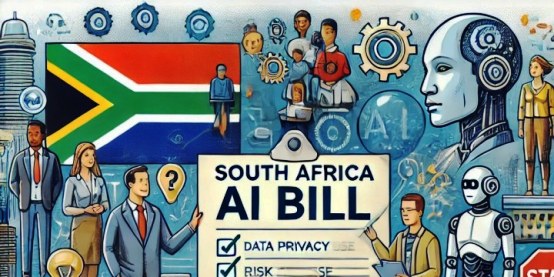
By Robby Coelho and Justin Ramages, Partners, Ashleigh Brink, Senior Associate and Tanya Chivaura Associate, Bowmans
On 10 April 2026, the Department of Communications and Digital Technologies (DCDT) published South Africa’s Draft National AI Policy (Draft Policy) (available here) for public comment. The Draft Policy was approved by Cabinet on 25 March 2026, together with the Special Sitting of Cabinet on 1 April 2026, and comments are due by 10 June 2026 at 16h00.
RELATED: South Africa: Department of Communications and Digital Technologies releases Artificial Intelligence Policy Framework
The Draft Policy is a significant step in South Africa’s developing AI policy landscape. Although it is not binding law, it provides an indication of the Government’s current approach to AI regulation, institutional oversight and sector-specific implementation.


The Draft Policy expressly states that it is a work in progress and should be viewed as a point of departure, rather than a final or exhaustive statement of policy.
AI as a tool for growth, inclusion and public interest
At a high level, the Draft Policy positions AI as a tool to support inclusive economic growth, job creation, cost reduction, and a developing Africa. It identifies education, healthcare, agriculture, and public administration as priority areas for AI implementation, while also emphasising that AI policy must be grounded in South Africa’s constitutional framework, human rights standards, and socio-economic context, including the need to address inequality and the digital divide.
In this regard, the Draft Policy makes it clear that constitutional values and public interest should guide the deployment, development and use of high-impact and high-risk AI systems.
Key focus areas under the Draft Policy
The Draft Policy adopts a broad approach. It contemplates interventions across AI education and skills development, public sector use of AI, startup and innovation support, infrastructure investment, ethical standards, indigenous language development, and mechanisms to promote fairness, accountability, and transparency across the AI lifecycle.
It also places emphasis on capacity building, digital infrastructure, and widening access to AI technologies and tools.
New institutions and oversight mechanisms
One of the notable features of the Draft Policy is its proposed institutional framework. It contemplates the establishment of a National AI Commission or Office, an AI Ethics Board, an AI Regulatory Authority, an AI Ombudsperson Office, a National AI Safety Institute, and an AI Insurance Superfund, among other structures.
The Draft Policy also envisages a role for existing regulators and public institutions, including the DCDT, the Information Regulator, the South African Human Rights Commission, the Independent Communications Authority of South Africa, the Council for Scientific and Industrial Research, the Department of Science, Technology and Innovation, the Technology Innovation Agency and the Industrial Development Corporation of South Africa.

A phased approach to future AI regulation
The Draft Policy further contemplates a staged, risk-based and technology-neutral approach to AI regulation. In broad terms, the Draft Policy refers to the finalisation of a national policy and initial draft regulatory requirements for unacceptable-risk use cases in the first phase, followed by guidelines and regulatory requirements for high-risk, and later medium- and low-risk AI use cases. It also envisages sector-specific working groups and implementation roadmaps.
The publication of the Draft Policy marks the start of a formal public consultation process on South Africa’s proposed national approach to AI. The Draft Policy sets out the Government’s proposed approach in respect of AI policy priorities, governance structures and implementation pathways, while making clear that further consultation and refinement are anticipated before the policy is finalised.
Early considerations for businesses
For businesses, the publication of the Draft Policy is already significant. Although it does not yet create binding obligations, it signals increased regulatory attention on AI governance, ethics, transparency, data protection, fairness, and sector-specific oversight.
Businesses developing, deploying, procuring, or relying on AI systems in South Africa should begin considering how their existing governance, compliance, data, risk, and contracting frameworks may need to evolve in anticipation of a more structured AI regulatory environment.