 By
By 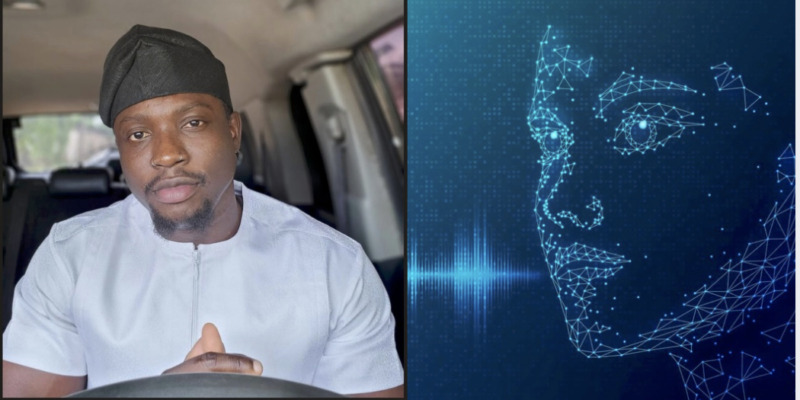
By Nana Theresa Timothy
On Wednesday, May 27, 2026, social media influencer Martins Vincent Otse, known as VDM, uploaded a video containing what he claimed was a leaked audio recording of President Bola Tinubu. The purported audio captured the President allegedly discussing controversial topics, attempts to remove him from office, insecurity in Nigeria’s South East, and World Bank loans. In the supposed recording, a voice resembling Tinubu made inflammatory statements, including claims about deliberately prolonging regional insecurity for electoral advantage.
Within hours, millions of Nigerians encountered this content across WhatsApp, Facebook, Twitter, and TikTok. The controversy escalated rapidly, prompting Presidential aide Bayo Onanuga to issue a strongly-worded statement condemning VDM for spreading “fake audio” and abusing social media platforms. Onanuga insisted the recording was fabricated and called for legal consequences against the influencer for deliberately disseminating false information capable of damaging the President’s image and misleading the public.
Yet the incident raised a troubling question that few Nigerians seemed ready to answer: In an era of artificial intelligence and deepfake technology, how will voters distinguish authentic recordings from sophisticated forgeries as the 2027 presidential election campaign intensifies?
The Technology Behind the Deception
Deepfakes represent a technological leap beyond traditional forgery. Unlike simple edited videos or doctored images, deepfakes employ artificial intelligence and deep learning models to create audio and video content that appears convincingly authentic. These AI systems learn from massive datasets of a person’s voice, speech patterns, facial movements, and mannerisms, then synthesize entirely new content, words never spoken, gestures never made with frightening accuracy.
The technology operates in two primary forms. Audio deepfakes clone a person’s voice with remarkable precision, enabling fake recordings to capture every vocal nuance and speech quirk. Video deepfakes manipulate facial expressions and movements, making it appear as though someone performed actions they never did. In Nigeria’s digital landscape, where both mediums spread rapidly, the combination poses unprecedented risks.
Creating a convincing deepfake no longer requires expensive studio equipment or specialized expertise. Today, open-source tools and commercial software allow anyone with minimal technical knowledge to produce synthetic media. The barrier to entry has collapsed. The barrier to detection, meanwhile, continues rising as AI models become increasingly sophisticated and harder to distinguish from genuine content.
Nigeria’s Perfect Storm: Demographics, Trust, and Infrastructure
Nigeria presents conditions ideally suited for deepfake exploitation. The numbers alone tell the story. Approximately 62 percent of Nigerians obtain their political news from social media, making digital platforms the primary source of electoral information for most voters. The country boasts 47.8 million social media identities as of late 2025, with these users spending an average of 29 hours and 6 minutes per week on social media and actively using an average of 8.1 platforms per month.
This hyperactive digital engagement coexists with dangerously low digital literacy. While Nigeria’s Federal Government targets 95 percent digital literacy by 2030, current figures remain substantially lower. The widespread use of encrypted messaging platforms like WhatsApp makes it difficult to track or counter the spread of false information, and Nigeria’s regulatory framework has not yet fully adapted to the realities of AI, with existing laws addressing traditional misinformation but not adequately covering the complexities of synthetic media and algorithmic manipulation.
Nigeria’s social landscape amplifies these vulnerabilities further. The country has a highly polarized political landscape, where misinformation easily inflames ethnic, religious, and regional tensions. In a nation managing farmer-herder conflicts, displaced communities, and fragile security across multiple regions, a single deepfake video claiming a leader engineered insecurity for electoral gain carries explosive potential.

The 2027 election campaigns will unfold against this backdrop: a massive, deeply engaged online population, limited capacity to verify synthetic content, pre-existing political polarization, and platforms designed to amplify sensational claims faster than corrections can spread.
The Global Warning Signs Already Appearing
Nigeria need not look far for cautionary tales. Multiple accounts have been documented actively experimenting with deepfake political content on platforms like X, TikTok, and Facebook, seriously threatening the integrity of elections and potentially undermining the foundation of democratic trust. Pew Research reports that more than two-thirds of computer specialists predict deepfakes will be a major source of false information in global elections.
Even before the Tinubu audio incident, researchers documented multiple instances of AI-generated deepfake experiments targeting Nigerian political figures. One widely-shared video, though eventually identified as AI-generated by fact-checkers, demonstrated how quickly synthetic media travels through Nigerian networks before verification catches up.
The 2027 Election at the Intersection of Democracy and Technology
The 2027 general election will test Nigeria’s ability to manage an unprecedented challenge. 2027 Nigerian general elections may well be the first in the country’s history to be significantly shaped by artificial intelligence.
Election observers and democracy experts increasingly acknowledge that protecting democratic integrity now requires more than counting votes accurately. It demands protecting the truth itself. As one fact-checking organization noted, trust takes time to build, just like democracy, but it can be broken in a matter of seconds.
Building Defenses Against Synthetic Deception
Nigeria’s response to the deepfake threat has begun, though fragmented and incomplete. The Independent National Electoral Commission (INEC) established a new Artificial Intelligence Division, while grassroots fact-checking networks and digital literacy initiatives mobilize across the country. Platforms like Google and TikTok have rolled out watermarking tools such as SynthID and auto-labels for synthetic content, though implementation in Nigeria remains inconsistent.
Mitigation and safeguards require a multi-layered approach: clear regulations on AI use in political campaigns with mandatory disclosure of AI-generated content, investment in detection tools capable of identifying deepfakes particularly in local languages, nationwide digital literacy campaigns helping citizens recognize manipulated content, strengthened institutional capacity at the Ministry of Communications and INEC, and platform accountability through collaboration with social media companies.
Organizations like the Collaborative Media Project and Center for Democracy and Development (CDD) have upgraded detection capabilities to better analyze AI-generated video, image, and audio content. Yet experts warn that no single solution suffices. As AI systems evolve, so too must the strategies countering them.
The Road Ahead: Technology Against Technology
The Tinubu audio incident exposed Nigeria’s vulnerability but also sparked urgency around the deepfake challenge. Election officials, fact-checkers, journalists, and technology experts increasingly coordinate responses. But time is running short. Campaign season accelerates, social media algorithms amplify divisive content, and artificial intelligence grows more sophisticated daily.
Nigerians cannot eliminate deepfakes before 2027. What remains possible is building resilience, creating institutional capacity to detect and debunk synthetic media rapidly, fostering digital literacy across populations most vulnerable to deception, establishing clear legal frameworks holding creators and distributors accountable, and collaborating across sectors to address a threat that transcends traditional boundaries.
The question is no longer whether deepfakes will appear during Nigeria’s 2027 election. They will. The pressing question becomes whether Nigerian democracy can withstand them. The answer depends on decisions made in the months ahead, decisions about investment, regulation, education, and cooperation. The Tinubu audio served as a warning. What Nigerians do with that warning will shape not only the next election, but the future of democracy itself in Africa’s largest nation.