By
By 
Nigeria Accelerates Digital Economy Vision with Global Alliance
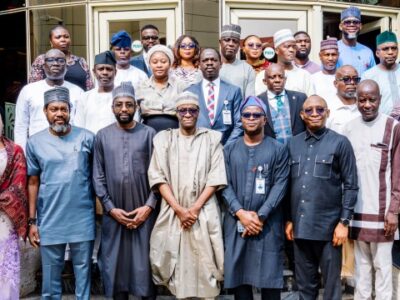
National Information Technology Development Agency (NITDA) and the International Data Center Authority (IDCA) have entered into a landmark strategic partnership to deliver a large-scale national digital infrastructure programme aimed at positioning Nigeria as a fully integrated digital economy ecosystem.
The collaboration brings together local and international ecosystem players under an execution-led, investment-driven framework. This framework is designed to mobilise public and private capital while accelerating long-term economic value creation.

Sovereign Cloud at the Core of National Digital Strategy
The partnership aligns with Nigeria’s Sovereign Cloud initiative, which seeks to unify infrastructure deployment, regulatory standards, and workforce development into a single national platform. The objective is to strengthen data sovereignty, support emerging technologies, and enhance Nigeria’s competitiveness in the global digital economy.
Introducing the Nigeria Digital Triangle (NDT)
At the heart of the programme is the Nigeria Digital Triangle (NDT)—a planned network of strategically located, hyperscale, AI-enabled data centre clusters. These interconnected hubs are designed to attract large-scale investment, host global cloud and enterprise workloads, and serve as the backbone of Nigeria’s expanding digital economy.
Four Pillars Driving the Digital Transformation Agenda
The initiative is structured around four integrated pillars:
- A National Digital Economy Masterplan with clearly defined milestones
- Hyperscale Digital Infrastructure delivered through interconnected data centre hubs
- National Digital Standards aligned with global best practices
- Education and Workforce Development frameworks to sustain long-term capacity building
Government: A Defining Moment for Data Sovereignty and Growth
Kashifu Inuwa, Director General of NITDA, described the partnership as a turning point in Nigeria’s economic transformation.
“This initiative represents a defining moment in Nigeria’s economic transformation, reaffirming the government’s commitment to advancing the Digital Economy and Data Sovereignty Agenda. By prioritising digital infrastructure, talent development, artificial intelligence, and entrepreneurship, Nigeria is laying the foundation for sustainable growth, job creation, and inclusive development.”
IDCA: Building a Competitive Advantage for Africa’s Largest Economy
Mehdi Paryavi, Chairman of IDCA, noted that Nigeria’s scale and ambition make the programme globally significant.
“Nigeria is the largest economy in Africa and has the potential to be far more impactful. This is more than a national initiative—it is a platform for long-term economic value creation that integrates infrastructure, standards, talent, investment, and policy.”
Structured, Investment-Ready Approach
IDCA’s Chief Research Officer, Roger Strukhoff, said the programme reflects a disciplined, execution-focused strategy aligned with global best practices, positioning Nigeria as a future regional digital powerhouse.
Similarly, Solomon Edun, Global Head of Strategic Services and Head of Europe and Africa at IDCA, described the initiative as a historic milestone designed to convert long-term vision into measurable outcomes through infrastructure deployment, investment attraction, and skills development.

Standards, Regulation, and Long-Term Sustainability
Barrister Emmanuel Edet, Acting Director of Regulations and Compliance at NITDA, emphasised that nationally endorsed digital standards—implemented alongside physical infrastructure—are critical to regulatory consistency, data security, and long-term sustainability.
Three-Year Rollout with Multi-Stakeholder Engagement
Implementation of the programme spans three years, supported by clearly defined milestones. The initiative also features structured collaboration among government institutions, private sector investors, and international partners.
Reinforcing Nigeria’s Global Digital Ambitions
This strategic partnership underscores Nigeria’s dedication to using digital infrastructure to drive economic diversification and innovation. It equally promotes skills development and stronger integration into the global digital economy.