 By
By 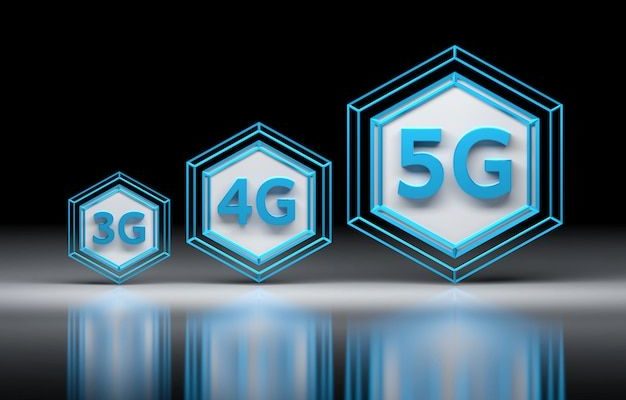
Nigeria’s telecoms industry has entered a major transition phase as operators rapidly phase out legacy 3G infrastructure and expand investments in 4G and 5G networks to meet rising demand for faster and more reliable digital connectivity.
RELATED: MTN Nigeria, Huawei achieve Sub-Saharan Africa’s dirst 25Gbps full-duplex microwave breakthrough
Fresh industry data released by the Nigerian Communications Commission (NCC) through a Q1 telecoms sector review conducted by Ookla shows that the country is moving aggressively toward next-generation broadband infrastructure, with telecom operators reallocating spectrum resources away from outdated technologies to support modern digital services. The development signals a major shift in Nigeria’s digital transformation journey as the country pushes to improve Internet quality, expand digital inclusion and strengthen its position in Africa’s growing digital economy.

According to the report, telecom operators have started retiring the 900MHz 3G spectrum band, especially in rural states such as Sokoto, while reallocating those resources to 1800MHz and 2100MHz 4G bands. Industry experts describe the migration as a strategic move that will improve network efficiency, boost speeds and expand access to essential digital services across underserved communities.
The report identified Airtel and MTN as the leading drivers of the transition, noting that both operators have significantly reduced reliance on legacy spectrum infrastructure while accelerating nationwide network modernisation efforts.
Nigeria’s Mobile Internet Landscape Changes Rapidly
The latest telecom penetration figures reveal how quickly Nigeria’s mobile ecosystem is evolving. According to data reviewed by The Guardian, 4G now dominates the market with 53.76 per cent penetration. Meanwhile, 2G accounts for 36.74 per cent, 3G stands at 5.30 per cent and 5G currently records 4.20 per cent penetration.
However, the Executive Vice Chairman of the NCC, Dr Aminu Maida, recently disclosed during a meeting in Lagos that 5G penetration has already reached 14 per cent in Nigeria, while active usage currently stands at about five per cent. The figures highlight the growing appetite for faster mobile broadband services as more Nigerians depend on digital platforms for work, entertainment, education, banking and business operations.
Over the last few years, demand for high-speed Internet has increased sharply due to the expansion of streaming services, cloud applications, fintech platforms, online learning and remote work systems. Telecom operators now face increasing pressure to upgrade infrastructure capable of supporting these bandwidth-heavy activities.
5G Emerges as Nigeria’s Digital Fast Lane
At the centre of Nigeria’s next-generation connectivity push lies the n77 spectrum band operating on the 3.5GHz frequency. The NCC describes the n77 band as the “fast lane” of Nigeria’s broadband future because it delivers speeds up to 10 times faster than average 4G performance.
According to the Ookla report, 5G test volumes in Nigeria have surged by 44 per cent since late 2025, reflecting growing adoption among consumers and businesses. Airtel and MTN continue to lead the rollout and adoption of 5G services nationwide.
In major urban centres such as Lagos and Abuja, download speeds now exceed 250Mbps, dramatically improving the user experience for activities such as video streaming, online gaming, cloud computing, virtual collaboration and high-definition video conferencing. The report noted that consumers need smartphones and devices compatible with the n77 band to fully benefit from the technology.
Analysts believe Nigeria’s growing 5G ecosystem could unlock new opportunities in sectors such as healthcare, education, financial services, manufacturing, logistics and artificial intelligence.
Rural Nigeria Still Faces Connectivity Gaps
While urban areas continue to enjoy stronger broadband performance, several rural states still rely heavily on older technologies.
The report specifically identified Sokoto and Imo as regions where 3G dependence remains relatively high, limiting access to modern digital services and applications. However, telecom operators have already started expanding 4G infrastructure into underserved communities as part of ongoing nationwide migration efforts.
The NCC framed the transition as an issue of digital equity, stressing that reliable Internet access should not remain exclusive to major cities and urban business centres. Improved connectivity could significantly impact education, healthcare delivery, financial inclusion and small business growth in rural communities.
For example, stronger 4G coverage could help students access online learning platforms more effectively while enabling small businesses to process digital payments and reach wider markets. The report also highlighted how spectrum optimisation directly improves the daily lives of Nigerians by supporting seamless communication, faster transactions and improved access to information.
4G Remains Nigeria’s Everyday Workhorse
Despite growing excitement around 5G, 4G still serves as the backbone of Nigeria’s mobile Internet ecosystem.
Most Nigerians currently depend on 4G networks for everyday digital activities such as social media usage, video calls, banking transactions, web browsing and online communication. Experts say 4G offers the best balance between speed, affordability and coverage, especially in a country where millions of users still rely on mid-range smartphones.
However, 5G continues to gain attention because of its ultra-fast speeds and ability to support data-intensive technologies. Industry analysts predict that 5G adoption will accelerate further as smartphone prices gradually decline and telecom operators expand coverage beyond major cities.
The NCC’s broader strategy focuses on retiring outdated technologies, strengthening current infrastructure and accelerating the transition toward faster broadband systems. According to the Ookla report, Nigeria’s spectrum evolution represents more than a technical upgrade.
“It is a social and economic catalyst,” the report noted.
IXPN, China Mobile Partnership Boosts Nigeria’s Internet Ecosystem
Meanwhile, Nigeria’s Internet ecosystem received another major boost as the Internet Exchange Point of Nigeria (IXPN) announced that China Mobile International Limited (CMI) has joined its peering fabric.
The development marks a significant milestone for Nigeria’s digital infrastructure ecosystem and could strengthen the country’s role as a regional hub for global Internet traffic in West Africa. CMI serves as the international subsidiary of China Mobile Limited, widely recognised as the world’s largest mobile operator by subscriber base.
Its integration into IXPN’s ecosystem will allow Internet traffic exchange directly within Nigeria instead of routing large volumes of data through expensive international transit systems. Industry experts say the move could reduce operational costs for Internet service providers while improving network efficiency and reducing latency. IXPN described the partnership as a landmark moment for Nigeria’s Internet ecosystem.
CMI’s presence on the IXPN fabric means that Nigerian businesses, enterprises and Internet users stand to benefit from enhanced connectivity, faster traffic exchange and access to a truly global telecommunications network right here locally. IXPN stated.
Nigeria Pushes Toward Digital Sovereignty
The partnership also strengthens Nigeria’s push for digital sovereignty by ensuring more locally generated Internet traffic remains within the country.
Currently, many African countries still route large volumes of Internet traffic through foreign servers, increasing costs and reducing efficiency. Localising data exchange improves the performance of latency-sensitive services such as cloud computing, video conferencing, AI-powered applications and streaming platforms.
Experts believe Nigeria’s expanding digital infrastructure could position the country as one of Africa’s leading technology and connectivity hubs over the next decade. As telecom operators expand 4G and 5G networks while infrastructure organisations strengthen local Internet exchange systems, Nigeria appears determined to build a faster, more resilient and globally competitive digital economy.
The country’s telecom evolution now extends beyond faster Internet speeds. It increasingly shapes financial inclusion, digital innovation, education access, entrepreneurship and Nigeria’s broader economic future.