By
By 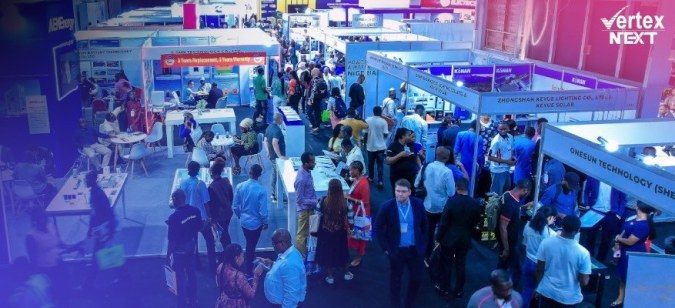
Africa’s Digital Growth Under Pressure
Government officials, technology firms, and infrastructure providers have sounded the alarm on Africa’s digital future. The continent faces urgent challenges: rising cyber threats, inadequate data infrastructure, and persistent power and interconnectivity gaps. Without swift action on these fronts, Africa’s digital economy will struggle to reach its full potential.
RELATED: Nigeria’s digital infrastructure boom takes centre stage at IoT West Africa 2026 in Lagos
These views were shared at the IoT West Africa 2026 Conference and Data Centre Cloud Expo held in Lagos. The event brought together policymakers, data centre operators, cloud providers, and investors to assess the future of Africa’s digital ecosystem.
Cybersecurity Threats Rise with Digital Expansion
In a keynote address, Dr. Vincent Olatunji, National Commissioner and CEO of the Nigeria Data Protection Commission, cautioned that Africa’s rapid digitalisation is being matched by an unprecedented rise in cybercrime.


According to Olatunji, cyberattacks now occur every 39 seconds globally, with annual losses estimated at $10.5 trillion. Nigeria alone records more than 4,000 cyberattacks weekly. The country accounted for nearly 45 per cent of incidents across Africa and financial losses exceeded ₦12 billion in 2024.
He also highlighted the scale of global data growth, noting that over 402 million terabytes of data are generated daily. Global data volumes are projected to rise from 181 zettabytes to 221 zettabytes.
“Data is the new oil, powering everything from IoT and cloud computing to digital platforms,” Olatunji said.
He added that Nigeria’s digital economy, currently valued at $18.3 billion, could double within five years.
Data Centres, Power and Interconnection Take Centre Stage
During a fireside chat on the role of colocation in Africa’s data centre transformation, industry leaders identified power availability, affordability, and interconnection as the biggest constraints to growth.
Mr. Yashnath Issur, CEO of Nxtra by Airtel, stressed that Africa’s data centre market must meet global benchmarks.
“This is no longer a local market. It is a global business that demands global quality, scale, and expertise,” he said.
Similarly, Mr. Lars Johannisson, CEO of Rack Centre, described energy as the single biggest barrier to expansion.
“Data centres are about power, cooling, and people. Without fixing energy, scaling will remain constrained,” Johannisson stated .
Mr. Wole Abu, Managing Director of Equinix West Africa, underscored the importance of interconnected digital ecosystems. He likened isolated data centres to ships, while interconnected facilities function as ports that drive trade and economic growth.
Investment, Inclusion and Local Capacity
From an investment perspective, Mr. Akinsehinwa Akin-Taylor of African Infrastructure Investment Managers noted that capital remains available. However, he said investors are now prioritising bankability, strong operating history, and long-term asset quality.
Mr. Ifeanyi Otudoh of MTN called for inclusive digital growth, urging stakeholders to build local capacity and extend infrastructure beyond major cities.
“Africa’s innovators must be empowered, and secondary cities must not be left behind,” he said.
Meanwhile, Mr. Gary Chomse of Vertiv noted that power instability continues to shape how data centres are designed across the continent, making resilience and uptime critical considerations.
Digital Twins Emerge as Game-Changer
At a separate panel on digital twins for data centre optimisation, experts said the technology could significantly improve efficiency, reduce failures, and lower operational costs.
Mr. Johnson Agogbua, CEO of Kasi Cloud, explained that digital twins enable predictive maintenance and power optimisation—critical in a market plagued by energy challenges.
Mr. Morris Nmor of Uptime Institute said widespread adoption could dramatically reduce operational risk, while Mr. Riaan De Leeuw of Zutari highlighted the technology’s role in improving cooling efficiency.
Mr. Kayode Akomolafe of Amazon Web Services added that digital twins provide granular data for advanced planning, forecasting, and even monetisation of data centre operations.
Prof. Ibrahim Adeyanju of Galaxy Backbone noted that the technology could also reduce energy wastage and strengthen cybersecurity controls.
Unlocking Africa’s Digital Economy Potential
Experts at the conference reached a clear consensus on Africa’s digital future. The continent’s multi-trillion-dollar digital economy opportunity depends on seamless data infrastructure, robust cybersecurity, and reliable power. Additionally, the adoption of emerging technologies like digital twins will be essential for realising this potential.
Without these foundations, they warned, the continent risks falling behind even as global demand for digital services continues to accelerate.