By
By 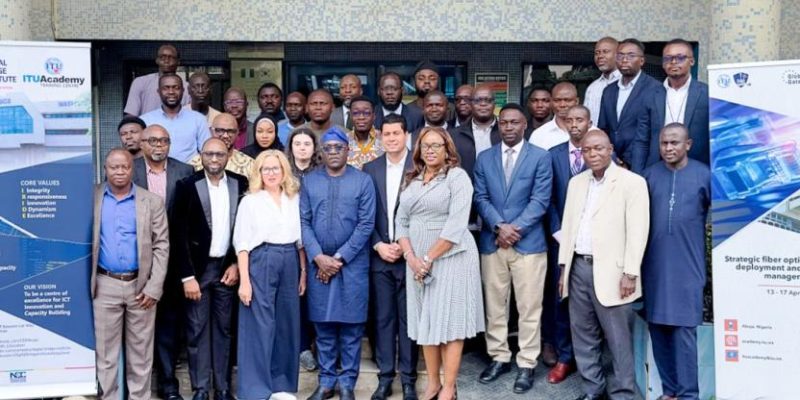
DBI–ITU Fibre Optic Training Advances Nigeria’s Digital Jobs Agenda

From left, Ghazi Mabrouk, Project officer, ITU; Director Special Duties, DBI, Viola Askia Usoro; Igna Stefanowicz of EU; Abraham Oshadami, Executive Commissioner NCC; and Ahmed Atere, DBI’s lead Instructor.
The Digital Bridge Institute (DBI) and International Telecommunication Union (ITU) have commenced a fibre optic infrastructure training programme in Abuja. A strategic move to expand technology-driven employment, the training will also deepen Nigeria’s digital economy.
RELATED: ITU and DBI launch cybersecurity train-the-trainer programme in Jos to bridge Nigeria’s skills gap
The programme is equipping 31 participants from 10 countries across Africa and Europe with critical skills required for fibre optic deployment. Other areas include regulation, and infrastructure management; capabilities considered central to broadband expansion and digital job creation.
EU-Backed Programme Targets Skills and Employment Growth
Hosted at DBI’s headquarters in Abuja, the intensive training is sponsored by the European Union under its Global Gateway Initiative. It is designed to strengthen digital infrastructure capacity. The training is expected to open new pathways for employment across participating countries, with a strong focus on Nigeria.
This initiative aligns with Nigeria’s broader push to scale broadband penetration, enhance digital inclusion, and position the country as a regional digital hub.
DBI: Building a Future-Ready Digital Workforce
Welcoming participants, DBI President/CEO David Daser described the programme as a strategic milestone in building a future-ready workforce.
“This programme represents a significant milestone in our collective efforts to advance resilient, inclusive, and future-ready digital infrastructure. It is not just a training, but a platform for knowledge exchange, innovation, and international collaboration,” Daser said.
He noted that DBI, established by the Nigerian Communications Commission, has evolved into a centre of excellence for ICT capacity development. The DBI is producing professionals who contribute to both national and global digital ecosystems.
Participants, he explained, are being trained in fibre deployment planning, regulatory frameworks, infrastructure sharing, and stakeholder engagement. All of these are skills critical to unlocking broadband growth and digital employment.
NCC Links Fibre Infrastructure to National Development
In a goodwill message, the Executive Vice Chairman/CEO of the Nigerian Communications Commission (NCC), Aminu Maida, underscored the importance of fibre infrastructure to Nigeria’s digital transformation. He was represented by Executive Commissioner, Technical Services, Sunday Abraham Oshadami.
“Robust, well-regulated fibre optic infrastructure is the foundation for any digital transformation agenda,” Maida stated.
He revealed that under Project BRIDGE, the Federal Government is targeting the deployment of 90,000 kilometres of fibre optic cables nationwide. Project BRIDGE is designed to cover all 774 local government areas in Nigeria. While acknowledging challenges such as Right of Way charges, regulatory bottlenecks, and infrastructure vandalism, he stressed that collaboration remains key.

According to him, 13 states have already waived Right of Way charges, attracting fresh investment. A 2024 Presidential Order designating telecom assets as Critical National Information Infrastructure has strengthened protection for digital infrastructure.
ITU Highlights Global Capacity-Building Impact
From the international perspective, ITU Project Officer Ghazi Mabrouk said the Abuja training forms part of ITU’s global capacity development portfolio, which delivers over 150 training programmes annually.
He described DBI as a key partner within ITU’s global training network. Mabrouk praised the diversity of participants from both public and private sector institutions. He noted that such cross-sector engagement strengthens policy formulation and implementation.
EU Reaffirms Commitment to Nigeria’s Digital Transformation
Also speaking, Head of Section, Green and Digital Economy at the EU Delegation to Nigeria and ECOWAS, Inga Stefanowicz, reaffirmed the EU’s commitment to Nigeria’s digital future.
She highlighted the EU’s €820 million Digital Economy Package for Nigeria, which supports digital skills development, innovation, and infrastructure expansion.
“At the heart of this effort is the development of fibre optic infrastructure, which remains fundamental to enabling digital transformation,” she said.
Stefanowicz stressed that meeting Nigeria’s infrastructure needs will require strong private sector participation, with EU-backed initiatives mobilising financing, expertise, and sustainable technologies.
Aligning Policy, Skills, and International Cooperation
Stakeholders noted that the DBI–ITU collaboration, backed by EU funding, reflects a growing alignment between policy, capacity development, and international cooperation.
The initiative underscores Nigeria’s determination to expand its broadband footprint, close skills gaps, and create more digital employment opportunities. All of these will help position the country, and the wider region, for a more inclusive digital future.