By
By 
Sumsub Unveils Real-Time Adaptive Deepfake Detection
Sumsub, a global full-cycle verification platform enabling scalable compliance, has launched its Adaptive Deepfake Detector. This is a next-generation solution designed to overcome the limitations of traditional, offline fraud detection systems.
RELATED: AI-powered fraud is soaring: 83% of experts predict significant rise in deepfake scams
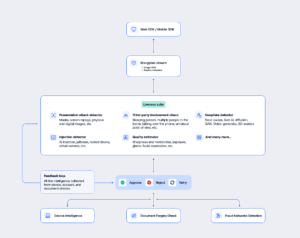
Unlike legacy tools that rely on periodic model updates, the new detector uses machine learning–driven online self-learning. It allows the system to identify emerging and highly sophisticated deepfake attacks in real time. This enables the system to adapt within hours, rather than weeks or months, significantly reducing exposure to newly evolving fraud techniques.
Africa Faces Rapid Shift to AI-Enabled Fraud
While the solution is rolling out worldwide, it holds special significance across Africa. There, fraudsters are quickly shifting from basic scams to AI-driven impersonation and identity fraud.


According to Sumsub’s Identity Fraud Report 2025–2026, Tanzania recorded the continent’s highest fraud rate in 2025 at 5.0%. It is followed by Uganda at 4.7%. Côte d’Ivoire experienced a sharp 51% year-on-year increase, pushing its fraud rate to 4.5%.
Overall fraud levels in Kenya have dropped. But deepfakes now make up nearly 10% of all fraud attempts. This shift underscores the growing role of AI-enabled deception, even in maturing fraud-control markets.
South Africa: Falling Fraud, Rising Deepfakes
South Africa illustrates the changing threat landscape. Although the country’s overall fraud rate dropped by 31% year-on-year to 1.4% in 2025, deepfake-related incidents surged by more than 269% over the same period. This divergence highlights how AI-driven impersonation is emerging as the next major risk vector in digital identity systems.
Why Periodic Updates Are No Longer Enough
Traditional fraud models depend on scheduled updates that may take weeks or months to deploy. During these gaps, new attack methods can bypass defences, causing material losses to both users and businesses.
Sumsub’s Adaptive Deepfake Detector addresses this vulnerability by continuously learning from fraud signals across multiple layers, enabling it to respond dynamically to new threats as they emerge.
Industry Implications for High-Risk Digital Sectors
For businesses operating in digital finance, payments, crypto, iGaming and other high-risk online industries, the findings underscore the urgent need for fraud prevention systems that adapt in real time rather than relying solely on static or periodically updated models.

“In 2026, the threat landscape has evolved, demanding that risk management teams respond with next-generation fraud prevention models,” said Nikita Marshalkin, Head of Machine Learning at Sumsub. “Modern deepfakes can no longer be detected by the human eye. Decisions must be based on real-time, multi-signal analysis.”
Beyond Visual Checks: Full-Context Fraud Detection
Sumsub noted that effective deepfake detection can no longer rely on visual inspection alone. Fraudsters increasingly combine deepfake images, voices and videos with sophisticated injection methods, creating additional data layers that must be monitored throughout the entire user session.
How the Adaptive Deepfake Detector Works
From a technical standpoint, the new solution is built on an online learning model that removes the need for scheduled retraining cycles or constant human review. Key capabilities include:
- Continuous learning of new fraud patterns, including emerging deepfake types and injection methods
- Multi-source signal analysis covering documents, geolocation, IP addresses, device intelligence, facial biometrics (liveness) and cross-user network behaviour
- Automatic parameter adjustment with every new observation, without manual retraining
- A dynamic decision boundary that evolves with threats, pushing detection accuracy close to 100%
A New Standard for AI-Driven Fraud Prevention
Advanced document verification, device intelligence, and network-level fraud analysis now work alongside adaptive deepfake detection in Sumsub’s platform. Together, these capabilities target increasingly complex AI-driven fraud. Sumsub says the combination sets a new benchmark for protecting digital platforms.