By
By 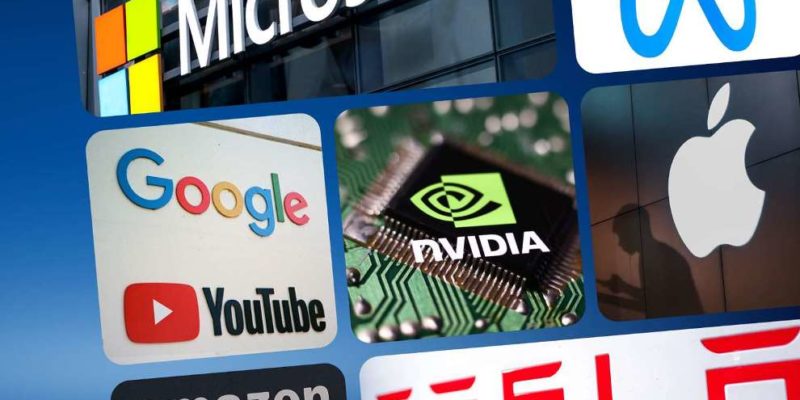
The era of the “Magnificent Seven” as a single, unified market trade may be nearing its end, according to Nigel Green, CEO and founder of deVere Group.
RELATED: Magnificent Seven stocks – a bubble or indicator of advancements in AI?
Green predicts that within the next five years, investors will conclude that only three of today’s mega-cap technology giants truly capture the economic upside of the artificial intelligence (AI) revolution.
“The Magnificent Seven will become the Magnificent Three,” he says.
Why the ‘Magnificent Seven’ Trade Is Fragmenting
For years, global markets have treated the Magnificent Seven—Apple, Microsoft, Nvidia, Alphabet, Amazon, Meta, and Tesla—as equal beneficiaries of AI-driven growth.


Green argues this assumption is deeply flawed.
“The market has largely assumed that all seven companies benefit equally from artificial intelligence. I believe that theory will prove to be one of the biggest investment misconceptions of this decade.”
Apple’s Price Hike Triggers Broader Tech Sell-Off
His comments come amid a global sell-off in technology stocks following Apple’s decision to raise prices on MacBooks and iPads, citing sharply higher memory and storage costs driven by explosive demand from AI data centres.
Apple’s shares fell more than 6% after the company admitted it could no longer fully shield consumers from the inflationary pressures created by the AI boom—helping spark a wider retreat in global tech stocks.
“This wasn’t a sell-off because consumers suddenly stopped wanting iPhones or AI services,” Green explains.
“It was because one of the world’s most powerful companies effectively admitted it no longer controls some of the most important economics in the tech sector.”
AI Is Creating a New Hierarchy in Global Technology
According to Green, artificial intelligence is reshaping power dynamics across the technology industry.
“AI is creating a completely new hierarchy of power in global technology. The winners of the next decade will increasingly be the companies selling the infrastructure, memory, chips, energy and computing capacity that AI requires.”
Industry data appears to support this view. Estimates suggest memory and storage costs have quadrupled in the past three quarters as suppliers prioritise high-bandwidth memory for AI servers. In contrast, memory manufacturers are reporting record revenues and margins—signalling where the economic leverage of the AI era may ultimately sit.
Producers vs Consumers of AI Economics
Green believes markets are approaching a critical inflection point, where investors will increasingly distinguish between two categories of mega-cap tech companies:

- Those that extract economic rents from AI infrastructure, and
- Those that consume those rents to remain competitive.
“Owning an AI strategy and capturing the economics of AI are two very different things,” he notes.
While many of today’s tech giants are investing hundreds of billions of dollars into AI development, Green says this does not automatically translate into superior valuation premiums.
“They will continue to thrive, but they may face margin pressure and lower valuation multiples compared to companies controlling the critical infrastructure that powers AI.”
Not a Decline—But a Repricing of Big Tech
Green is quick to clarify that his outlook is not a prediction of failure for the world’s largest technology companies.
“Apple, Microsoft, Alphabet, Amazon, Meta, Nvidia and Tesla are among the greatest businesses ever created. My prediction is simply that markets will stop treating all seven as equal beneficiaries of AI.”
He stops short of naming which three firms will ultimately emerge as the long-term winners, but insists the dividing line will become increasingly obvious to investors.
The End of the Consumer Tech Era?
Beyond short-term volatility, Green says the implications could be profound.
“We could be witnessing the end of the consumer technology era as the dominant force in markets. For the first time since the personal computer revolution, the most important customers in technology are no longer people—they’re machines.”
A New Investment Narrative Emerges
Green concludes that within five years, investors will no longer speak of the Magnificent Seven as a single phenomenon.
“Instead, they’ll be talking about the Magnificent Three—and four other extraordinary companies that successfully adapted to a fundamentally new technological order.”