By
By 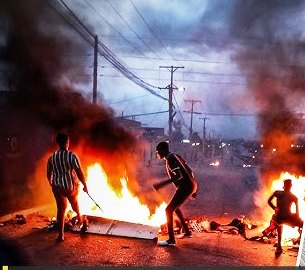
By Elisha Chebwawaza Gideon (ElishaJnr ProCreative)
By early April 2024, the deadly rhythm between violence and innovation in Jos had reached a breaking point. A brutal attack on the Angwan Rukuba community—claiming nearly 30 lives—forced the city’s tech ecosystem to pivot sharply toward security-focused solutions. But that journey never truly left the danger zone. When violence flared again on Palm Sunday 2026—once more in Angwan Rukuba—its shockwaves rippled across the city, landing hardest along the Bauchi Ring Road, the corridor that hosts the University of Jos.
There is a haunting cadence to the Silicon Plateau. It is the sound of high-speed fiber-optic cables being laid during the day and the crackle of distant gunfire at night. In the cool, mist-shrouded highlands of Jos, a generation of software engineers has mastered a skill not found in any Python or JavaScript manual: operational survival.
RELATED: Despite tension, Jos gains traction on digital skill development with Code Plateau
As of April 2026, the tech community in Jos is once again in recovery mode. Following the latest surge in communal instability—which forced the emergency evacuation of students and developers from the University of Jos corridors—the narrative of this city is being rewritten.
ALSO READ: Why Network of Incubators and Accelerators want to change the landscape of startups in Jos
This isn’t just about a crisis. It is about the systematic strangulation of one of Africa’s most promising digital frontiers by a quarter-century of unresolved friction and institutional neglect.

The Jos Crisis: A Chronic Condition, Not a Single Event
The Jos Crisis is not one tragedy. It is a recurring wound that has never been allowed to heal. To understand its impact on technology, one must look at the track record of disruption that has defined the last twenty-five years.
2001: When the first major riots shattered the city’s peace, the tech scene was barely a whisper—a collection of cybercafés and basic desktop publishing centers. The violence didn’t just claim lives; it killed Jos’s reputation as a safe haven for investment.
2008–2010: As the world moved toward mobile-first technology, Jos was busy counting bodies and razed businesses. Each time the city neared a tech breakout, a new wave of violence acted as a reset button, forcing senior talent to flee to the chaotic but predictably safe environment of Lagos.
Mid-2010s: A heroic resurgence emerged with the birth of hubs like nHub, QED, and later ICIDATTECHNOLOGIES. Jos began producing some of Nigeria’s finest backend engineers. Hope flickered again.
2021–2026: A more sinister evolution of the crisis took hold. Violence shifted from urban riots to complex rural-fringe attacks and kidnapping risks. For a tech worker, the cloud is supposed to be an abstract place for data. In Jos, it became a literal necessity. If your physical office can be cordoned off by a military curfew at any moment, your entire business must exist in the ether.

The ‘Security Discount’: What Jos Founders Face in 2026
For a Jos-based founder pitching to global venture capitalists today, there is an invisible penalty attached to their address: the Security Discount.
Investors aren’t just looking at user acquisition costs. They are scrutinizing your disaster recovery plan. They are calculating the risk of a 48-hour curfew interrupting global service-level agreements.
Senior developers often view Jos as a bootcamp—a low-cost environment to learn the craft. But the moment they hit professional maturity, they seek relocation. While Lagos builds data centers, Jos struggles to maintain consistent fiber-optic uptime during periods of unrest.
“In 2026, a 48-hour curfew in Jos doesn’t just stop traffic. It stops global service-level agreements.”
A Tragedy of Systemic Governance Failure
The tragedy of the Jos tech community is that its growth is happening in spite of systemic governance failure. For twenty-five years, state and federal responses have followed a weary, reactive pattern:
- Violence erupts
- Military is deployed
- Curfew is set
- Commission of Inquiry is inaugurated
Yet the root causes; land rights, indigene-settler politics, and systemic poverty, are left to fester. The government’s culpability lies in its refusal to evolve.
In an era where Jos engineers are building sophisticated AI tools, the state security apparatus remains largely analog. It is unable to predict or preempt communal clashes that have been brewing for decades. There is a total absence of Special Economic Zone status for the Plateau that could provide the specific security and infrastructure guarantees needed to reassure international partners.
A Way Forward: Tech-First Security Integration
In my view, the solution to the Jos crisis cannot be found at the tip of a bayonet. The government has failed by treating symptoms rather than disease. It is consistently prioritizing political optics over human and economic security.
To proffer a real solution, the government must adopt a Tech-First Security Integration model:
1. Establish Digital Intelligence Centers
Partner with the local tech community to build early-warning systems using data analytics. The same minds building AI tools can help predict and prevent violence—if given the opportunity.
2. Create a Dedicated, Highly-Secured Innovation Corridor
A physical space with 24/7 independent power and enhanced security would decouple the tech economy from the city’s physical volatility. A safe zone where innovation is protected, not collateral damage.
3. Finally Tackle the Indigene vs. Settler Legal Quagmire
Tech is meritocratic. It doesn’t care who your ancestors were. As long as political rights are tied to bloodlines, the city will remain a tinderbox. This legal reform is long overdue.
The Cost of Inaction: What Jos Could Become—and What It Loses
Jos has the talent to be Africa’s Tallinn or Boulder, a global tech hub known for innovation, not instability. But this will not happen until the government treats the Silicon Plateau as a national asset worth defending with modern policy. Not just reactionary force! Until then, the city’s brilliant minds will continue to build the future while looking over their shoulders.
Resilience is a virtue. But it should never be a permanent requirement for innovation.