By
By 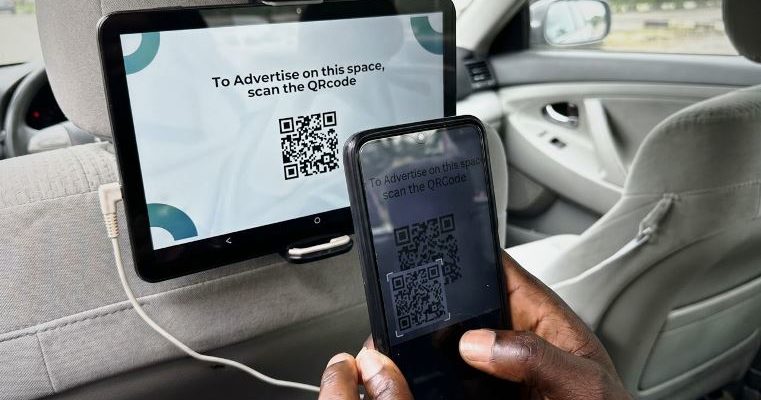
With QR-code interactive ads inside tricycles and ride-hailing vehicles, RideAD is helping brands cut through the noise in Nigeria’s most crowded cities.

Today, every brand is fighting for the same thing: attention. Social media ads are skipped, billboards are passed in seconds, and TV ads struggle to stick. The traditional advertising model is losing its effectiveness.
RELATED: Nigeria partners with Aleph Group to train 2,600 youth in digital advertising
For businesses today, the real challenge is no longer just advertising. It is being remembered and actually driving action.
That is why brands are rethinking how they show up in people’s everyday lives. Instead of shouting louder, they need smarter ways to connect with customers in real moments when attention is natural. This is exactly where RideAD is changing the game.
Why Traditional Advertising Is Failing in Nigeria’s Mega-Cities
In urban centres like Lagos—home to over 20 million people—the advertising landscape is cluttered and competitive. Billboards compete for fleeting glances, social media feeds are saturated with sponsored content, and traditional media struggles to hold viewer attention. For brands, the cost of reaching consumers is rising, but the return on that investment is often unclear.
The challenge is not just visibility; it is relevance. People in high-density cities are constantly bombarded with messages. The brand that wins is not the one that shouts loudest but the one that shows up in moments of genuine attention—when people are relaxed, present, and open to engagement.
How RideAD Works: Advertising That Moves With You
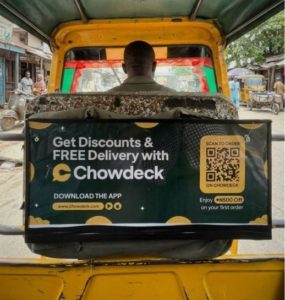
RideAD is taking advertising out of traditional spaces and placing it right inside everyday journeys. By turning the interiors of tricycles and ride-hailing vehicles into digital advertising spaces, brands can now reach people while they are commuting—when they are relaxed, attentive, and actually looking around. It feels less like an interruption and more like part of the experience.
At its core, RideAD is a platform that transforms the inside of tricycles into mobile advertising screens that connect brands with real, everyday audiences. But it does not stop at visibility. It uses QR codes to make the experience interactive, so instead of just seeing an ad, people can scan it and instantly engage with the brand online.
Why Lagos and Nigeria’s Urban Centres Are a Game-Changer for Brands
With over 20 million people, Lagos is Africa’s largest city and one of the most densely populated urban centres in the world. Millions of residents commute daily by tricycle, bus, and ride-hailing vehicles—creating a captive audience that traditional advertising often misses.

In cities like Lagos, Abuja, Kano, Kaduna, Oyo, Ogun, and Osun, commuters spend significant time in transit. RideAD turns this commute time into valuable advertising real estate. For brands, this means reaching consumers in a low-distraction environment where they are more receptive to messaging.
Interactive Advertising: From Passive Viewing to Active Engagement
Here is how it works in practice: each campaign gets a unique QR code. When a commuter scans it, they are taken straight to the brand’s content—whether that is a product page, a promotion, an app, or a special offer. There is no friction, no long process—just a quick connection between interest and action.
For brands, this solves a long-standing problem in outdoor advertising: uncertainty. RideAD provides real-time data showing how campaigns are performing. Businesses can see how many people are viewing, scanning, and engaging, making it much easier to understand what is actually working and where to improve.
Flexibility for Every Business Size
RideAD gives brands flexibility. Whether the goal is to build awareness, promote a product, or run a targeted campaign, businesses can shape their message to match their objective and adjust as they go. This makes it useful for both large companies and smaller businesses trying to grow their presence.
One of the most powerful parts of the platform is how simple it keeps everything for the end user. People do not need to download anything or go through complicated steps—they just scan and engage. That ease is what makes the interaction feel natural rather than forced.
The Vision Behind RideAD
Behind the idea, founder and CEO Omotayo Noah Ayantuga explains it simply: the goal is to create value for everyone involved. Brands gain visibility where people are actually paying attention. Drivers earn extra income from the system. Passengers, meanwhile, receive useful, relevant content while they move around the city.
Since launching in 2025, RideAD has grown across cities like Lagos, Abuja, Kano, Kaduna, Oyo, Ogun, and Osun, as more businesses look for better ways to stand out and win customers in a crowded market.
The Big Picture: What This Means for Nigerian Businesses
In a country where over 60% of the population is under 30 and increasingly urban, the advertising landscape is shifting rapidly. Traditional media is losing its grip, and brands that fail to adapt risk being left behind. RideAD offers a new model—one that meets consumers where they already are, in moments of genuine attention, and turns that attention into measurable action.
For businesses operating in Nigeria’s most competitive markets, the question is no longer whether to advertise. It is how to advertise in a way that people actually notice and act on. RideAD is providing one compelling answer to that challenge.
At its core, RideAD is helping brands do something most traditional advertising struggles with: turn attention into real action. And in today’s world, that is what actually drives growth and market share.