 By
By 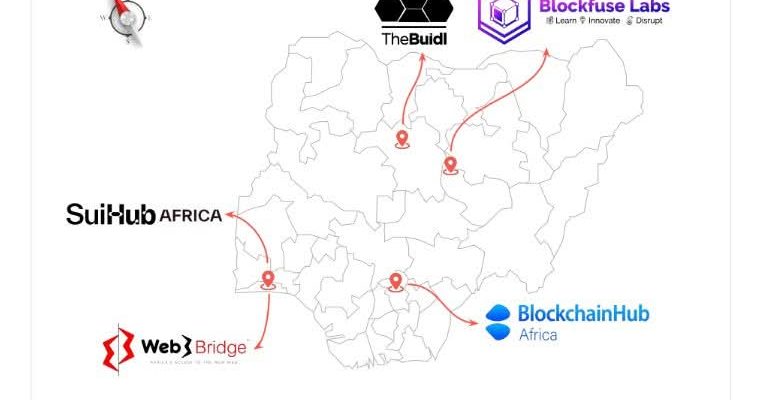
Nigeria’s Web3 ecosystem is no longer defined solely by its major cities. A new wave of growth is being powered by regional hubs, physical spaces that are activating developers, building communities, and expanding the ecosystem from the ground up.
RELATED: Quantum computing is coming for Web3 and research reveals most IT directors say they are not ready

The Nigeria Web3 Landscape Report 2025 underscores this shift, revealing a 9% increase in developer activity across the country. But beyond the headline figure lies a deeper story, one that points to a structural transformation in how Nigeria is building its Web3 future.
So, what does this 9% really mean?
From the Margins to the Spotlight
In practical terms, the 9% growth represents more than just incremental progress. It reflects the rise of new centers of innovation, places that were previously absent from the national Web3 conversation.
One of the most striking examples is Jos.
Just months ago, Jos was not widely recognized as a Web3 hub. Today, it stands as the second-most-active Web3 city in Nigeria, signaling a dramatic shift in the ecosystem’s geographic landscape. This rise is not accidental—it is the result of deliberate investment in infrastructure, training, and community building.
The Power of Regional Hubs
At the core of this transformation are regional hubs such as Blockfuse Labs, TheBuidl, SuiHub Africa, BlockchainHub, and web3Bridge.
These hubs are redefining what it means to build in Web3. Rather than relying solely on online learning or centralized opportunities in cities like Lagos, they provide localized access to training, mentorship, and collaborative environments.

They function as critical infrastructure bridging the gap between interest and execution, and turning passive learners into active builders.
Blockfuse Labs and the Rise of Jos
Among these hubs, Blockfuse Labs has played a defining role in the emergence of Jos as a Web3 powerhouse.
Blockfuse Labs is not just training developers, it is building a pipeline. Through structured programs, hands-on workshops, and a strong emphasis on real-world application, the hub has created a system where talent is continuously nurtured and deployed into the ecosystem.
What sets Blockfuse Labs apart is its ability to build not just skills, but consistency. Its community shows up, regularly participating in learning sessions, contributing to projects, and engaging with the broader Web3 space.
The result is a vibrant, active ecosystem that is now being reflected in national data.
The 9% increase in developer activity is, in many ways, a validation of this work. It is proof that sustained effort at the community level can translate into measurable growth at the national level.
Nigeria’s Growing Global Footprint
The report also places Nigeria within a global context. The country now accounts for 4% of Web3 developers worldwide and is growing at an impressive 36% year-on-year, the fastest rate on the African continent.
This rapid growth is not happening in isolation. It is being supported by a network of communities and infrastructure that have been quietly building long before the numbers caught up.
In this sense, the 9% increase is not the beginning of growth, it is the confirmation of it.
Community Before Metrics
One of the most important insights from this development is that data often lags behind reality. The communities driving Nigeria’s Web3 ecosystem have been active, engaged, and productive long before formal reports began to capture their impact.
Regional hubs have been organizing meetups, hosting hackathons, mentoring developers, and fostering collaboration, all without waiting for external validation.
Now, the data is catching up.
The 9% growth can be seen as a “receipt” a clear indication that the groundwork laid by these communities is yielding results.
A Collective Effort
While hubs like Blockfuse Labs are central to this story, the growth of Nigeria’s Web3 ecosystem is a collective achievement. It is supported by a wide range of contributors, from global ecosystems to local builders.
Communities such as HashedEM, the Solana ecosystem, and SuperteamNG have all played a role in supporting developers, providing resources, and creating opportunities for growth.
At the same time, individual builders, developers who commit their time and energy to learning and creating, remain the backbone of the ecosystem.
This combination of infrastructure, support, and individual effort is what makes sustained growth possible.
Decentralizing Opportunity
The rise of Jos as a major Web3 hub also highlights a broader trend: the decentralization of opportunity.
For years, access to tech resources in Nigeria has been concentrated in a few urban centers. Regional hubs are changing that dynamic by bringing opportunities closer to underserved communities.
This shift not only increases participation but also strengthens the ecosystem by introducing diverse perspectives and ideas. It ensures that innovation is not limited by geography.
What the 9% Really Means
Ultimately, the 9% increase in developer activity represents more than growth, it represents validation.
It confirms that:
- Regional hubs are effective in activating developers
- Community-driven approaches can scale
- Infrastructure investments are yielding tangible results
- Nigeria’s Web3 ecosystem is moving from potential to execution
Most importantly, it shows that the work came first.
Looking Ahead
As Nigeria continues to expand its presence in the global Web3 landscape, the role of regional hubs will only become more important. Sustaining this momentum will require continued investment in training, mentorship, and community building.
Jos stands as a powerful example of what is possible when the right infrastructure is in place. Its rapid rise demonstrates that with the right support, any city can become a center of innovation.
If the current trajectory continues, the 9% growth recorded today may soon look like just the beginning.
For now, it serves as a clear signal: Nigeria’s Web3 ecosystem is not just growing, it is evolving. And at the heart of that evolution are the communities and hubs that chose to build first, long before the numbers told their story.