By
By 
Agency calls for coordinated cybersecurity strategy, stronger inter-agency collaboration and workforce capacity to safeguard Nigeria’s digital government infrastructure
The National Information Technology Development Agency (NITDA) has called on Ministries, Departments and Agencies (MDAs) to adopt a more coordinated, proactive and intelligence-driven approach to protecting Nigeria’s government digital infrastructure from an increasingly sophisticated wave of cyber threats.
RELATED: Tinubu orders full digital transition for MDAs, targets ₦2bn annual savings through paperless civil service
The appeal comes amid growing concerns over the frequency and complexity of cyberattacks targeting government institutions, including ransomware attacks, website hijackings, data breaches and digital identity theft, which threaten public trust, national security and the country’s digital transformation agenda.
The call was made during the opening of a two-day Cybersecurity Workshop for Ministries, Departments and Agencies (MDAs) themed “Securing Government Digital Infrastructure through Capacity Building.”


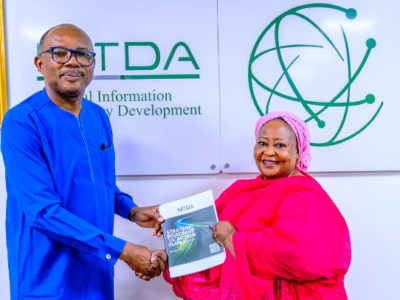
Director General of NITDA, Kashifu Inuwa Abdullahi, who was represented by Dr. Ayodele Bakare, Assistant Director in the Agency’s Cybersecurity Department, said protecting Nigeria’s expanding digital public infrastructure requires collective responsibility across government institutions rather than isolated cybersecurity efforts.
Government Digital Platforms Under Increasing Attack
According to NITDA, government digital services have become attractive targets for cybercriminals as public institutions increasingly migrate critical services online.
Abdullahi noted that government portals relied upon daily by millions of Nigerians have experienced numerous attacks ranging from website defacement and ransomware to database compromise and unauthorized redirection to malicious websites.
“We have watched websites of government organisations defaced, hijacked and quietly redirected to gambling sites. We have seen coordinated ransomware attacks force government web portals to shut down and witnessed repeated attacks on government databases leading to data exfiltration and abuse of personal data,” he said.
He warned that every government digital platform represents a commitment to efficient, transparent and accessible public service delivery, a promise that can only be sustained if those platforms remain secure.
Nigeria Among Africa’s Most Targeted Countries
Highlighting the growing cyber threat landscape, the NITDA Director General referenced findings from the United Nations Office on Drugs and Crime (UNODC) Cybercrime Assessment for Nigeria, which identified Nigeria as one of Africa’s three most targeted countries because of its rapidly expanding digital economy and widening cyberattack surface.
He also cited the Lloyd Cybersecurity Outlook, which estimates that cybercrime cost Nigeria more than $3 billion between 2019 and 2025, reflecting the enormous economic consequences of digital insecurity.
The figures underscore the urgent need for stronger cyber resilience as Nigeria accelerates the digitisation of government services, public records, financial systems and citizen-facing platforms.

Fragmented Security Leaves Government Vulnerable
A key message from the workshop was that cybersecurity within government cannot succeed if agencies operate independently.
According to Abdullahi, cyber attackers increasingly exploit weak links across interconnected government systems, making collaboration essential.
“A weakness in one MDA becomes a doorway into another. Our defences cannot be fragmented. Cybersecurity in government is a shared national obligation, and we are only as strong as our least protected system.”
He stressed that modern cyberattacks are orchestrated by highly organised and well-funded criminal groups capable of exploiting vulnerabilities across multiple institutions simultaneously.
Prevention Must Take Priority
While highlighting the role of NITDA’s Computer Emergency Readiness and Response Team (CERRT) as government’s frontline cyber incident response mechanism, the Director General emphasised that preventing cyberattacks is far more effective than responding after damage has occurred.
He outlined several pillars required for effective cybersecurity governance, including:
- Continuous cybersecurity risk assessments
- Strong governance and compliance frameworks
- Effective implementation of security policies
- Regular cybersecurity awareness programmes
- Technical security controls
- Incident response planning
- Continuous workforce capacity development
According to him, cybersecurity must become an integral part of institutional governance rather than merely an IT function.
Building Nigeria’s ‘Human Firewall’
Beyond technology, NITDA identified human capacity as the country’s strongest cybersecurity defence.
Abdullahi described employees across government institutions as the “first line of defence,” stressing that even the most advanced cybersecurity technologies cannot compensate for poor security awareness among users.
“No firewall or technical control can replace an informed, alert and security-conscious workforce. That is what we refer to as the human firewall.”
The workshop is therefore designed not only to enhance technical capabilities but also to cultivate a security-conscious culture across Nigeria’s public sector.
MDAs to Shape New Government Information Security Guidelines
Participants at the workshop were also given an opportunity to contribute to the development of NITDA’s forthcoming Regulatory Guidelines for Government Information Security Management.
According to the Agency, the participants represent the first external stakeholder group invited to review the draft framework before wider public consultations commence.
The collaborative approach is intended to ensure the new guidelines address real-world operational challenges facing government institutions while strengthening national cybersecurity standards.
Abdullahi encouraged participants to openly discuss vulnerabilities within their organisations, noting that shared experiences could help other agencies avoid similar incidents.
“Ask difficult questions and honestly share the security concerns within your environment because your candour may help a sister agency avoid the same issue.”
Cybersecurity Becomes Central to Nigeria’s Digital Transformation
As Nigeria expands digital government services, cloud adoption, digital identity programmes, electronic payments and online public service delivery, cybersecurity is increasingly becoming a strategic national priority rather than merely a technology concern.
Analysts note that the country’s digital economy ambitions—including increased e-government services, artificial intelligence adoption, digital public infrastructure and smart governance—will depend heavily on citizens’ confidence that government systems are secure and resilient.
Without robust cybersecurity, cyber incidents could disrupt essential public services, expose sensitive government information, compromise citizens’ personal data and weaken trust in digital governance.
Implications for Government, Businesses and Citizens
NITDA’s renewed emphasis on cybersecurity carries significant implications across Nigeria’s digital ecosystem.
For Government Institutions
MDAs will need to strengthen cybersecurity governance, invest in workforce training, improve incident response capabilities and adopt common security standards that reduce vulnerabilities across interconnected public systems.
For Citizens
Improved protection of government platforms means stronger safeguards for citizens’ personal information, digital identities and access to essential online public services.
For Businesses
Companies interacting with government platforms—including fintech firms, telecom operators, IT service providers and digital businesses—stand to benefit from a more secure digital environment that reduces operational risks and strengthens confidence in public digital infrastructure.
For Nigeria’s Digital Economy
Enhanced cyber resilience supports investor confidence, protects digital innovation and creates a stronger foundation for achieving Nigeria’s digital economy objectives while reducing the financial losses associated with cybercrime.
Building a Trusted Digital Government
NITDA reaffirmed that Nigeria’s digital future should be viewed as an opportunity to unlock innovation, economic growth and improved public service delivery—but only if the nation’s digital assets remain secure.
“Nigeria’s digital future is not a threat to be feared. It is an opportunity to be secured. Securing it is precisely the duty we have gathered here to take up together,” Abdullahi said.
The Agency said the workshop is expected to deepen cybersecurity knowledge across government institutions, promote inter-agency collaboration and strengthen Nigeria’s collective cyber resilience as part of its broader commitment to building a secure, trusted and resilient digital ecosystem.