By
By 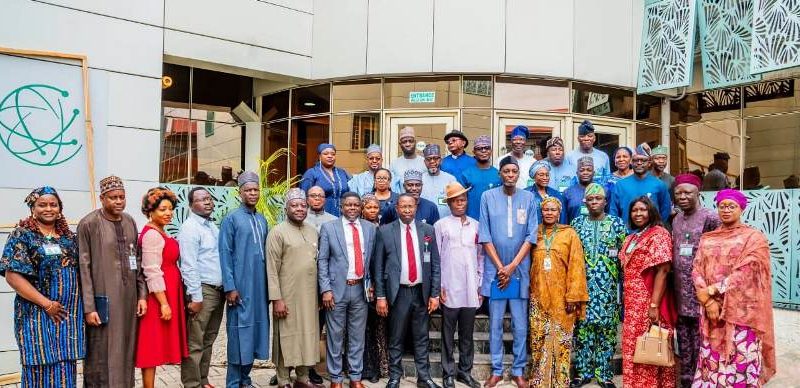
Strengthening Collaboration for Digital Transformation
The National Information Technology Development Agency (National Information Technology Development Agency) has reaffirmed its commitment to advancing Nigeria’s digital transformation through stronger collaboration with strategic institutions.
RELATED: NITDA trains Federal Character Commission staff to drive data-driven public service reform
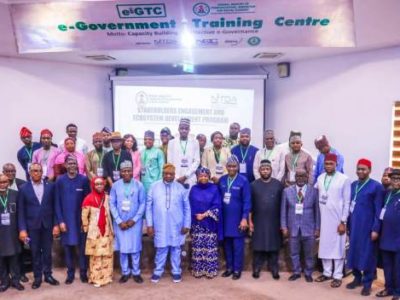
This was underscored during a courtesy visit by the Director General of the National Institute for Policy and Strategic Studies (National Institute for Policy and Strategic Studies), Ayo Omotayo, alongside participants of the Senior Executive Course (SEC) 48, 2026.
The engagement builds on an earlier strategic study tour and created a platform for in-depth discussions on how digital innovation can drive sustainable economic growth, with particular emphasis on the Orange Economy.
NITDA Highlights Inclusive Digital Ecosystem
Representing NITDA’s Director General, Kashifu Inuwa Abdullahi, the Director of Stakeholder Management and Partnerships, Aristotle Onumo, reiterated the agency’s resolve to foster a vibrant and inclusive digital ecosystem.
“NITDA is committed to creating an enabling environment where innovation can thrive by bringing together government, the private sector, academia, and creatives to drive Nigeria’s digital economy,” he said.
Orange Economy as a Catalyst for Growth
Abdullahi stressed the growing relevance of the Orange Economy as a critical engine for innovation and value creation anchored on intellectual property. He identified digital content creation, film, animation, and digital art as key sectors contributing to national development.

“The Orange Economy represents a powerful opportunity to transform our rich cultural heritage and creativity into sustainable economic growth,” he noted.
He added that Nigeria’s youthful and creative population gives the country a strategic advantage on the global stage.
Addressing Gaps and Building Capacity
NITDA also showcased its strategic initiatives supporting the digital and creative sectors, including investments in digital infrastructure, promotion of digital literacy, and policies designed to help startups and innovators scale.
However, Abdullahi acknowledged persistent challenges such as limited access to funding, infrastructure deficits, weak intellectual property protection, and ecosystem fragmentation. He emphasised that coordinated action among stakeholders is essential to unlocking the sector’s full potential.
The agency reiterated its goal of achieving 70 per cent digital literacy by 2027, noting that ongoing programmes are already equipping millions of Nigerians—particularly in underserved and informal sectors—with essential digital skills.
Policy Insights from NIPSS
In his remarks, Professor Omotayo described the visit as a valuable opportunity to deepen understanding of how digital technologies are reshaping economic sectors, especially the creative industry. He noted that insights from the engagement would inform policy recommendations aimed at strengthening Nigeria’s economic framework.

Participants of the SEC 48 programme actively engaged NITDA officials, raising questions around capacity development, access to digital tools, and frameworks for protecting digital content. NITDA highlighted its collaborations with industry players to provide training, innovation hubs, and access to critical digital resources for young Nigerians.
Renewed Commitment to Partnership
The visit concluded with a renewed commitment by both NITDA and NIPSS to deepen collaboration in research, policy development, and capacity building—efforts aimed at positioning Nigeria as a globally competitive force in the digital and creative economy.