By
By 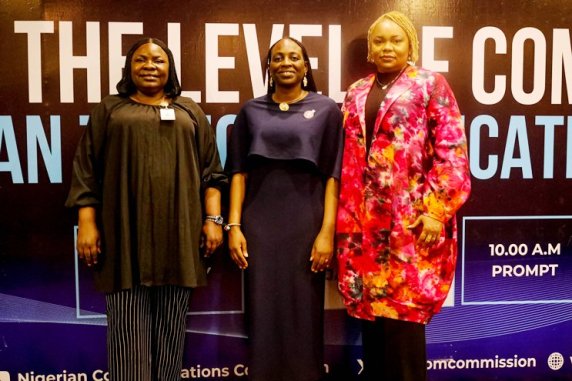
NCC, PwC Lead Stakeholder Engagement on Market Competition
Stakeholders in Nigeria’s telecommunications industry have converged in Lagos to examine competition in the voice and data segments, as the Nigerian Communications Commission (NCC) begins a comprehensive study of the country’s $76 billion telecoms sector.
RELATED: NCC begins implementation of accounting separation framework in telecoms industry to deepen competition
The study is designed to assess market dominance, promote fair and sustainable competition, and prepare the industry for emerging technologies. It was unveiled at a stakeholders’ forum on the Study of Competition in the Nigerian Telecommunications Industry, organised by the NCC in collaboration with PricewaterhouseCoopers (PwC).
Why the Competition Study Matters
Speaking at the forum, Head of Competition and Tariff at the NCC, Mrs Omotayo Mohammed, said the exercise was necessary to validate existing competition policies against current market realities.
She noted that rapid technological change, evolving consumer behaviour, rising investment costs and intensifying competitive pressures had increased concerns around market concentration, barriers to entry and the survival of smaller operators.
According to Mohammed, the last industry-wide competition study was conducted in 2013, with subsequent reviews focusing only on specific services. She stressed that developments in technology, market structure and consumer expectations now require a holistic reassessment of competition across the entire telecoms value chain.

“The study is diagnostic and evidence-based. It is not designed to pre-judge outcomes or single out any operator,” she said.
Telecoms’ Growing Role in Nigeria’s Economy
Mohammed revealed that the telecommunications sector contributed about 9.1 per cent to Nigeria’s GDP in Q3 2025, underscoring its importance as a key enabler of growth, inclusion and innovation across all sectors of the economy.
However, she observed that revenue models have shifted, investment patterns have changed and new forms of market interaction have emerged—making it critical to reassess how competition is managed in the sector.
Global and Regional Industry Shifts
Also speaking, Akolawole Odunlami, Director of Strategy at PwC Network, said the study was timely given the slowing growth and structural shifts in the global telecoms industry.
He disclosed that the global telecoms market is projected to reach $1.3 trillion by 2028, but annual growth has slowed to about two to three per cent, down from four per cent before the COVID-19 pandemic.
In sub-Saharan Africa, while subscriber numbers continue to rise, most operators are experiencing declining average revenue per user (ARPU), intensifying competition and putting pressure on traditional business models.

“Today’s consumers are not just buying data. They are seeking digital experiences—entertainment, financial services, self-service applications and social connectivity—with data as the backbone,” Odunlami said.
He added that operators worldwide are integrating lifestyle and fintech services into their platforms, while over-the-top (OTT) players like WhatsApp and Microsoft Teams have reshaped traditional voice and messaging revenues.
5G, Future Networks and Competitive Dynamics
Odunlami noted that the rollout of 5G—and eventually 6G—networks will further transform competition, though adoption in Nigeria and sub-Saharan Africa remains constrained by infrastructure gaps, low R&D investment and slow uptake of 5G-enabled devices.
He said short- to medium-term 5G adoption in the region is projected at 14–17 per cent, well below global averages, highlighting the need for stronger policy and investment support.
According to him, the NCC-PwC study will analyse market dynamics, identify sources of market power and provide evidence-based recommendations to enhance competition, innovation and service quality.
Smaller Operators Seek a Level Playing Field
At the forum, smaller telecoms operators raised concerns about market dominance by major players, warning that the trend could stifle competition if regulatory safeguards are not strengthened.
Industry data shows that MTN and Airtel control over 86 per cent of Nigeria’s telecoms market, with MTN holding about 51–52 per cent share and Airtel around 34 per cent. Glo follows with roughly 12 per cent, while T2 and other smaller operators account for the remainder.
Speaking on behalf of smaller operators, Mr Chidi Ibisi, Executive Director of Broadbased Communications Limited, called for a more balanced regulatory framework.
“There is a need for a level playing field between big and small operators to ensure the survival of smaller players. This can only be achieved through a calculated regulatory framework that promotes fair competition,” Ibisi said.
He urged PwC to reflect the concerns of smaller operators in its final recommendations to the NCC at the conclusion of the 12–14 week study.
PwC Assures Fairness and Objectivity
Responding, Mary Iwelumo, Partner and Public Sector Lead at PwC Nigeria, assured stakeholders that the study would be conducted with objectivity and fairness.
She said the review is not intended to expose industry operations but to strengthen competition, improve service delivery and protect consumers.
“Our focus is to ensure that competition in voice and data connectivity ultimately benefits telecoms users across the country,” Iwelumo said.
Collaboration Key to a Stronger Telecoms Market
Participants at the forum—including representatives of the Federal Competition and Consumer Protection Commission (FCCPC), NCC and PwC—emphasised the need for collaboration among regulators, operators and professional advisers to build a more competitive, innovative and consumer-friendly telecoms ecosystem.
The NCC-PwC study is expected to deliver policy-relevant insights that will guide regulatory interventions, foster investment and safeguard the interests of millions of telecoms consumers nationwide.