By
By 
For seventeen years, the promise of digital television in Nigeria has remained just that — an unfulfilled promise. Over ₦60 billion has been spent, yet the majority of Nigerians continue to receive analogue signals, while broadcasters operate in the dark, lacking reliable audience data.
RELATED: Africa must treat digital broadcasting as economic infrastructure, not just regulation — NBC DG
On Tuesday, the National Broadcasting Commission (NBC) finally addressed this long-standing failure with rare candour. In a presentation titled “The Big Picture,” the regulator acknowledged systemic breakdowns and outlined an ambitious, time-bound roadmap to realise a true digital future for Nigerian broadcasting.
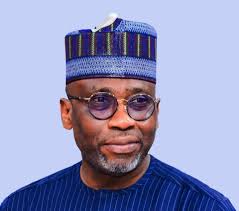
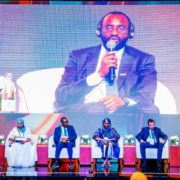
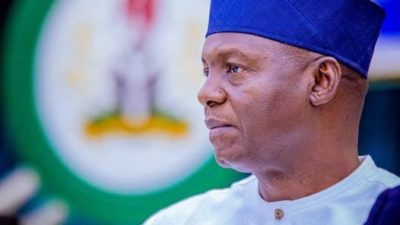
Charles Ebuebu, DG, NBC
Dr. Charles Ebuebu, Director General of the NBC, delivered the keynote speech to the Broadcasting Organisations of Nigeria (BON) General Assembly with remarkable candour and clarity — a welcome change from the regulator’s usual tone.
FreeTV: A Genuine National Platform
The proposed solution, branded FreeTV, is not just an incremental tweak. It is a complete national digital broadcasting platform aimed at ensuring universal access.
- 100% national coverage through a hybrid satellite and IP delivery system
- No encryption — completely free-to-air
- A user-friendly mobile app for seamless viewing
- A European-standard audience measurement system that will finally provide advertisers with accurate, credible viewership data
For the first 18 months, any broadcaster that signs on, commits to a minimum of 60% local content, and actively promotes the platform will broadcast for free. A regulated rate card will come into effect from January 2028.
The analogue switch-off date is firm: 31 December 2028 — with no further extensions planned.
Decentralising Storytelling and Creating Jobs
Beyond technology, the plan carries a bold cultural and economic vision. Six regional production hubs will be established to decentralise content creation and amplify local voices:
- Lagos – Film and post-production
- Kano – Hausa content
- Enugu – Igbo language and culture
- Benin – Edo heritage and South-South stories
- Port Harcourt
- Jos
Additional hubs are expected in other geopolitical zones.
The NBC believes that when compelling local stories reach national audiences with measurable viewership, both creative industry revenue and national cohesion will strengthen. Thousands of jobs are projected in production, technical, and creative roles.
Learning from Global Successes, Avoiding Past Failures
The strategy draws smartly from international benchmarks:
- The public-private partnership model of the UK’s Freeview
- South Africa’s surge in local content following its successful Digital Switchover (DSO)
- Bulgaria’s proven GARB audience measurement system
Ghana’s stalled and politicised digital transition is explicitly cited as the mistake Nigeria must avoid.
A Clear Call to Action
Broadcasters now face a genuine opportunity. The NBC has removed almost every technical and financial barrier for the first 18 months. In return, it demands commitment: high local content quotas and active promotion of the platform.
The message from the podium was direct and powerful: “Your content. Our distribution. National reach.”
After years of false starts and wasted resources, Nigerian broadcasting finally has a firm finish line — and a ticking clock. As Dr Ebuebu declared, “The digital future will happen. The only question is whether you will lead it… or watch it from the sidelines.”
Background: Understanding Digital Switchover (DSO)
Digital Switchover (also known as Digital Television Transition or Analogue Switch-Off) is the global process of replacing analogue terrestrial television broadcasting with more efficient digital terrestrial television (DTT).
Key Benefits:
- Superior picture and sound quality (including HD and UHD support)
- More channels within the same spectrum
- Lower transmission power and operational costs for broadcasters
- Freeing up valuable “digital dividend” spectrum for mobile broadband and other services
Why the Switch Is Necessary: Analogue signals are spectrum-inefficient and outdated technically. Digital broadcasting is more resilient, supports interactive features like Electronic Programme Guides (EPGs), and provides better reception — including on portable and mobile devices. The International Telecommunication Union (ITU) coordinated regional deadlines, with many countries aiming for 2015 under the GE06 Agreement.
During the transition, broadcasters typically simulcast (broadcast both analogue and digital signals) to allow gradual migration. Viewers with older analogue TVs require a digital set-top box (decoder) or a new digital television to continue receiving free-to-air channels. Cable, satellite, and IPTV services are generally unaffected as they were already digital.
Global Status: Most developed nations completed the transition years ago:
- United States: Full-power analogue ended in 2009 (low-power extensions until 2022).
- United Kingdom: Completed by 2012.
- Many European and Asian countries followed in the 2010s.
Several African countries have faced delays due to infrastructure, funding, and awareness challenges. As of 2026, a few are still in progress or reviving earlier stalled projects.
Nigeria’s Journey Nigeria’s DSO efforts commenced around 2006–2012, with pilot projects in Jos (2016), Abuja, Kaduna, and Kwara. The country missed the original ITU-inspired 2015 deadline due to funding shortages, infrastructure gaps, limited technical capacity, and inconsistent government support.
As of early 2026, the project has been revived under President Bola Ahmed Tinubu’s Renewed Hope Agenda. The NBC is partnering with Nigerian Communications Satellite Limited (NIGCOMSAT) on a hybrid terrestrial-satellite model to ensure true nationwide coverage, especially in remote areas.
Targeted Benefits for Nigeria:
- Significantly more TV channels with superior quality
- Freed spectrum for telecommunications growth
- Economic boost for local content production and broadcasting
- Improved access in underserved regions
Chidorum Nwakanma: Experienced business leader, author, and specialist in integrated marketing communication.
Courtesy: The Public Sphere