By
By 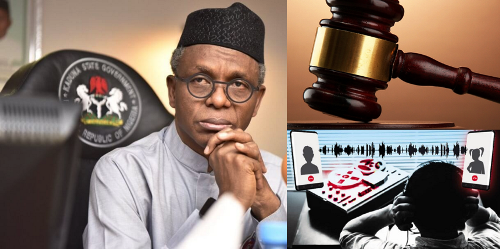
Matters eRising with Olusegun Oruame
Alleged Phone Interception Puts Nigeria’s Cybercrime Laws in the Spotlight
Former Kaduna State Governor Nasir El-Rufai is facing a five-count criminal charge over the alleged interception and access to telephone communications belonging to Nigeria’s National Security Adviser, Nuhu Ribadu.
RELATED: Big Brother listening to your phone talk
The charges, filed by the Federal Government through the Department of State Services (DSS), are anchored on alleged violations of the Cybercrimes (Prohibition, Prevention, etc.) Amendment Act, 2024 and the Nigerian Communications Act, 2003.


ALSO READ: Has President Buhari signed a law allowing foreign governments to spy on, intercept communication of Nigerians?
El-Rufai has pleaded not guilty, insisting that comments he made during a February 13, 2026 interview on Arise TV do not amount to a legal confession.
What Triggered the Charges?
According to court filings, the case stems from El-Rufai’s public claim that his “camp” intercepted the NSA’s phone communications. Prosecutors argue that the statement amounts to an admission of unlawful surveillance involving communications classified as critical national information infrastructure.
The case has now become one of Nigeria’s most high-profile tests of how digital evidence, media statements, and cybercrime laws intersect.
The Technology Behind Phone Interception
From a technical perspective, intercepting phone communications involves monitoring or capturing voice calls, messages, or data traffic without the user’s consent. While lawful interception is permitted under strict judicial oversight, unauthorized interception is illegal.
Common Interception Techniques
- IMSI Catchers (Stingrays): Rogue base stations that impersonate mobile towers, forcing nearby phones to connect and exposing calls, SMS, and location data.
- SS7 Network Exploits: Abuse of legacy global telecom signaling protocols to reroute calls or intercept SMS authentication messages.
- Spyware and Malware: Malicious software deployed via phishing or device compromise to record calls, read messages, or activate microphones and cameras.
- Lawful Interception (LI): Court-authorised surveillance conducted by designated security agencies for national security or serious crime investigations.
Why This Case Matters Technologically
The allegations raise serious concerns about Nigeria’s telecom security architecture, including:
- The vulnerability of mobile networks to advanced interception tools
- The risk of powerful surveillance technology falling into private or political hands
- The absence of transparency and safeguards if interception occurs outside judicial control
If proven, experts warn, such actions could undermine trust in Nigeria’s communications infrastructure and expose systemic weaknesses in network security.
Legal Framework Governing the Case
The prosecution is relying on multiple legal instruments:

Key Laws Applied
- Cybercrimes Act (Amended 2024):
- Criminalises unlawful interception of electronic communications
- Penalises failure to report knowledge of cybercrime activities
- Nigerian Communications Act, 2003 (Section 131):
- Prohibits the use of technical equipment to compromise public safety or national security
- Critical National Information Infrastructure Order, 2024:
- Provides enhanced protection for sensitive government communications, including those of the NSA
Convictions under these laws carry severe penalties, including imprisonment and heavy fines.
Privacy, Surveillance and Constitutional Implications
Legal analysts note that the case sits at the intersection of national security and civil liberties.
- Right to Privacy: Section 37 of Nigeria’s 1999 Constitution guarantees the privacy of communications.
- Authorized Surveillance: Only designated agencies, acting under judicial warrants, may lawfully intercept communications.
- Criminal Liability: Any individual who intercepts, uses, or benefits from intercepted data without authorization commits a serious offence.
The case may set a precedent on how public statements, digital surveillance capability, and proof of technical execution are evaluated in court.
The “Television Confession” Debate
A central issue is whether El-Rufai’s televised remarks constitute a valid confession. His defence argues that:
- The statement was not made under caution
- Media commentary does not meet the legal threshold for a confessional statement
- The prosecution must prove actual technical capacity and execution, not just verbal claims
Prosecutors, however, insist the statement triggered a legitimate investigation under cybercrime statutes.
What Legal Experts Are Saying
Legal observers agree that while the public admission is significant, evidence of technical action—such as tools used, network logs, or third-party collaboration—will be crucial for conviction.
The case has been adjourned to May 2026, when hearings on motions to quash the charges are expected to begin.
Why the Case Is Bigger Than One Defendant
Beyond individual culpability, the trial highlights:
- The growing role of cyber forensics in Nigerian courts
- The enforcement strength of Nigeria’s updated cybercrime laws
- The need for stronger safeguards around surveillance technology
- The legal risks of discussing sensitive digital operations publicly
As Nigeria deepens its digital transformation, the outcome could redefine how privacy, national security, and technology accountability are balanced.