By
By 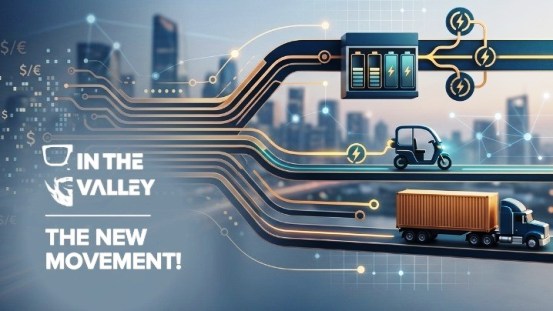
By Ibrahim Sagna. Executive Chairman, Silverbacks Holdings | Private capital for Africa/GCC | FinTech + Sports | $30B+ structured
In January 2026, fintech followed a familiar script in Africa. Raking in $131.6M, more than any other sector.
Then February broke the pattern.


Logistics and transport surged to the top, becoming the most-funded sector with $119.6M. Energy and water followed with $94M. Fintech plummeted to fourth, with $54.1M. Let that sink in. In a single 28-day window, the sector that defined African venture capital for a decade dropped entirely out of the top three.
RELATED: Global Development Finance Coalition commits over $5.5B for MSME financing in Africa
This is not a statistical anomaly. Across January and February 2026, African startups raised a massive $575M across 58 deals. The aggregate masks a clear shift beneath the surface. Capital is moving with intent into logistics, transport, and energy. What began as early signals in 2025 has accelerated into a coordinated reallocation.
This edition of IN THE VALLEY examines what this shift signals. We are witnessing the beginning of a structural reallocation toward the physical infrastructure that will determine whether Africa’s digital economy stalls or scales.
The Layer Fintech Never Reached
Investor sentiment hasn’t changed. The diagnosis has.
For the better part of a decade, financial exclusion defined the investment thesis. Fintech became the primary solution. Digital payments, lending platforms, and mobile wallets absorbed the lion’s share of startup capital under a simple assumption: connect the continent to the financial system and growth will naturally follow.
Except, growth didn’t fully follow.
Fintech built the rails for money to move seamlessly. It did not build the infrastructure for goods, people, and energy to move alongside it.

That gap now defines the opportunity. Capital is targeting the physical layer that fintech left behind. The shift becomes clear when you track where capital is deployed, not where narratives sit.
The Pattern: Three Layers of the Same Missing Stack
February’s funding surge wasn’t broad-based; it was surgical. A mere two deals drove the absolute majority of the $119.6M. This concentration isn’t a vulnerability in the data. It is the signal.
Capital is targeting specific and identifiable bottlenecks across a continental system with the same structural constraint repeated at each layer.
1. Electrifying the Energy Network for Urban Movement
Motorcycle taxis are the undisputed connective tissue of African cities. Whether it’s the boda boda in Nairobi, the okada in Lagos, or the zemidjan in Cotonou, these two-wheeled networks move people, deliver goods, and serve as the heartbeat of informal economies. They are also expensive to run, chronically reliant on imported fuel, and economically fragile for riders.
Let’s look at the math. In Kenya, a typical boda boda rider burns through 700 shillings daily on fuel. Transitioning to electric slashes that expense to roughly 200 shillings, a saving that nearly doubles daily take-home pay. This isn’t a sustainability argument; It is a raw, undeniable economic incentive. That is what drives adoption.
But plug-in charging remains a constraint. Riders cannot afford downtime. Battery swapping solves this in under two minutes.
Spiro addresses the power grid problem head-on, leveraging second-life batteries at its swap stations for energy storage, ensuring stations remain operational even when the grid fails.
The numbers validate the model. Spiro raised $57M in February and currently operates 80,000 electric motorcycles alongside over 2,500 battery swap stations. They have executed over 30M battery swaps across six countries, logging north of one billion kilometers of low-carbon travel.
Here is the institutional genius: Spiro isn’t selling bikes. It provides energy-as-a-service. Riders own or lease the motorcycle. Spiro owns the batteries. Revenue is recurring and usage-based.
This converts a volatile mobility business into infrastructure. The company that owns the battery network owns the customer relationship. Each station increases switching costs and deepens the moat.
2. Closing the Vehicle Ownership Gap
Across the continent, millions of people hustle to earn a living as delivery couriers or ride-hailing drivers. The bottleneck isn’t opportunity; it’s access to the one asset that catalyzes it: access to vehicles.
Formal credit is structurally blind to this market. Banks demand collateral and credit histories that gig workers simply don’t possess. The result is a predatory catch-22: you need the vehicle to earn, but you need to earn to afford the vehicle. Consequently, workers are forced to rent from fleet owners, bleeding daily fees that consume their margins and leave them with zero equity after years of grinding.
Models such as Uber backed Moove or even GoCab address this constraint directly. They convert access into structured financing. Drivers make structured daily payments and transition to ownership. Rental expense becomes asset accumulation.
Capital is aggressively backing this asset-level intervention. GoCab raised $45M to scale this model pan-Africa, reflecting deep conviction in solutions that address mobility constraints at the root. The traction is staggering: $17M in ARR by February 2026 after a mere 18 months of operation, with a laser-focused target of hitting $100M by 2027.
This is not a mobility play. It is a credit infrastructure model.
The underlying asset is data. Daily payments generate behavioral and income data at scale. This supports underwriting for insurance, working capital, and broader credit products.
The platform turns previously invisible workers into financeable customers.
3. Digitizing the Freight Backbone
If urban mobility is the visible tip of the logistics spear, long-haul freight is not. It is also more complex and more expensive.
Moving goods between African cities remains painfully fragmented. Pricing lacks transparency. Matching is highly inefficient and trucks often return empty.
Each empty mile represents lost revenue, wasted fuel, and reduced economic output.
A continent that accounts for 17% of the global population contributes a pathetic 3% to global trade. The chasm reflects structural inefficiencies, not only policy constraints.
The Macro Force Behind the Micro Bets
These infrastructure plays do not exist in a vacuum. They are being meticulously built against the most significant macro backdrop in a generation: the African Continental Free Trade Area (AfCFTA). This framework is building the regulatory foundation for a $7T market, creating the largest free trade area in the world by participating countries. Tariffs are falling. Borders are, theoretically, opening.
But let’s be pragmatic: ink on trade agreements does not move goods. Roads, fleets, energy networks, cold chains, and logistics platforms determine whether trade flows.
Companies such as Maersk backed Trella illustrate that direction. Tech enabled logistics platforms are positioning to capture this shift.
AfCFTA has triggered a massive demand signal for continental-scale logistics infrastructure. The founders pulling capital today are the ones actively responding to it. The sizable arbitrage opportunity sits in the gap between policy activation and infrastructure maturity.
The Investment Capital: Why Physical Infrastructure Compounds Differently
In this specific cycle, the smartest money isn’t just backing companies that use infrastructure; It is funding infrastructure ownership.
Own the battery-swapping network and you control urban mobility economics. Control vehicle financing and you control access to income. Infrastructure is no longer support. It is the core asset.
Three dynamics define this shift:
- Physical networks are infinitely difficult to replicate: Deploying a multi-country battery-swapping network requires years of grinding—aligning heavy capital, complex regulation, and ground-game operations. Unlike a SaaS app, you cannot copy and paste a physical grid. Once entrenched, it is nearly impossible to displace.
- Hard assets models attract broader capital pools: Business models anchored by physical assets and highly predictable cash flows unlock debt markets, not just highly dilutive equity. This structurally lowers the cost of capital, allowing these infrastructure plays to scale with an efficiency pure-tech models can only dream of.
- Logistics is the ultimate foundational layer: The exact same freight network can move vaccines, agricultural yields, or consumer electronics. The identical financing platform can underwrite multiple classes of gig workers. In economies where logistics absorb a crippling percentage of product costs, fixing the plumbing yields massive, economy-wide dividends.
Execution risk remains high. Markets are fragmented. Currency volatility persists. Regulation varies.
These constraints also create defensibility. The complexity that slows entry protects incumbents at scale.
IN THE VALLEY Opinion
What appears as a rotation into logistics reflects a deeper shift in how African growth is financed.
For the last decade, capital focused on access: payments, lending, and digital marketplaces. That digital layer is now largely built. The constraint, and therefore the alpha, has violently shifted to movement.
Institutional capital is no longer chasing trendy sectors. It is hunting bottlenecks. Energy grids, asset ownership, and freight coordination are the new frontiers, because solving just one of these constraints unlocks entire economic systems and with the advent of autonomous mobility one can only expect more capital deployment within this particular tunnel.